
AI & AUTOMATION · ANTHROPIC · SEPTEMBER 2026
Claude Opus 5.5: Pricing, Benchmarks, 1M Context, Safety and Availability
Anthropic’s first Claude 5.5 model cuts Opus pricing, expands agentic coding performance and keeps a 1 million-token context window—but the biggest change for developers may be how much work it can finish per dollar, not a single benchmark score.
Published September 23, 2026 · Research-based analysis using Anthropic, AWS and Reuters · Digital Pulse Brief has not independently benchmarked Claude Opus 5.5

Quick answer
Claude Opus 5.5 launched on September 22, 2026 as the first model in Anthropic’s Claude 5.5 family. It costs $4 per million input tokens and $20 per million output tokens, keeps a 1M-token context window, supports up to 128K output tokens, and uses adaptive thinking that cannot be switched off.
Anthropic says standard per-token rates are 20% below Opus 5, cache reads are 60% cheaper at $0.20 per million tokens, output is more than 30% faster, and typical task cost falls about 40% because the model also uses fewer tokens. Those efficiency figures are vendor claims, not Digital Pulse Brief tests.
What matters most: for long coding and agent workflows, Opus 5.5 makes the premium Opus tier materially cheaper to run. Existing Opus 5 API integrations should still test before switching because the new model introduces breaking changes around thinking, forced tool use and computer-use tooling.
Anthropic released Claude Opus 5.5 into an unusually crowded AI launch cycle. The company positions it as a step up from Opus 5 for coding, long-running agents and professional knowledge work, while pricing it below the previous Opus tier. Reuters reported the release on September 22 as Anthropic’s latest push to improve capability while reducing the cost of deploying frontier models.
The headline numbers are attractive, but they need context. Anthropic’s benchmark table uses different effort levels and safeguards depending on the test. Some cybersecurity, biology and frontier-AI tasks can be routed to fallback models when safeguards intervene. Anthropic itself warns that small benchmark margins are becoming less reliable as a guide to real-world differences.
That makes this launch more interesting as an economics-and-deployment story than a benchmark-race story: how much capability does a team get at a given token budget, what changes in production integrations, and which safeguards come with the new model?
For comparison, Digital Pulse Brief’s recent GPT-6 Sol vs Luna analysis looks at the same cost-per-task problem from OpenAI’s side, while our model misalignment framework explainer provides useful background on why agent behavior and controllability matter alongside raw capability.
Claude Opus 5.5 specs and pricing at a glance
The model is active across the Claude API, Amazon Bedrock, Google Cloud, Microsoft Foundry and Claude Platform on AWS. Anthropic’s model documentation lists a reliable knowledge cutoff of June 2026, text-and-image input, text output, adaptive thinking that is always on, and medium as the default effort setting.
| Specification | Claude Opus 5.5 |
|---|---|
| Release date | September 22, 2026 |
| API model ID | claude-opus-5-5 |
| Context window | 1 million tokens |
| Maximum output | 128K tokens (standard); Anthropic documents up to 300K for Batch API beta |
| Input price | $4 per 1M tokens |
| Output price | $20 per 1M tokens |
| 5-minute cache write | $5 per 1M tokens |
| 1-hour cache write | $8 per 1M tokens |
| Cache read | $0.20 per 1M tokens |
| Fast mode | Up to 2.5× faster; $8 input / $40 output per 1M tokens |
| Knowledge cutoff | June 2026 |
Sources: Anthropic’s launch announcement and Claude Platform model documentation.
The real change is cost per completed task
Per-token pricing falls 20% versus Opus 5: from $5 to $4 for input and from $25 to $20 for output. Cache reads drop more sharply, from $0.50 to $0.20 per million tokens. Anthropic says that combination, plus lower token usage per task, reduces typical task cost by about 40% at default settings.
A simple token-only example makes the distinction clear. A workload that consumes 100 million input tokens and 20 million output tokens would cost about $800 on Opus 5.5 before caching, tools or other platform charges. At Opus 5’s $5/$25 rates, the same raw token volume would cost about $1,000. That is a 20% rate reduction—not 40%. Anthropic’s larger 40% claim depends on Opus 5.5 completing comparable work with fewer tokens.
Why cache pricing matters for agentsLong-running coding and agent systems repeatedly reuse large codebases, instructions, tool schemas and conversation state. When repeated context can be served from cache, dropping cache-read pricing to $0.20 per million tokens can matter more than the headline input rate for some workloads.
Fast mode is a different trade-off. Anthropic advertises up to 2.5× faster output, but doubles input and output token prices to $8 and $40 per million. That can make sense when developer wait time or user-facing latency is worth more than the additional inference cost; it is not automatically the economical default.
What Anthropic’s benchmarks do—and do not—show
Anthropic reports strong gains on agentic coding and knowledge-work evaluations. In its launch table, Opus 5.5 records 66.4% on Terminal-Bench 4.0, versus 55.8% for Claude Fable 5.1, 52.3% for Opus 5, 57.9% for GPT-6 Astra and 37.3% for GPT-5.6 Sol. On CursorBench 4.0, Anthropic reports a top Opus 5.5 result of 57.8%.
Those numbers are useful evidence, but they are not a universal model ranking. Anthropic notes a ±2.6-point standard error for its Terminal-Bench 4.0 Opus 5.5 result, says competitor figures can come from the competing vendor’s own reports, and acknowledges that production safeguards can reduce apparent performance on some cybersecurity, biology and frontier-AI tasks.
Anthropic also says the apparent benchmark gap between Opus 5.5 and Fable 5.1 is wider than the difference it sees in day-to-day use. That is an important caveat: when frontier models cluster near one another, differences in harness, effort setting, tool setup, prompt design, retries and safeguard behavior can move results enough to change the ordering.
Digital Pulse Brief methodology: this article is a research-based launch analysis. We have not independently run Terminal-Bench, CursorBench, FrontierCode or production workloads on Opus 5.5. Benchmark claims are attributed to Anthropic and should be treated as vendor-reported until replicated by independent evaluators.
Developers should test four breaking changes before migrating
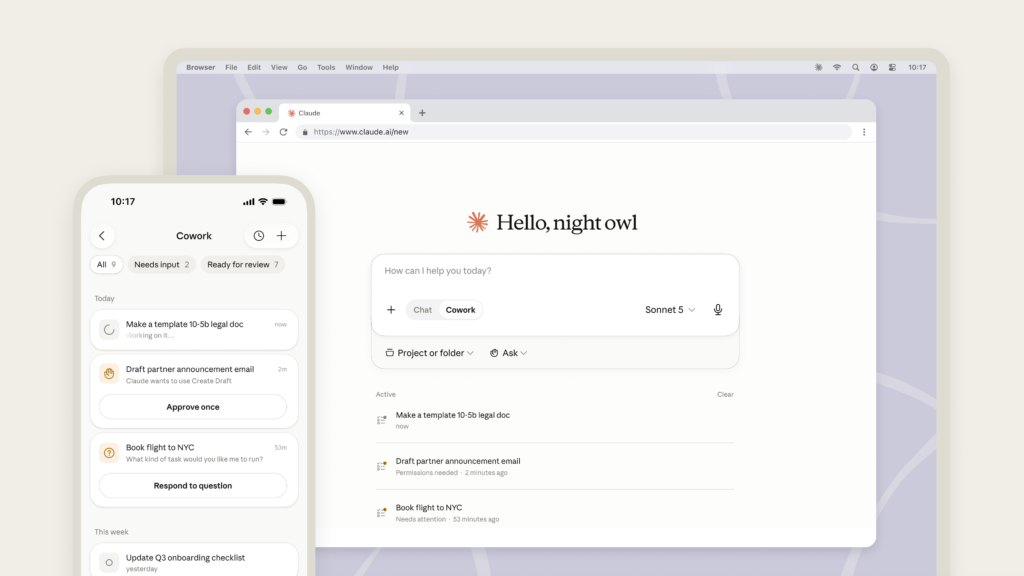
The lower price does not mean an existing Opus 5 integration should switch model IDs without testing. Anthropic documents several behavior and API changes that can break assumptions in production systems.
- Thinking cannot be disabled. Opus 5.5 always uses adaptive thinking. Requests that explicitly disable thinking or use the older manual token-budget form can return a 400 error. Developers should omit the thinking field or set it to adaptive and control depth with the effort parameter.
- Forced tool use changes. Anthropic says older forced
tool_choicemodes such asanyandtoolshould be replaced with automatic selection plus strict tool use. - Thinking blocks are model- and conversation-bound. Applications that manipulate or replay prior reasoning need to follow the new preserved-thinking behavior rather than editing those blocks freely.
- An older computer-use tool is no longer accepted on some platforms. Anthropic specifically flags
computer_20251124on the Claude API and Google Cloud. Integrations should move to the current toolset.
A quieter compatibility issue affects user interfaces that stream progress text between tool calls. Anthropic says that text can arrive inside thinking blocks whose text is empty under the default display setting. Apps that relied on that stream for progress indicators should test the thinking.display behavior before rollout.
Anthropic’s official migration notes are the right source for implementation details because they can change faster than third-party tutorials.
Safety is part of the product behavior, not a footnote
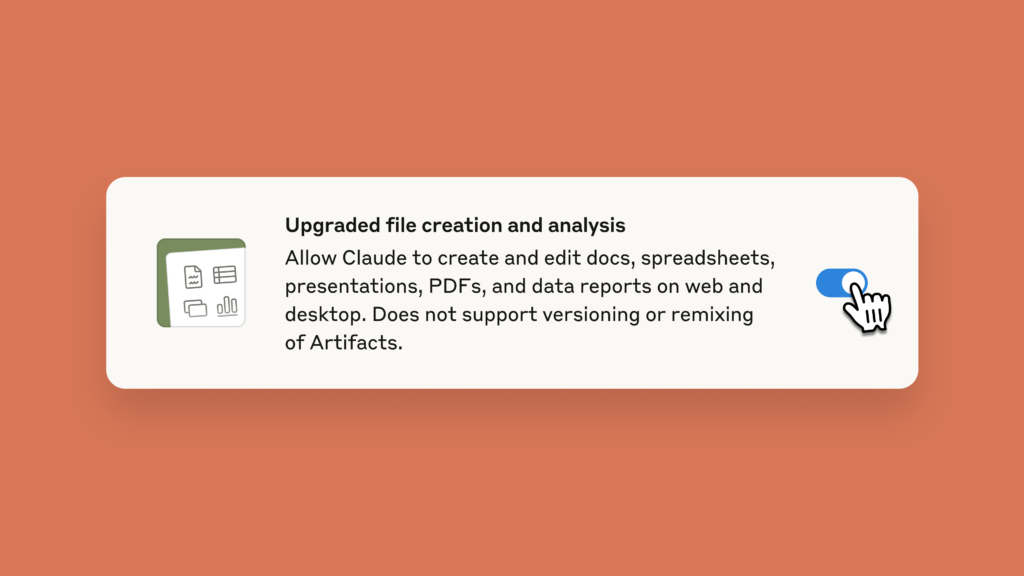
Opus 5.5 is Anthropic’s first Opus release to ship with a safeguard class similar to Fable 5.1 in cybersecurity, biology and anti-distillation. Anthropic says external evaluators including Frontier Design and METR tested the model before release, and its internal automated behavioral audit spans nearly 2,000 scenarios.
The company says Opus 5.5 is less likely than recent Claude models to take difficult-to-reverse actions or operate outside assigned boundaries, and reports stronger prompt-injection resistance than Opus 5. Anthropic also describes an action classifier that screens agent actions before execution, an open-source sandbox that security teams can inspect, and code review designed to catch vulnerabilities before changes merge.
There is a practical trade-off: stronger safety filters can change what a model will do. Anthropic notes that some sensitive cybersecurity tasks may be routed to a less capable fallback model when safeguards intervene, and verified cybersecurity practitioners will receive expanded access through its Cyber Verification Program. Life-sciences researchers can apply to a separate verification program.
Opus 5.5 is also available with zero data retention, and Anthropic says it carries preserved-thinking protections intended to make large-scale capability extraction harder. These controls matter to enterprise buyers because a model’s usable capability is determined by both what it can do and what a deployment is permitted to do.
For broader context on AI-agent behavior, see Digital Pulse Brief’s AI model misalignment framework explainer.
Where Claude Opus 5.5 is available
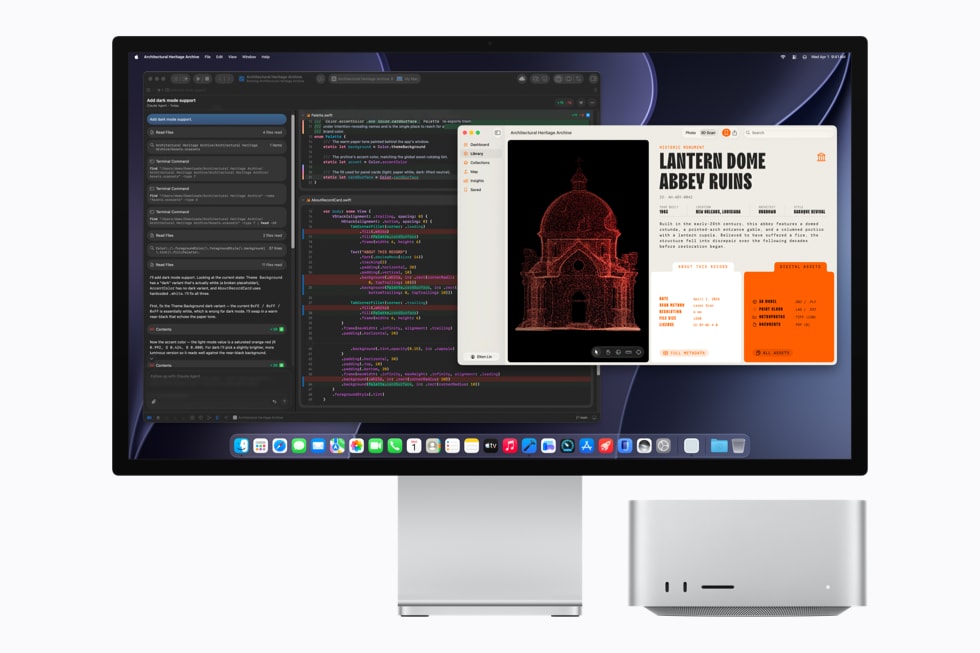
For Claude app users, Anthropic lists Opus 5.5 for Pro, Max, Team and Enterprise plans. Developers can access it through the Claude Platform, Amazon Bedrock, Google Cloud and Microsoft Foundry. The common Claude API identifier is claude-opus-5-5; AWS uses provider-specific identifiers and inference profiles.
AWS says the model is available through US, EU, Australia, Japan and global cross-region inference profiles on Bedrock, with separate in-region availability through its newer Bedrock Mantle endpoint in selected regions. Teams with residency requirements should verify the exact region and endpoint rather than assume the global model ID keeps traffic in one geography.
Anthropic says Claude Sonnet 5.5 and Claude Haiku 5.5 will follow in the coming weeks. Until those arrive, Opus 5.5 sits at an unusual point in the lineup: premium capability at a token price closer to what teams previously associated with a mid-tier frontier model.
Who should switch now—and who should wait?
Opus 5 users running long coding or agent sessions have the clearest migration incentive. The standard token rates are lower, cache reads are much cheaper, and Anthropic reports both faster output and fewer tokens used per task. The migration cost is mostly integration testing around thinking and tools.
Teams already satisfied with a cheaper model should not upgrade just because Opus 5.5 is newer. For classification, extraction, short summaries and other bounded high-volume workloads, a lower-cost model can still be economically superior even if it scores lower on advanced coding benchmarks.
Enterprises with strict safety or residency requirements should test policy behavior as carefully as quality. The new safeguards and cross-region options can be benefits, but they may also change which tasks are served directly, refused or routed differently.
Anyone comparing Opus 5.5 with GPT-6 Astra, Sol or other frontier models should benchmark their own workflow. Vendor benchmark tables are useful for narrowing candidates; they cannot tell you the cost of your repository, tool chain, retrieval layer, retry policy or review process.
Claude Opus 5.5 FAQ
When was Claude Opus 5.5 released?
Anthropic released Claude Opus 5.5 on September 22, 2026. It is the first model in the Claude 5.5 family.
How much does Claude Opus 5.5 cost?
Standard API pricing is $4 per million input tokens and $20 per million output tokens. Five-minute cache writes cost $5 per million, one-hour cache writes $8, and cache reads $0.20. Fast mode costs $8 input and $40 output per million tokens.
What is the Claude Opus 5.5 context window?
Anthropic and AWS document a 1 million-token context window with up to 128K output tokens under standard use.
Is Opus 5.5 cheaper than Opus 5?
Yes on standard token rates: input and output prices are 20% lower. Anthropic says typical tasks cost about 40% less because Opus 5.5 also uses fewer tokens, but that larger percentage is a vendor-measured workload claim rather than a guaranteed saving for every application.
Does Claude Opus 5.5 support images?
Yes as input. The model accepts text and images and produces text output; it is not an image-generation model.
Can adaptive thinking be disabled?
No. Anthropic says adaptive thinking is always on for Opus 5.5. Developers control reasoning depth with the effort setting instead.
Bottom line
Claude Opus 5.5 is a more consequential release than its “.5” name suggests because Anthropic improved the economics and deployment model at the same time as capability. The 1M context window and premium coding focus are familiar; the notable shifts are lower token rates, dramatically cheaper cache reads, faster output, adaptive thinking that cannot be disabled, and stricter safeguards around sensitive capabilities.
For developers, the smartest response is not to accept a benchmark headline at face value. Run representative repository, tool-use and knowledge-work tasks; measure successful-task cost rather than price per token alone; and test migration behavior before replacing Opus 5 in production.
Update policy: Digital Pulse Brief will revise this guide if Anthropic changes model pricing, availability, migration requirements or materially updates the system card. The facts above were checked against first-party sources on September 23, 2026.
Sources
- Anthropic — Introducing Claude Opus 5.5
- Anthropic — Claude Opus 5.5 model documentation
- Anthropic — What’s new and migration notes
- AWS — Claude Opus 5.5 availability and Bedrock guidance
- Reuters — Anthropic unveils Claude Opus 5.5
You may also like
- GPT-6 Sol vs GPT-6 Luna: API Pricing, Benchmarks and Availability
- GPT-6 Astra Explained: Features, Price and Availability
- OpenAI’s Model Misalignment Framework: What It Means for AI Safety
Follow the next model shiftDigital Pulse Brief tracks major AI launches, pricing changes, security implications and the practical choices developers and businesses need to make—without turning vendor claims into independent test results.
DIGITAL PULSE BRIEF NEWSLETTER
Get clear AI, technology and business insights in your inbox
Breaking developments, practical explainers, reviews and useful tech intelligence — without the noise.
WHAT TO READ NEXT
New Microsoft Copilot 2026: Home, Code and Autopilot Turn Copilot Into a Work Operating Layer  Claude Opus 5.5 Explained: Pricing, Coding Gains, Safety Changes and Who Should Use It
  Gemini 3.8 Live Avatar Is Now GA: 97 Languages, Custom Avatars, SynthID and Enterprise Use
MORE FROM DIGITAL PULSE BRIEF