Home › Software & SaaS › Made on YouTube 2026
Made on YouTube 2026 • September 23, 2026
Made on YouTube 2026: AI Editing, Custom Feeds, Live Dubbing and the Features That Matter
YouTube’s September 23 event is a platform-wide update to creation, discovery and monetization: prompt-driven editing, customizable recommendation feeds, video A/B tests, live translation, episodic Shorts, likeness tools and expanded creator commerce. Here is what is confirmed, when it arrives and what creators should do next.
By Digital Pulse Brief • News analysis • Published September 23, 2026 • Rollout details verified against YouTube’s first-party announcements
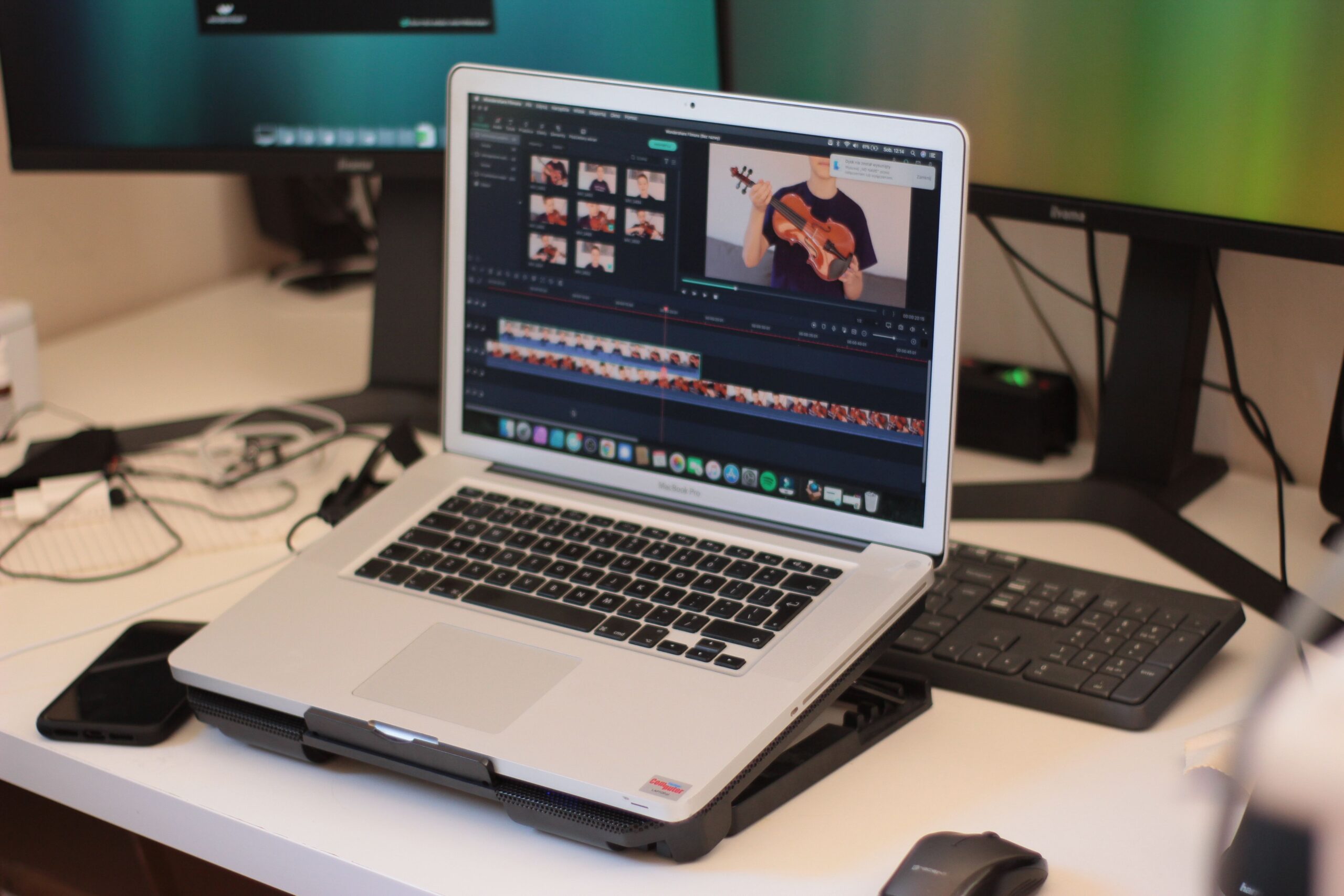
Context image: a creator video-editing workspace. Photo: Adam Sondel / Pexels. Pexels lists the image as free to use. This is not a YouTube product screenshot.
The short version
Made on YouTube 2026 is not a single product launch. It is a set of announced rollouts across YouTube, Studio, Live, TV and YouTube Music. The most immediate change is Shorts Series, which YouTube says began rolling out on September 23 across web, mobile and TV. Custom Feeds are due for U.S. users this fall. Live showdowns are planned for 2027 and YouTube says it will pilot Live auto-dubbing in early 2027.
The bigger pattern is more important than any one feature: YouTube is moving more of the creator workflow into its own products—idea discovery, editing, optimization, global distribution, identity protection and monetization. That can reduce tool-switching, but creators should treat “announced” and “available to my channel” as different states.
Editorial status: This article uses first-party YouTube announcements and current YouTube Help documentation. There is no rumor-based feature list here; the main uncertainty is rollout timing and eligibility.
Made on YouTube 2026 at a glance
YouTube held Made on YouTube 2026 in New York City on September 23. Rather than centering the event on one flagship product, the company spread updates across the viewer homepage, Shorts, YouTube Studio, Live, TV, Shopping and Music. The table below separates confirmed announcements from their actual availability.
| Feature | What it does | Availability stated by YouTube |
|---|---|---|
| Custom Feeds | Creates saved homepage feeds from conversational prompts for a mood, routine or interest. | U.S. users on web, mobile and TV this fall. |
| Conversational editing | Uses Gemini Omni inside Shorts and YouTube Create to trim speech, sync music, add hooks and reorder frames from prompts. | Announced; the event hub does not give one universal global date. |
| Video A/B testing | Lets creators compare up to three different cuts of a video. | Announced as a coming Studio capability. |
| Shorts Series | Organizes Shorts into seasons and episodes with sequential playback and custom thumbnails. | Rolling out from September 23 across web, mobile and TV. |
| Live showdowns | Turns co-hosted streams into head-to-head fan-funding competitions. | Coming in 2027. |
| Live auto-dubbing | Translates a live creator’s speech in real time for viewers in other languages. | Pilot starting in early 2027. |
| Likeness detection expansion | Adds mobile management and expands protection beyond facial matches toward speaking-voice detection. | Face matching is experimental now; mobile/voice expansion announced for the 2026 roadmap. |
| Creator Partnerships + Shopping | Adds pitch assistance, brand access, paid boosting and broader affiliate product tagging. | Creator Partnerships is in 20 countries; affiliate program targeted for 35 countries by year-end. |
| Ask Music + Podcast Lineup | Conversational music discovery plus a weekly AI-audio guide to recommended podcasts. | Coming soon to YouTube Music and Premium subscribers worldwide. |
Source note: Availability is based on YouTube’s September 23 announcements and current help pages. Rollouts can vary by country, account and eligibility.
The biggest shift: YouTube is putting AI inside the editing workflow
The headline creator feature is not “AI makes the whole video for you.” YouTube describes a more constrained assistant inside Shorts and the YouTube Create app. The new conversational editor uses Gemini Omni so a creator can ask it to remove pauses, change pacing, reorder frames, sync music or add text hooks, then continue editing manually.
That distinction matters. The tool is aimed at the mechanical first pass—the part of editing that often involves repetitive trimming and rearranging—rather than replacing the creator’s judgment about story, tone or accuracy. YouTube Studio is also expanding assistance earlier in the process with research and feedback tools, and later in the workflow with thumbnail generation and video A/B testing for up to three cuts.
For creators, the practical opportunity is faster iteration. A/B testing different edits could move experimentation beyond titles and thumbnails and into pacing itself. But a “winning” cut should not be treated as proof that every future video needs the same structure; retention depends on topic, audience and format.
Digital Pulse Brief has been tracking the same broader shift toward AI being embedded directly into everyday software rather than offered only as a separate chatbot. Our guide to Gemini for Windows looks at that pattern on the desktop.
Context image: mobile-first creator production. Photo: PNW Production / Pexels. Free to use under the Pexels license.
What this means: AI assistance is moving from “generate something” toward “help me finish the work I already started.” For serious creators, the value will depend on how much control remains after the automated first pass.
Custom Feeds give viewers more direct control over recommendations
Custom Feeds let viewers create dedicated homepage tabs for a specific interest, routine or mood using conversational prompts, then save multiple feeds for later. YouTube says the feature is coming to U.S. users on web, mobile and TV this fall.
For viewers, that is a meaningful change in how discovery can begin. Instead of relying only on the default homepage or a search query, a user can describe an intent and create a reusable recommendation surface around it. YouTube is also expanding Ask YouTube, its conversational discovery feature, including product-recommendation use cases.
For creators, the SEO implication is subtler than “optimize for Custom Feeds.” There is no special markup or guaranteed ranking trick. The useful response is still to make topics, titles and descriptions clear enough that YouTube can understand what a video is about and match it to a viewer’s stated interest. Conversational discovery raises the value of clear topical identity; it does not remove the importance of viewer satisfaction.
YouTube’s viewer announcement is the primary source for Custom Feeds and the Ask YouTube expansion.
Shorts Series turns episodic vertical video into a TV-friendly format
YouTube is making episodic Shorts easier to package. Shorts Series lets creators structure short-form videos into seasons and episodes, add custom thumbnails and enable sequential playback. YouTube says the rollout started on September 23 across web, mobile and TV.
The television part is easy to overlook. YouTube says more than half of its top 100 creators now have TV as their most-watched interface. It also reports that microdramas passed 6.5 billion views in the first half of 2026, with microdrama watch time up more than 50% year over year and TV views up more than 90%. Those figures are YouTube’s own measurements, not independent audience estimates.
The product direction is clear: a vertical episode no longer has to be treated as an isolated swipe in a feed. A serialized creator can build a viewing path that continues on a television, which makes short-form storytelling more compatible with living-room viewing.
Context image: multi-screen video viewing in a living room. Photo: Andrea Piacquadio / Pexels. Free to use under the Pexels license.
See the rollout details in YouTube’s TV and Shorts Series announcement.
YouTube Live gets competition, reaction formats and real-time translation
Made on YouTube 2026 also pushes Live beyond a conventional one-to-many broadcast. The new Live showdowns are designed for co-hosted streams in which viewer chats, gifts and Super Chats can move an on-screen score. YouTube says the format is coming in 2027.
The more consequential international feature may be Live auto-dubbing. YouTube says it will pilot real-time speech translation in early 2027 so viewers can listen to a creator in their preferred language while the stream is happening. That is separate from the automatic dubbing already available for eligible uploaded videos, where YouTube generates translated audio tracks after upload.
Current automatic dubbing is not perfect. YouTube’s Help documentation warns that generated dubs can contain errors involving pronunciation, accents, dialects, proper nouns and background noise. Creators can review eligible dubs before publication. That caveat will be even more important for real-time translation, where there is less opportunity to correct a mistake before a viewer hears it.
YouTube also announced a long-form expansion of Watch With, which lets creators react live alongside eligible videos. According to YouTube’s own August 2026 data, more than 600 million logged-in viewers watched live content, including archives, on an average day—useful context for why the company is investing in Live as a major surface rather than a niche tool.
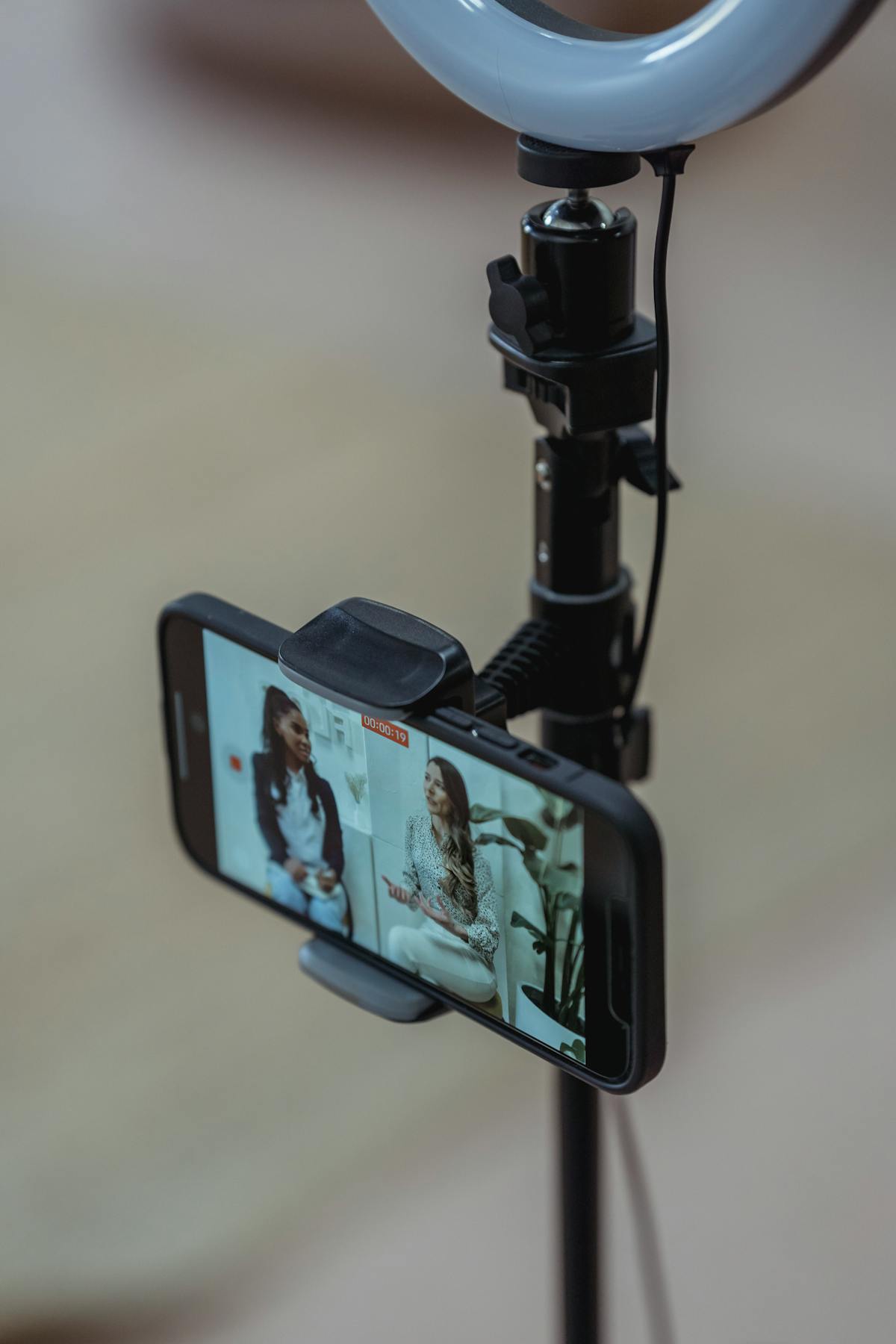
Context image: a smartphone prepared for live recording. Photo: George Milton / Pexels. Free to use under the Pexels license.
Primary sources: YouTube’s Live announcement and its automatic dubbing help page.
Likeness detection is expanding, but voice matching is not fully there yet
YouTube’s likeness detection tool is designed to help enrolled creators find videos in which their face may have been altered or generated by AI. At Made on YouTube, the company said likeness management is coming to mobile and that it will start integrating speaking-voice detection with facial detection.
The current Help page draws an important line: today, the experimental system is focused on facial matches, while YouTube says it is working to extend detection to audio in 2026. So creators should not assume that every voice clone is already being detected automatically.
Enrollment also involves sensitive identity data. Eligible creators must be over 18, be a channel Owner or Manager, provide a government-issued ID and record a brief face video. YouTube says the feature is not available in every country. It also says the setup data is not used to train Google’s generative AI models without the creator’s consent, and creators can separately opt in or out of allowing face and voice templates to improve likeness-detection models.
That makes this one of the few Made on YouTube features where the decision is not simply “turn it on if available.” Creators should read the current data-use terms, understand who on the channel can review matches and decide whether the protection benefit is worth the enrollment requirements.
Context image: a creator recording on camera. Photo: Anna Shvets / Pexels. Free to use under the Pexels license.
For eligibility, verification, retention and consent details, read YouTube’s current likeness detection documentation.
Creator Partnerships and Shopping move more of the business workflow into Studio
YouTube’s creator-business updates are less visually flashy than the AI editing demos, but they may matter more to channels already earning money.
YouTube Creator Partnerships is now available in 20 countries. YouTube says Ask Studio will help creators draft tailored responses to brand briefs, build proactive pitches and improve their Media Kit. Once a partnership is posted, creators can share partner access with a one-click code so brands can see performance data and put paid media behind the content through Creator Partnerships boost.
YouTube is also continuing to test dynamic brand segments that can be inserted into as many as 20 long-form videos at once, targeted by region and paired with a direct call-to-action shelf. That is a significant business shift: older videos could become reusable sponsorship inventory rather than having one permanently burned-in sponsor slot.
On Shopping, YouTube says more than 1.3 million creators are in its affiliate program and that gross merchandise value has grown 13-fold over two years. Those are internal YouTube figures. The company plans to expand the affiliate program to 35 countries by the end of 2026, extend Amazon product tagging from the U.S. to India and Brazil in the coming weeks, and localize product links for viewers across borders.
Creators still need to treat sponsored and affiliate content transparently. Better monetization tooling does not remove disclosure obligations or the need to keep recommendations credible.
Context image: creator-led online selling setup. Photo: Hanna Pad / Pexels. Free to use under the Pexels license.
Ask Music and Podcast Lineup extend conversational discovery beyond video
YouTube Music is getting two AI-driven discovery features. Ask Music is a conversational interface that works across podcasts and YouTube Music’s catalog of more than 300 million songs, including official releases, remixes, live performances, covers and DJ sets. Users can refine a queue conversationally or ask for more context around artists and music.
Podcast Lineup is a different kind of assistant: a personalized weekly audio guide that previews recommended shows and explains why they may fit the listener before jumping into the episodes. YouTube says both features are coming soon to YouTube Music and Premium subscribers worldwide.
The common theme with Custom Feeds is explicit intent. Instead of only inferring what someone wants from prior behavior, YouTube is adding more places where the user can state what they want in natural language and ask the product to reorganize discovery around that request.
Context image: modern podcast production setup. Photo: Jakub Zerdzicki / Pexels. Free to use under the Pexels license.
Source: YouTube’s Music announcement.
What creators should do now
Most of the announcements are staged rollouts, so the useful move is not to rebuild a channel strategy around features that may not be available yet. A better approach is to prepare the workflow around them:
- Check Studio before planning around a launch. Confirm that a feature is actually enabled on your account, country and device.
- Identify content that naturally fits a series. If you already publish multipart Shorts, map the sequence now so Shorts Series can improve continuity when it reaches your channel.
- Keep a baseline for retention. When video A/B testing becomes available, compare edits against existing retention patterns instead of optimizing only for the first few seconds.
- Set the correct original video language. YouTube says automatic dubbing quality and eligibility depend partly on the source language and speech conditions. If you serve a global audience, review generated dubs rather than assuming they are error-free.
- Review likeness terms before enrollment. Understand the ID/selfie requirements, channel roles, retention rules and optional model-improvement consent before opting in.
- Prepare commercial disclosures. If Creator Partnerships, Shopping or affiliate campaigns become a larger part of your business, make disclosure and approval steps part of the publishing checklist—not an afterthought.
Practical bottom line: The best near-term advantage is not “use every AI feature.” It is to remove repetitive production work while preserving editorial control, then use the new distribution and business tools only where they improve the viewer experience.
Confirmed announcement does not mean universal access
Made on YouTube is a roadmap event as well as a launch event. That creates an easy reporting trap: turning “YouTube announced this” into “everyone can use this now.” The current status is more mixed.
| Status | Examples | How to read it |
|---|---|---|
| Rolling out now | Shorts Series | YouTube says rollout started September 23, but account availability can still be gradual. |
| Dated future rollout | Custom Feeds this fall; Live auto-dubbing pilot early 2027; Live showdowns in 2027 | The feature is official, but the date is future-facing. |
| Announced, timing varies | Conversational editing, expanded A/B testing, mobile likeness management, Watch With long-form | Do not assume universal access until the control appears for your account. |
There are no third-party leaks in this guide. If YouTube materially changes rollout dates or eligibility, Digital Pulse Brief should update the relevant row and the article’s updated timestamp rather than simply changing the date for freshness.
FAQ
When will Custom Feeds be available?
YouTube says Custom Feeds will reach users in the United States on web, mobile and TV this fall. It has not announced a universal worldwide launch date in the Made on YouTube event hub.
Is YouTube’s conversational video editor available to every creator now?
No. YouTube announced Gemini Omni-powered conversational editing for Shorts and YouTube Create, but the event materials do not state that every creator worldwide has the feature immediately. Check the creation tools on your own account before relying on it.
Is Live auto-dubbing the same as the automatic dubbing already on uploaded videos?
No. Eligible uploaded videos can already receive automatically generated translated audio tracks. Live auto-dubbing is a new real-time translation feature that YouTube says it will begin piloting in early 2027.
Does likeness detection already detect cloned voices?
Not fully. YouTube’s current help page says likeness detection presently aims to find facial matches for enrolled creators and that audio detection is an expansion target. Made on YouTube 2026 announced tighter integration of speaking-voice and facial detection.
Is Shorts Series available now?
YouTube says Shorts Series began rolling out on September 23, 2026 across web, mobile and TV. Because YouTube rollouts can be gradual, individual creator accounts may receive access at different times.
Sources and image credits
Primary product sources
- Made on YouTube 2026 official hub
- YouTube: What’s new for viewers and creators
- YouTube: New creator and Studio tools
- YouTube: Custom Feeds and viewer discovery
- YouTube: Live updates, showdowns and Live auto-dubbing
- YouTube: Shorts Series and TV features
- YouTube: Creator Partnerships and Shopping
- YouTube: Ask Music and Podcast Lineup
- YouTube Help: Likeness detection
- YouTube Help: Automatic dubbing
Image license record
All non-product context photography in this article comes from Pexels pages that state the images are free to use. Photographers/creators credited in the captions: Adam Sondel, PNW Production, Andrea Piacquadio, George Milton, Anna Shvets, Hanna Pad and Jakub Zerdzicki. The visuals are editorial context and are not presented as screenshots or documentary images of Made on YouTube 2026.
Keep following the platform shifts that matter
Digital Pulse Brief covers AI, software and business technology with a source-first approach. Explore more Software & SaaS coverage for practical explainers as these YouTube features move from announcement to real-world availability.
DIGITAL PULSE BRIEF NEWSLETTER
Get clear AI, technology and business insights in your inbox
Breaking developments, practical explainers, reviews and useful tech intelligence — without the noise.
WHAT TO READ NEXT
New Microsoft Copilot 2026: Home, Code and Autopilot Turn Copilot Into a Work Operating Layer  SaaS vs On-Premise Software: Cost, Security, Control and the Hybrid Reality in 2026
  Gemini for Windows: Download, Requirements, Alt+Space, Features and What It Changes for PC AI
MORE FROM DIGITAL PULSE BRIEF