Apsara Conference 2026 • September 23, 2026
Alibaba Zhenwu V900: 216GB AI Chip, Qwen 5 Roadmap and the 20GW Cloud Push
Alibaba is tying a new in-house AI accelerator to a 5–10-trillion-parameter Qwen roadmap, supernode-scale infrastructure and a 20GW-plus cloud expansion target. Here is what is confirmed, what is still a roadmap, and what customers should watch next.
By Digital Pulse Brief • News analysis • Updated September 23, 2026
The short version
Alibaba’s Zhenwu V900 is not a retail GPU and it is not commercially available yet. Alibaba says the accelerator is planned for mass production and commercial release in the first quarter of 2027. The company lists 216GB of memory, 1,200GB/s inter-chip bandwidth and support for FP8 and FP4, while claiming roughly three times the performance of its previous Zhenwu M890.
The bigger story is the stack around it: Qwen 4 is in training; later Qwen 4.5/Qwen 5 models are projected at 5–10 trillion parameters; Alibaba Cloud wants more than 20GW of global data-center capacity by 2032; and the company is expanding regions across Europe, the Middle East and Asia. Those model sizes and future infrastructure targets are roadmaps, not delivered products today.
What Alibaba actually announced at Apsara 2026
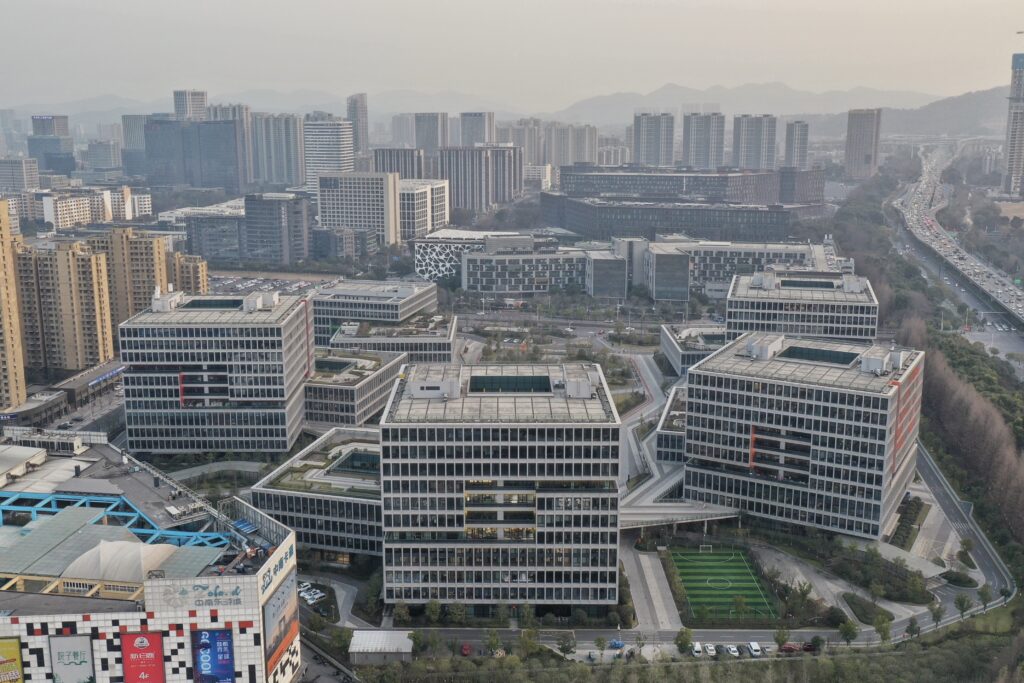
At Apsara Conference 2026 in Hangzhou, Alibaba presented a roadmap that stretches from silicon to models, networks, storage and agent infrastructure. The official Alibaba Cloud announcement says the company is preparing its Zhenwu V900 accelerator for commercial release while training Qwen 4 and planning even larger successor models.
The distinction matters. The V900 is a future commercial product, not something developers can order today. Qwen 4 is described as being in training, while Qwen 4.5 and Qwen 5 are roadmap models. Alibaba’s own performance comparisons should also be treated as vendor claims until independent benchmarks and production hardware become available.
Zhenwu V900 specs: what is confirmed so far
| Item | Alibaba’s stated detail | Status |
|---|---|---|
| Product | Zhenwu V900 AI accelerator | Confirmed announcement |
| Memory | 216GB | Vendor specification |
| Inter-chip bandwidth | 1,200GB/s | Vendor specification |
| Low-precision formats | FP8 and FP4 | Vendor specification |
| Relative performance | About 3× Zhenwu M890 | Alibaba claim; independent testing pending |
| Commercial timing | Q1 2027 mass production/commercial release | Roadmap |
The 216GB memory figure is notable because model training and long-context inference are often constrained by how much model state and key-value cache can remain close to the accelerator. But memory capacity alone does not tell us real throughput, latency or energy efficiency. Alibaba has not publicly provided, in the announcement, the V900’s process node, TDP, price, independent benchmark results or a like-for-like comparison against current NVIDIA, AMD or other accelerators.
Why the V900 matters: Alibaba is building a stack, not just a chip
Alibaba’s strategy is easiest to understand as vertical integration. The company wants its cloud to control more of the critical layers used to train and run large AI systems: accelerator silicon, CPUs, networking, storage, model software and agent services.
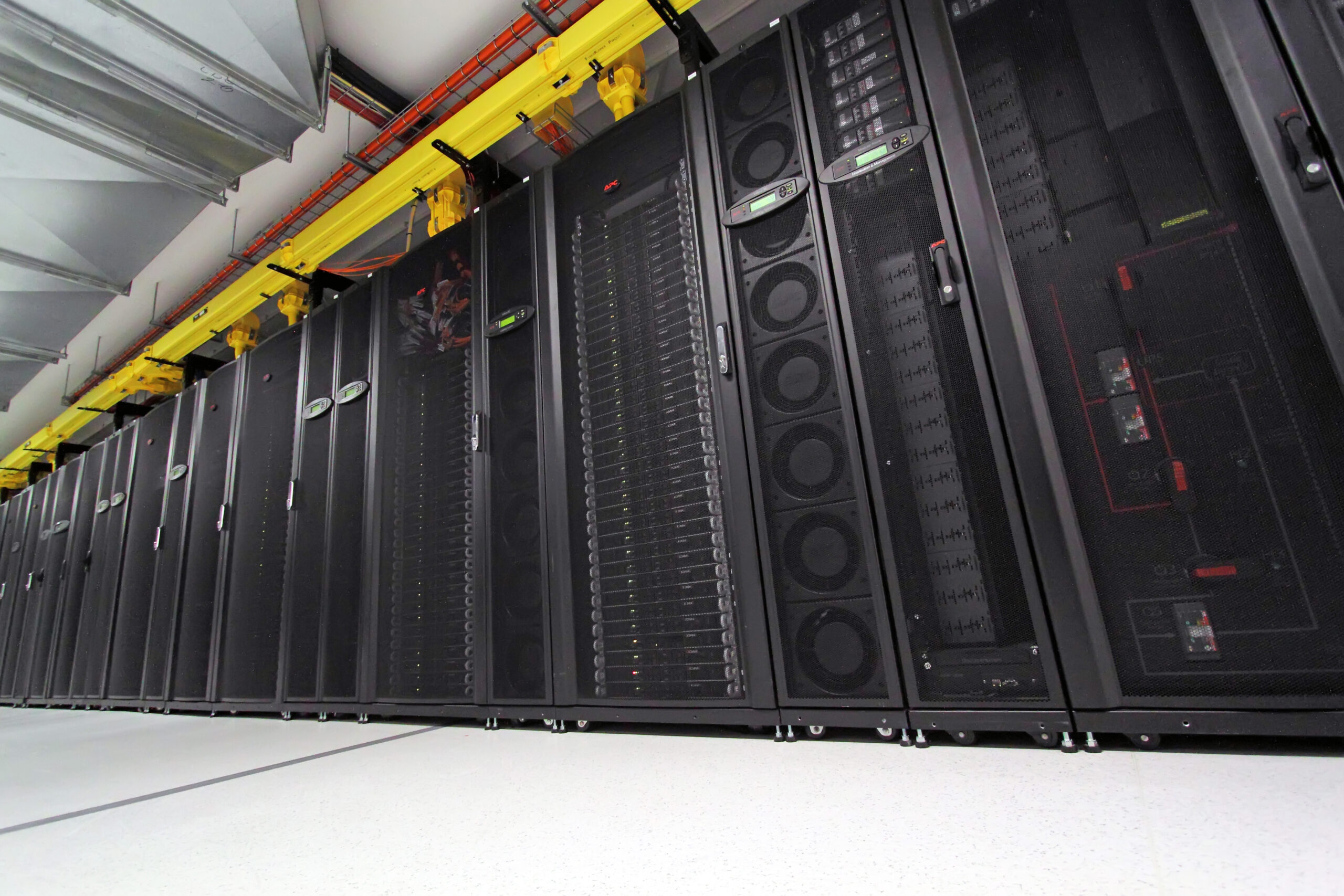
Alibaba says Zhenwu chips already serve more than 650 customers. It also described supernode-scale clusters that can extend to as many as 500,000 accelerator cards, plus a 2027 roadmap for Yitian 720 and Yitian 730 server CPUs. Its HPN 8.0 Pro network is described as supporting 100-petabit aggregate bandwidth and 130,000 800G ports, while CPFS storage is claimed to scale to 100TB/s and 100 million IOPS. These are Alibaba-provided figures, not Digital Pulse Brief test results.
That full-stack approach is strategically important because large-model economics are increasingly shaped by the system around the GPU: memory, fabric, storage, scheduling, utilization and data-center power. Our recent explainer on grid-aware AI data centers looks at the power-management side of the same scaling problem.
Qwen 4 is training; Qwen 5's 5–10T parameters are still a roadmap
Alibaba says Qwen 4 is currently in training. Beyond that, the company says Qwen 4.5 and Qwen 5 could scale into the 5–10-trillion-parameter range. That is a projected model-size range, not a released specification.
For context, Alibaba’s Qwen3.8-Max announcement describes the current flagship as a 2.4-trillion-parameter sparse mixture-of-experts model that activates 95 billion parameters for a given token and supports a context window of up to one million tokens. A future 5–10T model therefore should not be read as simply “two to four times smarter.” Parameter count does not translate linearly into capability, and sparse architectures make total parameter count especially easy to misinterpret.
The more useful signal is that Alibaba is designing chips, cluster fabric and storage with future Qwen training runs in mind. If the model roadmap lands, the V900 and its successors would be part of a vertically coordinated platform rather than a standalone component.
Confirmed, roadmap, and vendor-claim: the cleanest way to read this announcement
| Bucket | What belongs in it |
|---|---|
| Confirmed now | Alibaba announced V900 specifications; Qwen 4 is in training; global cloud expansion was announced; Apsara Conference 2026 is taking place Sept. 22–24 in Hangzhou. |
| Roadmap | V900 commercial release in Q1 2027; Qwen 4.5/Qwen 5 at 5–10T parameters; more than 20GW of global data-center capacity by 2032. |
| Vendor-performance claims | V900 at roughly 3× M890 performance; claimed networking/storage efficiency gains; claimed agent-context token reductions. |
| Still unknown | Independent V900 benchmarks, pricing, power draw, manufacturing process/foundry details, exact global availability and firm release dates for Qwen 4/4.5/5. |
The 20GW target changes the scale of the story
Alibaba CEO Eddie Wu said Alibaba Cloud is targeting more than 20 gigawatts of global data-center capacity by 2032. Capacity measured in gigawatts is a useful reminder that frontier AI is now an infrastructure problem as much as a model problem.
A 20GW target does not mean Alibaba will continuously draw 20GW of electricity, and it does not reveal how much will be dedicated to AI versus other cloud workloads. It is a capacity objective. The practical question for customers is whether new facilities, networking and in-house compute can translate into lower queue times, predictable capacity and better price/performance.
The industry-wide pressure is already visible in memory and component markets. Digital Pulse Brief’s RAMageddon 2026 analysis explains how AI demand is colliding with consumer-device supply chains.
Alibaba Cloud is expanding internationally at the same time
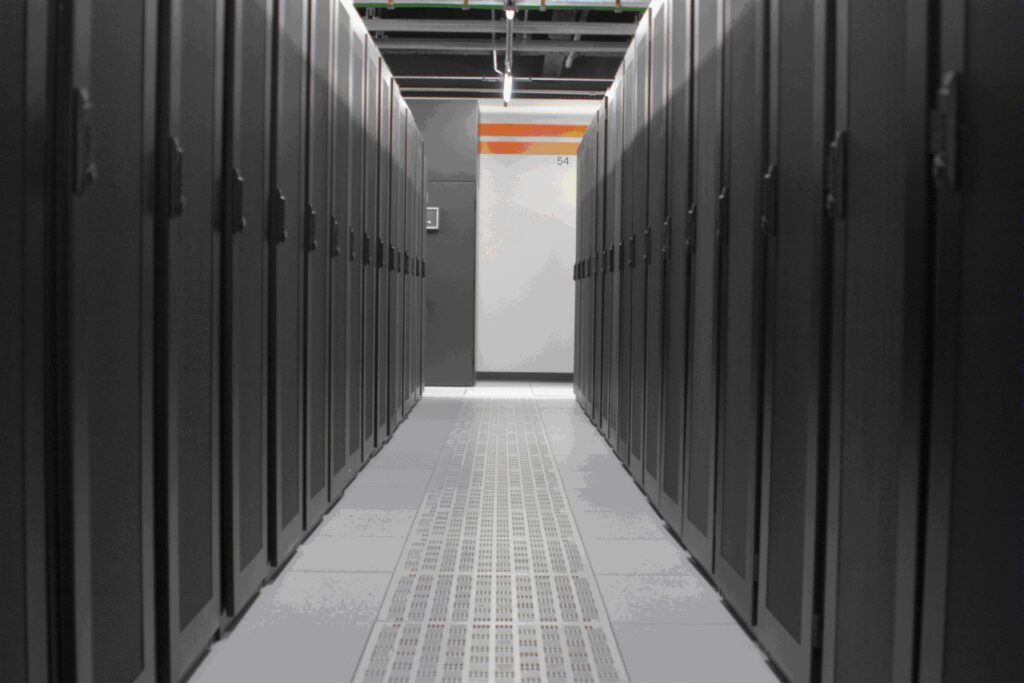
On September 23, Alibaba Cloud separately announced a new wave of infrastructure expansion. According to the company’s global infrastructure update, it plans its first cloud regions in Türkiye, Finland and the Netherlands over the next 12 months, while expanding data-center footprints in Malaysia, Germany, the UAE, France and Hong Kong.
Alibaba says its current network spans 107 availability zones across 31 regions. That matters to the V900/Qwen story because enterprise adoption depends on more than raw model capability. Data residency, latency, capacity, service availability, support and regulatory requirements often determine where a workload can actually run.
What 216GB and 1,200GB/s do — and do not — tell us
The V900’s 216GB memory capacity and 1,200GB/s inter-chip bandwidth are meaningful architectural clues, but they are not a benchmark. More accelerator memory can allow larger model states, key-value caches and batches to stay close to compute, reducing the need to spill or shard some workloads across additional devices. Faster inter-chip links can also reduce communication bottlenecks when a training or inference job is spread across many accelerators.
What those numbers cannot reveal is equally important. Real performance depends on memory bandwidth inside the package, interconnect topology, collective-communication efficiency, compiler quality, kernel maturity, scheduling, power limits and how well a specific model maps onto the hardware. The same applies to FP8 and FP4 support: lower-precision formats can raise effective throughput and reduce memory pressure, but model quality, calibration and workload compatibility determine whether those gains are usable in production.
That is why Digital Pulse Brief is not converting Alibaba’s “3× M890” claim into a cross-vendor ranking. A credible comparison will require reproducible workloads on production V900 systems, with software versions, batch sizes, power envelopes and model configurations disclosed.
The real test is cloud economics, not peak silicon
For enterprise customers, the V900 will ultimately be judged as part of a service rather than as a specification sheet. Useful measures include time to first token, sustained tokens per second, p95/p99 latency, job completion time, availability, effective utilization and total cost for a defined workload. For training, scale-out efficiency matters: doubling the number of accelerators should not be assumed to double useful work once communication and storage overhead are included.
Alibaba’s full-stack strategy gives it more levers to optimize those outcomes because it can tune the accelerator, network, storage, model software and cloud scheduler together. The trade-off is ecosystem maturity. Customers will need evidence around framework support, debugging tools, observability, model portability and the operational effort required to move existing workloads onto the stack.
Investor reaction is not technical validation, either. Reuters reported that Alibaba’s Hong Kong-listed shares rose 5.1% on September 22 after the announcements. That shows the market viewed the strategy as material; it does not tell us how the V900 will perform under independent testing.
What developers and enterprise buyers should do now
- Do not plan around 2027 silicon as if it were generally available today. Treat V900 as a roadmap input until pricing, instance types, regions and independent performance data arrive.
- Separate total parameters from active parameters. Future Qwen model-size headlines will be less useful than architecture, active-parameter count, inference cost, context behavior and task performance.
- Watch cloud-region availability. A powerful accelerator is irrelevant to many regulated workloads if the service is not offered in the required geography.
- Benchmark complete workloads, not chip claims. For production AI, measure latency, tokens per second, memory behavior, batch scaling, reliability and total cost.
- Track interoperability. The most consequential question may be how easily existing frameworks, models and orchestration layers move onto Alibaba’s in-house stack.
What remains unanswered about the Zhenwu V900
Alibaba’s announcement is unusually broad, but several details needed for a serious accelerator comparison are still missing. We do not yet have an independent benchmark suite, street or cloud-instance pricing, power consumption, manufacturing node, package details, a complete software-compatibility matrix or region-by-region launch plan.
Those omissions do not make the V900 insignificant; they define the next verification points. The strongest evidence will come when production hardware reaches customers, cloud instances are priced, and third parties can test model training and inference under reproducible conditions.
Bottom line
The Zhenwu V900 matters less as a single chip launch than as evidence of Alibaba’s full-stack direction. The company is pairing its own accelerator roadmap with larger Qwen models, server CPUs, high-scale networking, storage, agent infrastructure and an ambitious data-center buildout.
For readers tracking the AI infrastructure race, the key distinction is timing: the V900 specifications are announced, the commercial launch is targeted for Q1 2027, Qwen 4 is in training, the 5–10T Qwen models are roadmap items, and the 20GW figure is a 2032 capacity target. Treat the rest—especially performance comparisons—as claims to verify when independent data becomes available.
Sources
- Alibaba Cloud — full-stack AI roadmap, Zhenwu V900 and Qwen roadmap (Sept. 22, 2026)
- Alibaba Cloud — global infrastructure and AI expansion (Sept. 23, 2026)
- Alibaba Cloud — Qwen3.8-Max announcement (Aug. 3, 2026)
- Apsara Conference 2026 — official event page
- Reuters — Alibaba deepens AI push with new chip and bigger model (Sept. 22, 2026)
You may also like
AI Data Centers Are Becoming Grid-Aware • RAMageddon 2026: Why Tech Prices Are Rising • GPT-6 Sol vs GPT-6 Luna
Get the next AI infrastructure brief
Follow Digital Pulse Brief for source-first explainers on AI chips, models, cloud infrastructure and the technology business.
DIGITAL PULSE BRIEF NEWSLETTER
Get clear AI, technology and business insights in your inbox
Breaking developments, practical explainers, reviews and useful tech intelligence — without the noise.
WHAT TO READ NEXT
Google Project Suncatcher: First TPU Satellite Test Launches October 1 — What It Will Actually Prove  Cloud Computing Explained: IaaS vs PaaS vs SaaS vs Serverless in 2026
  AI Data Centers Are Becoming Grid-Aware: How Google, NVIDIA and Emerald AI Plan to Flex Power Demand
MORE FROM DIGITAL PULSE BRIEF