Home › AI & Automation › Gemini 3.8 Live
Gemini 3.8 Live Explained: Pricing, Voice Agents, Extended Thinking and API Limits
Google’s new real-time audio models push voice agents beyond simple speech in, speech out. Here is what Gemini 3.8 Live actually adds, what Extended Thinking changes, what the API costs, and the limits developers should design around.
Digital Pulse Brief Editorial Desk • Published September 18, 2026 • Approx. 12 min read
Quick answer: what is Gemini 3.8 Live?
Gemini 3.8 Live is Google’s generally available low-latency, audio-to-audio model for real-time voice agents and live dialogue. Released on September 15, 2026, it accepts text, images, audio and video, and returns text or native audio. Google positions the standard model for fast conversational experiences, while Gemini 3.8 Live Extended Thinking is designed for harder multi-step requests that need background reasoning and asynchronous tool calls while the conversation continues.
The practical shift is not simply “better voice.” The new Live stack lets an agent listen continuously, keep the conversation moving while tools run, update session context during an interaction, and—on the Extended Thinking model—reason in the background without forcing a long silent pause.
Primary keyword: Gemini 3.8 Live. Search intent: informational / developer evaluation.
At a glance
- Stable model ID:
gemini-3.8-live - Extended model ID:
gemini-3.8-live-extended-thinking - Inputs: text, images, audio and video
- Outputs: text and native audio
- Context: up to 131,072 input tokens; 65,536 output tokens
- Function calling: supported; asynchronous behavior is central to the new Live workflow
On this page
- What Google launched
- Live vs Extended Thinking
- What changed in the API
- Pricing and cost mechanics
- Best-fit voice-agent use cases
- Session limits and architecture
- Safety and operational risks
- How it relates to GPT-Live-1
- FAQ and sources
What Google launched on September 15, 2026
Google announced two related models: Gemini 3.8 Live and Gemini 3.8 Live Extended Thinking. The company describes the standard model as the default choice for most low-latency voice-agent experiences, with conversational intelligence, visual grounding, interleaved reasoning and asynchronous function calling. The Extended Thinking variant is aimed at complex workflows where a voice agent must keep talking naturally while planning, calling tools or waiting for external systems.
Both models are based on Gemini 3 Pro, according to Google DeepMind’s model card. They are natively multimodal: a live session can consume audio alongside text, images or video. That matters for scenarios such as guided troubleshooting, onboarding, field support and visual customer service, where the assistant needs to interpret what a person says and what a camera sees at the same time.
Availability is broad but not identical across the two variants. Google’s launch materials say Gemini 3.8 Live is rolling out through the Gemini API, Google AI Studio and consumer experiences including Search Live, while enterprise distribution also extends into Google’s business platforms. The Extended Thinking model is the higher-reasoning option and is exposed where Google supports that live reasoning workflow.
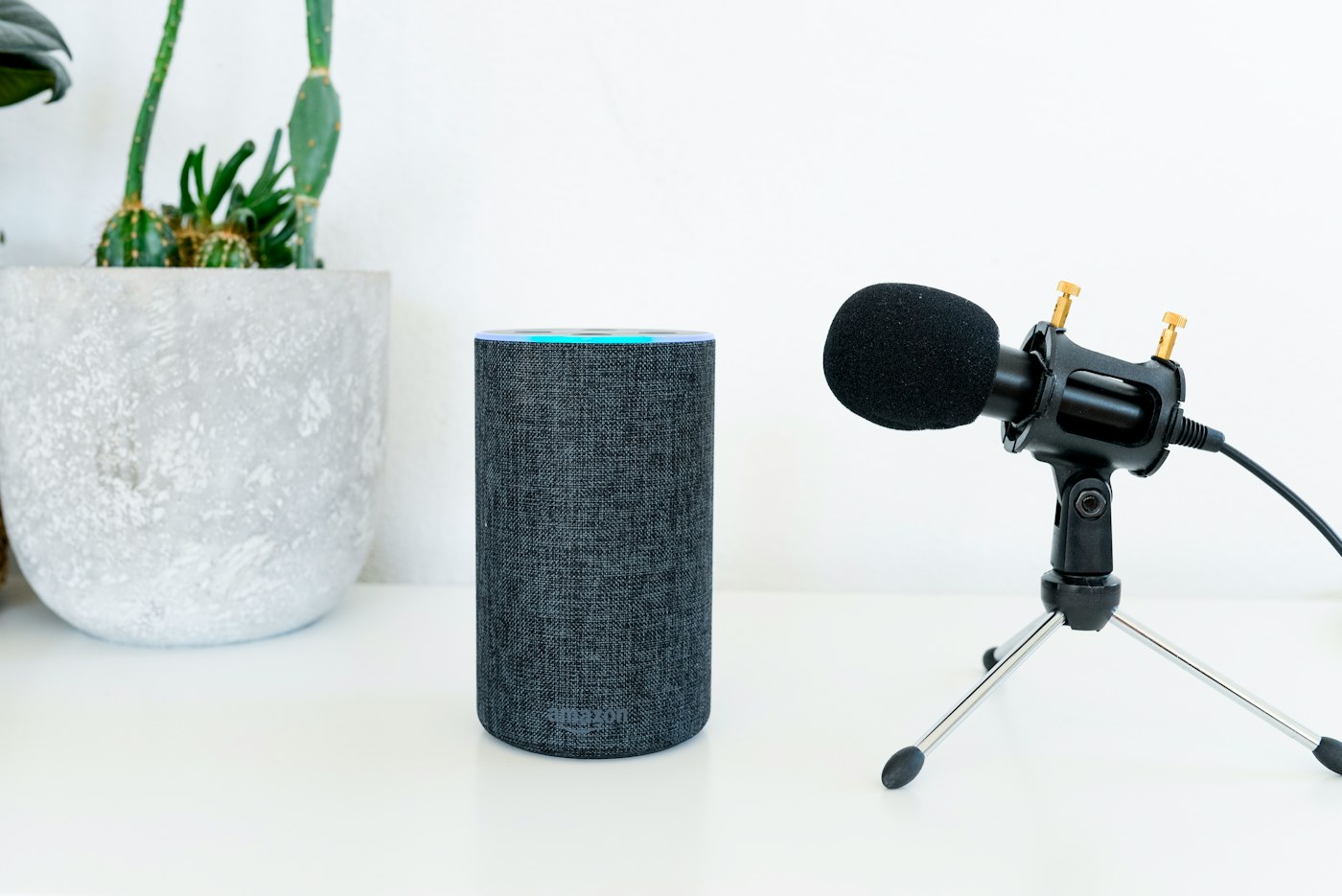
Gemini 3.8 Live vs Gemini 3.8 Live Extended Thinking
The two models share the same real-time conversational foundation, but they optimize for different interaction patterns. The standard model is the better fit when responsiveness is the priority: voice menus, live assistants, conversational search, helpdesk triage and other flows where a fast response matters more than deeper planning.
Extended Thinking is for requests where the agent must solve a problem rather than merely answer. Google’s Live API documentation describes a pattern in which the model can issue spoken progress cues while it performs background reasoning or asynchronous tool calls. The server exposes interaction status so an application can tell whether the model is still processing a larger task or has returned to an idle state.
| Area | Gemini 3.8 Live | Extended Thinking |
|---|---|---|
| Best fit | Fast natural dialogue | Complex multi-step voice tasks |
| Thinking control | Interleaved reasoning; no thinking_level setting | Supports low, medium and high thinking levels |
| Tool behavior | Function calling supported | Asynchronous function calling for background work |
| Typical experience | Immediate back-and-forth | Conversation continues while harder work runs |

What changed in the Live API
For developers moving from the earlier gemini-3.1-flash-live-preview, the migration is more than a model-string swap. Google’s current model documentation highlights several behavioral changes that affect application architecture.
- Asynchronous function calling is the default. Tools can run without freezing the conversation, although blocking behavior remains available for compatibility.
- Client content can be updated across the session lifecycle. Applications can send additional user or model context while the session is active.
- Proactive audio is permanently enabled. Developers cannot turn it off on Gemini 3.8 Live, which has implications for listening behavior and cost.
- Video frames are included in turn coverage by default. Google recommends sending frames only when needed to control context size and cost.
- Native audio is the response modality. If an application needs a readable transcript, output audio transcription must be enabled.
Under the hood, the Live API is a persistent bidirectional session over WebSockets. Google’s GenAI SDK abstracts most of that transport, but applications still need to handle connection resets, session resumption, audio formats and cost-aware context management.
Gemini 3.8 Live pricing: what voice sessions cost
Google lists both Gemini 3.8 Live variants in the same Live pricing section. As of September 18, 2026, the paid Standard tier lists text input at $0.75 per 1 million tokens, audio input at $3.00 per 1 million tokens or about $0.005 per minute, and image/video input at $1.00 per 1 million tokens or about $0.002 per minute. Output is listed at $4.50 per 1 million text tokens and $12.00 per 1 million audio tokens or about $0.018 per minute.
| Modality | Paid Standard rate |
|---|---|
| Text input | $0.75 / 1M tokens |
| Audio input | $3.00 / 1M tokens or ~$0.005/min |
| Image/video input | $1.00 / 1M tokens or ~$0.002/min |
| Text output | $4.50 / 1M tokens |
| Audio output | $12.00 / 1M tokens or ~$0.018/min |
Two details are easy to miss. First, transcription can add text-token charges when input or output transcription is enabled. Second, Google says proactive audio is permanently enabled on Gemini 3.8, so input costs continue while the API is listening. Long-lived voice agents therefore need explicit context and session-cost controls rather than assuming “silence is free.”
Pricing note: API prices change. Treat these as verified on September 18, 2026 and re-check Google’s official pricing page before estimating production costs.
Where Gemini 3.8 Live fits best
The most compelling use cases are ones where latency, natural speech and tool access matter at the same time. A conventional chatbot can wait several seconds and still feel acceptable; a voice interaction becomes awkward much faster.
Customer service and contact centers
A voice agent can identify intent, speak naturally, call account or CRM tools and continue the conversation while data is retrieved. Extended Thinking is especially relevant when the request spans several systems, such as checking an order, confirming policy rules and proposing the next action.
Guided troubleshooting
Because the model can accept video or image input alongside audio, an application can let a user show a device, error light or setup screen while describing the problem. That creates a different interaction model from a text-only support bot.
Employee onboarding and live assistance
Google’s launch examples emphasize real-time guidance. In an enterprise context, the useful part is not a generic spoken FAQ; it is a voice layer connected to tools, internal workflows and visual context, with strict permissions around what the agent can actually do.
Hands-busy interfaces
Field technicians, drivers, warehouse workers and accessibility-focused experiences can benefit from a conversational UI that does not demand constant typing. The business case depends on reliability and integration quality more than novelty.

Developer limits that matter in production
Google’s model page advertises a large 131,072-token input window and 65,536-token output limit, but real-time sessions have operational constraints that developers need to handle separately.
Google’s session-management documentation states that, without context-window compression, audio-only sessions are limited to 15 minutes and audio-video sessions to 2 minutes. A WebSocket connection itself is limited to roughly 10 minutes. Session resumption can carry one logical session across multiple connections, and resumption tokens remain valid for a limited period.
Context-window compression is therefore not just an optimization for long conversations; it is part of the architecture. Developers can configure compression thresholds and sliding windows so old context is summarized or discarded before token history grows without bound.
| Constraint | Current documented behavior |
|---|---|
| Input context | Up to 131,072 tokens |
| Output | Up to 65,536 tokens |
| Audio-only session without compression | 15 minutes |
| Audio-video session without compression | 2 minutes |
| WebSocket connection | Around 10 minutes; session resumption supported |

Safety, privacy and operational risks
Google DeepMind’s model card explicitly notes that Gemini 3.8 Live can still show general foundation-model limitations, including hallucinations, and may occasionally experience slowness or timeouts. That is important because spoken interfaces can make an answer feel more confident and immediate than the same text on a screen.
For production systems, the biggest risks are often architectural: excessive tool permissions, weak confirmation steps, sensitive data entering transcripts, or an agent taking irreversible actions from an ambiguous spoken request. Voice authentication is also a separate problem; a model understanding a caller does not prove the caller is authorized.
Google says generated audio is watermarked with SynthID. That helps provenance, but it does not replace application-level controls such as audit logs, least-privilege tool access, explicit confirmation for high-impact actions and clear disclosure that the user is speaking with an AI system.
Digital Pulse Brief’s practical recommendation is to treat the model as one layer in a voice-agent system, not as the security boundary. The safer architecture keeps identity, authorization, business rules and irreversible actions outside the model itself.
How Gemini 3.8 Live relates to GPT-Live-1
The competitive context matters. OpenAI’s GPT-Live-1 API also targets real-time spoken applications, so developers now have multiple frontier voice stacks rather than one obvious default. The useful comparison is not a simplistic “winner.” It is how each platform handles latency, multimodality, tool calling, session architecture, pricing, safety controls and the surrounding developer ecosystem.
Gemini 3.8 Live’s differentiator in Google’s documentation is the combination of native multimodal live input, default asynchronous tool workflows and a separate Extended Thinking model that can maintain conversational continuity during harder background reasoning. Teams already invested in Google AI Studio, Gemini API or Vertex AI may value that integration path.
For a broader look at agent safety, see Digital Pulse Brief’s explainer on OpenAI’s model misalignment framework and six documented AI-safety incidents. Voice agents add another interface layer, but the same core lesson applies: tool access and autonomy increase the importance of monitoring, permissions and recovery paths.
Who should use Gemini 3.8 Live now?
Use the standard Live model when the experience depends on fast, fluid dialogue and the task can be completed with light reasoning or straightforward tool calls. That includes conversational search, first-line support, voice navigation and real-time guidance.
Evaluate Extended Thinking when the agent needs to plan across multiple steps, wait on external tools, reconcile information or explain progress while work continues. That extra reasoning can improve task completion, but it also makes application state, tool permissions and cost controls more important.
Hold off on production automation if your workflow cannot tolerate hallucinations, timeouts or ambiguous voice commands and you have not built deterministic confirmation and fallback paths. A polished spoken response is not the same thing as a verified transaction.
Bottom line: Gemini 3.8 Live is most significant as an agent architecture, not a voice demo. The step forward is continuous multimodal conversation that can stay responsive while tools and, in the Extended Thinking variant, deeper reasoning happen in the background.
Frequently asked questions
Is Gemini 3.8 Live generally available?
Yes. Google’s Gemini API release notes list Gemini 3.8 Live and Gemini 3.8 Live Extended Thinking as generally available from September 15, 2026.
What is the Gemini 3.8 Live model ID?
The standard model ID is gemini-3.8-live. The higher-reasoning variant is gemini-3.8-live-extended-thinking.
Can Gemini 3.8 Live see video as well as hear audio?
Yes. Google lists text, images, audio and video as supported inputs. The Live API can ingest video frames while the session runs, although sending unnecessary frames increases context and cost.
Does Gemini 3.8 Live support function calling?
Yes. Function calling is supported, and asynchronous behavior is a central part of Gemini 3.8 Live. Extended Thinking uses asynchronous tool workflows for background reasoning during voice interactions.
Is the model safe enough to act without confirmation?
No general-purpose model should be treated as a standalone authorization layer. Google’s model card still lists hallucinations and occasional timeouts among known limitations. High-impact actions should use deterministic permissions, confirmation steps and audit logs.
Sources and references
- Google: Introducing Gemini 3.8 Live and 3.8 Live Extended Thinking — September 15, 2026.
- Google AI for Developers: Gemini 3.8 Live model page.
- Google AI for Developers: Gemini 3.8 Live Extended Thinking.
- Google AI for Developers: Gemini API pricing.
- Google AI for Developers: Live API SDK guide.
- Google AI for Developers: Live API session management.
- Google AI for Developers: Live API best practices.
- Google DeepMind: Gemini 3.8 Audio model card.
You may also like
Digital Pulse Brief
AI, Technology & Business — Explained Clearly. Follow our latest explainers for practical context on fast-moving AI platforms, software and infrastructure.
AI, Technology & Business — Explained Clearly. Follow our latest explainers for practical context on fast-moving AI platforms, software and infrastructure.
DIGITAL PULSE BRIEF NEWSLETTER
Get clear AI, technology and business insights in your inbox
Breaking developments, practical explainers, reviews and useful tech intelligence — without the noise.
WHAT TO READ NEXT
New Microsoft Copilot 2026: Home, Code and Autopilot Turn Copilot Into a Work Operating Layer  Claude Opus 5.5 Explained: Pricing, Coding Gains, Safety Changes and Who Should Use It
  Gemini 3.8 Live Avatar Is Now GA: 97 Languages, Custom Avatars, SynthID and Enterprise Use
MORE FROM DIGITAL PULSE BRIEF