
PREMIUM TECH • APPLE
iPhone Duo Is Apple’s First Foldable iPhone: Price, Release Date, Specs and What Actually Matters
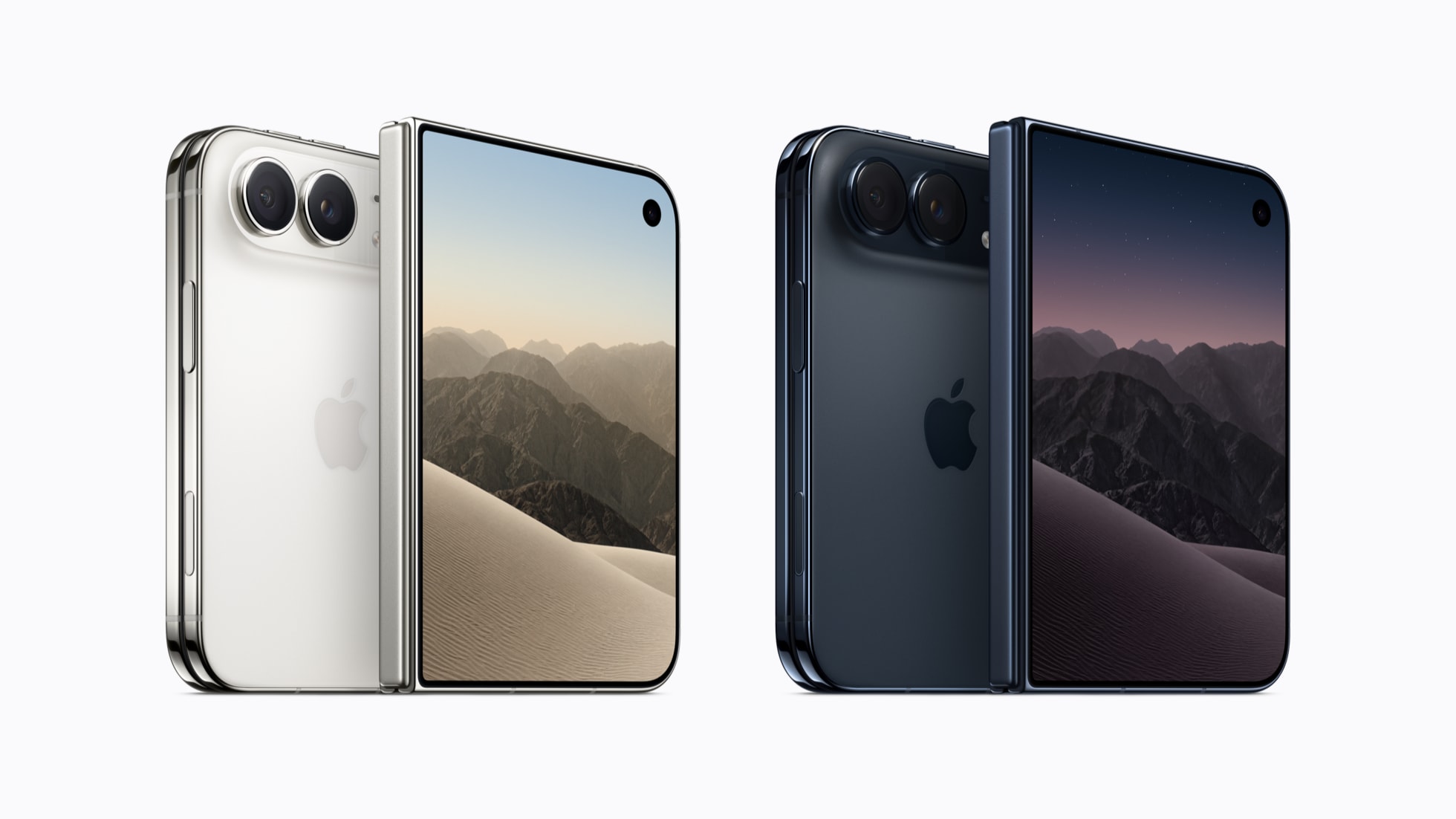
Apple has officially entered the foldable-phone era. The iPhone Duo starts at $1,999, opens into a 7.6-inch display, runs the A20 Pro chip and introduces a version of iOS 27 built around two-screen multitasking.
By Digital Pulse Brief Editorial Desk • Updated September 14, 2026 • 9 min read
iPhone Duo at a glance
- Price: from $1,999 in the U.S.
- Pre-orders: October 16, 2026; in stores: October 23.
- Displays: 5.4-inch outer and 7.6-inch inner Super Retina XDR, both with ProMotion, Always-On support and up to 3,000 nits peak outdoor brightness.
- Chip: A20 Pro with a custom vapor chamber and dual-battery design.
- Cameras: 48MP Fusion Main, 48MP Fusion Ultra Wide, 12MP Center Stage front camera and an under-display FaceTime camera.
- Software: iOS 27 with Split View, app pairs, upgraded StandBy and Siri AI.
- Storage: 256GB, 512GB, 1TB and 2TB.
- Colors: Star White and Night Sky.
Apple waited years to make a foldable. Now it is going all-in.
The iPhone Duo is not a concept or a rumor anymore. Apple unveiled it on September 9 as the company’s first foldable iPhone, putting Apple directly into a category that Samsung, Google, Huawei and others have spent years refining.
The most important part is not simply that the screen folds. Apple has redesigned the experience around the form factor. The phone works like a compact handset when closed, then opens into a 7.6-inch canvas for reading, video, gaming and side-by-side apps. That makes the Duo closer to an iPhone-and-small-iPad hybrid than a conventional large-screen phone.
For buyers, though, the central question is simple: does that extra flexibility justify a $1,999 starting price? Here is what matters before pre-orders begin.
iPhone Duo price and release date
Apple says the iPhone Duo starts at $1,999 in the United States. Storage choices are 256GB, 512GB, 1TB and 2TB. Pre-orders open at 5 a.m. PT on Friday, October 16, and the first units arrive on Friday, October 23.
The initial launch covers more than 70 countries and regions, including the U.S., UK, Canada, Australia, China, India, Japan, Germany, France, South Korea and the UAE. Another group of markets follows on October 30.
That price puts the Duo firmly in luxury-tech territory. It is not designed as a mass-market replacement for every iPhone. Apple is positioning it for buyers who value a bigger canvas, multitasking and a genuinely different hardware format enough to pay a premium.
Two displays are the whole point
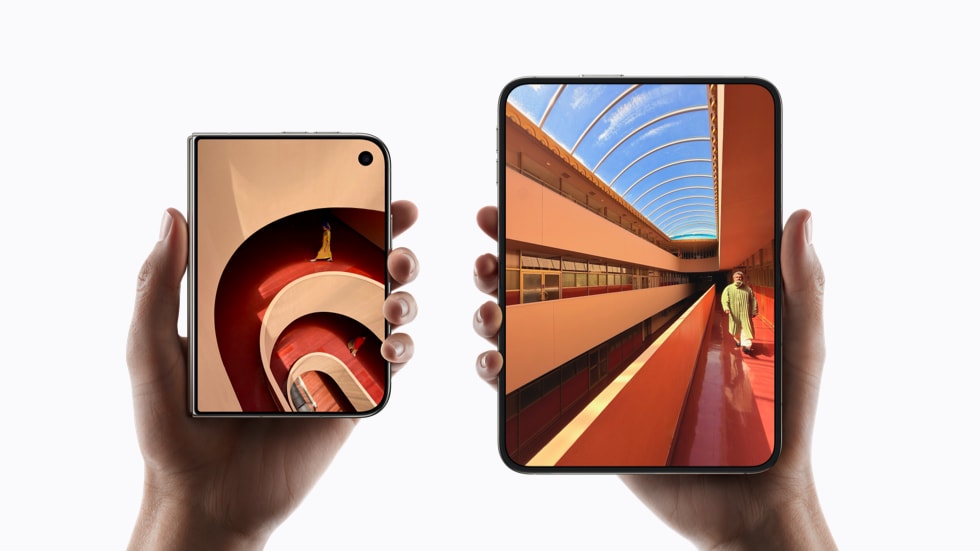
Closed, the Duo uses a 5.4-inch outer Super Retina XDR display. Apple says it provides about 90 percent of the screen area of an iPhone 18 Pro, but in a compact, passport-like body.
Open it and the inner 7.6-inch Super Retina XDR display becomes the largest screen Apple has shipped on an iPhone. Apple says it is 50 percent larger than the iPhone 18 Pro Max display. Both screens use the same aspect ratio, which helps apps and content transition more naturally as the device opens and closes.
The inner panel uses a nano-texture finish designed to reduce glare and make the crease less distracting. Both displays support ProMotion, Always-On functionality and up to 3,000 nits of peak outdoor brightness. Apple also says Apple Pencil with USB-C support is coming later in the year, potentially making the Duo more useful for notes, markups and quick sketches.
A hinge and frame designed to survive daily use
Foldables live or die by their hinges and flexible displays, so durability is a major part of Apple’s pitch. The Duo uses a polished grade 5 titanium enclosure and a hinge assembly built from more than 100 components. Ceramic Shield protects the back, while Ceramic Shield 2 protects the outer display.
The inner screen combines high-strength glass, flexible adhesive layers, a titanium support plate and a custom polymer cover layer. Apple says the phone carries an IP68 rating for water and dust resistance.
No foldable can eliminate the long-term questions around a moving hinge and flexible panel, so real-world durability will only become clear after months of use. Still, Apple is clearly trying to remove one of the biggest historical objections to foldables: that they feel more fragile than a conventional flagship phone.
iOS 27 makes the bigger screen more than a novelty
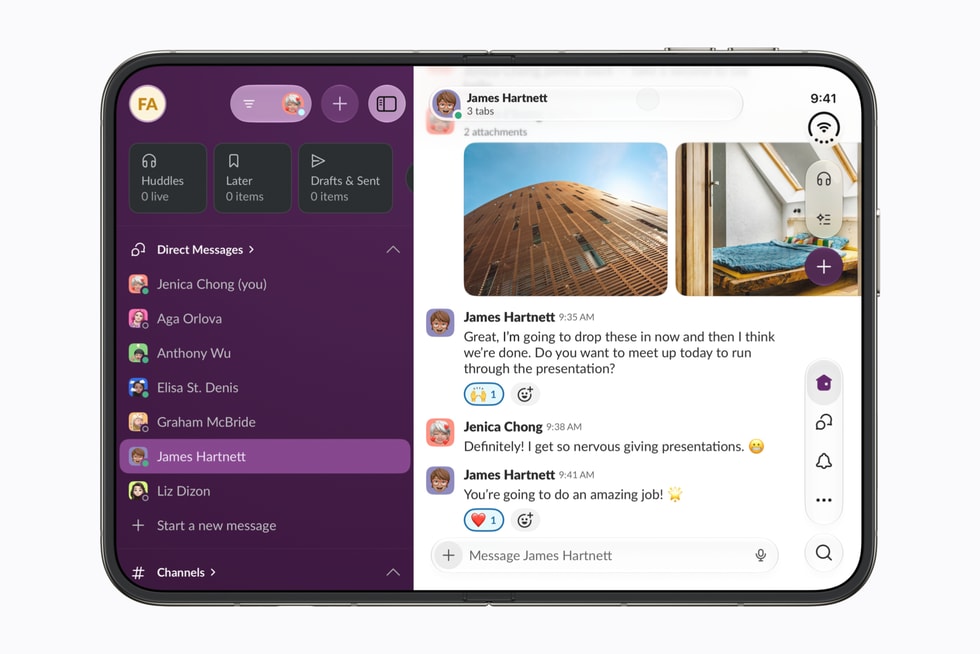
The Duo’s strongest argument may be software. iOS 27 has been reworked so controls, the Dock and navigation can shift around the larger canvas. Split View lets two apps run side by side on an iPhone for the first time, and users can save useful app pairs for faster access later.
You can also open two windows of the same app, move content between apps and keep Siri AI visible while working in another app. Apple says major third-party apps including Netflix, Zoom and Slack are already adapting to the foldable layout.
StandBy is more useful too. Because the device can hold itself at different angles, it can sit like a miniature laptop, turn into a desk clock or photo display, or keep media controls on one half while video plays on the other.
For video, the 7.6-inch screen could be the killer feature

Streaming is an obvious use case. Opened in landscape, the Duo offers a much larger viewing surface without requiring a tablet in your bag. It can also be partially folded so the phone supports itself on a table.
That flexibility matters for flights, hotel rooms, workouts and video calls. It is also the type of everyday advantage that can make a foldable feel useful after the novelty wears off. The trade-off is that a large flexible panel can consume more power, which is why Apple’s dual-battery design and software power management are especially important here.
A20 Pro: flagship performance with new cooling
The iPhone Duo uses the same A20 Pro family as Apple’s latest Pro phones, but Apple has paired it with a custom vapor chamber designed for sustained performance in the foldable chassis.
Apple says the 6-core CPU is up to 20 percent faster than A19 Pro, while the 7-core GPU is up to 40 percent faster and more power efficient. A dual 16-core Neural Engine doubles AI compute, and memory bandwidth is up 50 percent. The chip is built on a 2-nanometer process.
Those numbers matter because the Duo is expected to do more at once: drive two displays, run split-screen apps, handle on-device Apple Intelligence features and sustain high-performance gaming without overheating.
Cameras use the fold itself as a feature
The rear system combines a 48MP Fusion Main camera with optical-quality 2x framing and a 48MP Fusion Ultra Wide camera. Apple also includes a 12MP Center Stage front camera and a separate FaceTime camera hidden beneath the inner display.
The foldable design creates camera modes that a normal iPhone cannot easily copy. Duo Preview can show the person being photographed a live preview on the outer display. Smart Take can automatically capture a shot when subjects are ready. Kid Cue uses playful animations on the outer screen to get children looking toward the camera, while Duo FaceTime can bring people standing nearby into a call using the second display.
Video support reaches 4K at 120 fps in Dolby Vision on the main camera. The phone can also prop itself up, which reduces the need for a small tripod for calls, time-lapses and hands-free recording.
Battery life, charging and connectivity
Apple splits the battery across both halves of the phone. The company rates the Duo for up to 31 hours of video playback on the inner display, up to 44 hours on the outer display, or up to 24 hours of mixed use across both screens.
Fast charging can reach roughly 50 percent in about 20 minutes with a compatible wired charger. Apple also claims around 50 percent in about 30 minutes over MagSafe or Qi2.
Wireless hardware includes Wi-Fi 7, Bluetooth 6 and Thread through Apple’s N1 networking chip, while the C2 cellular modem adds updated cellular capabilities and mmWave support in the U.S. The Duo is eSIM-only worldwide, so travelers should confirm eSIM support with their carrier before buying.
Accessories lean into the foldable design
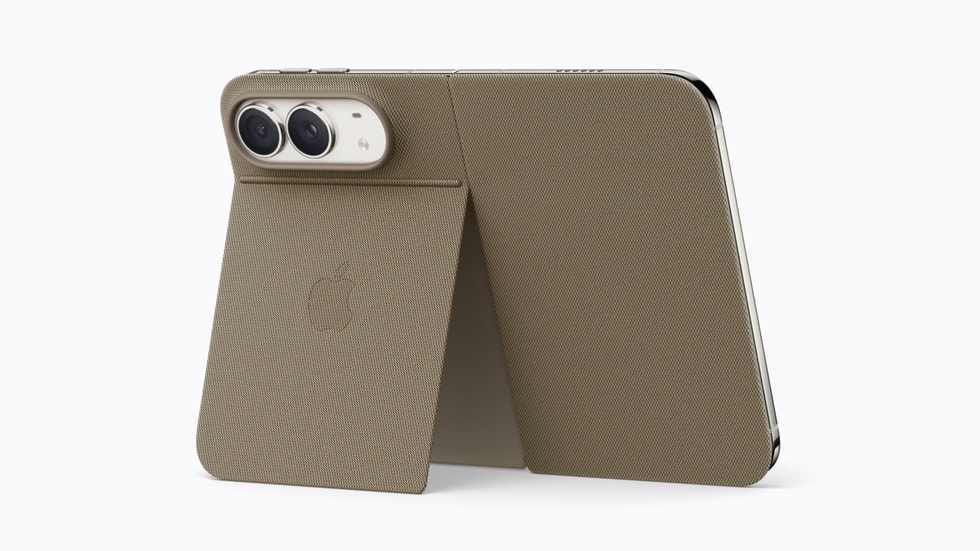
Apple’s new Duo Folio has an integrated kickstand and is available in taupe and navy blue. A separate two-piece Duo Case comes in sand and navy blue. Both are designed around the hinge and support MagSafe and Qi2 charging.
The integrated kickstand is more useful here than it would be on a standard phone because the Duo can switch between tablet-like viewing, tent-style positioning and a compact closed mode.
iPhone Duo key specs
| Starting price | $1,999 (U.S.) |
| Outer display | 5.4-inch Super Retina XDR |
| Inner display | 7.6-inch Super Retina XDR |
| Refresh / brightness | ProMotion, Always-On, up to 3,000 nits peak outdoor brightness |
| Processor | A20 Pro |
| Rear cameras | 48MP Fusion Main + 48MP Fusion Ultra Wide |
| Front cameras | 12MP Center Stage + under-display FaceTime camera |
| Storage | 256GB / 512GB / 1TB / 2TB |
| Durability | Grade 5 titanium, Ceramic Shield, IP68 |
| Connectivity | Wi-Fi 7, Bluetooth 6, Thread, C2 modem, eSIM only |
| Software | iOS 27 with Split View and Siri AI |
| Colors | Star White / Night Sky |
| Pre-order / release | October 16 / October 23, 2026 |
Should you buy the iPhone Duo?
The Duo makes the most sense for three groups: people who already use an iPhone plus an iPad mini-sized device, productivity-heavy users who genuinely benefit from two apps side by side, and early adopters who want Apple’s most ambitious new hardware category in years.
If your priority is simply the best camera, longest battery life or lowest price, a conventional flagship may still be the more rational choice. At $1,999, the Duo needs its larger screen and flexible positions to improve your daily routine, not merely impress you for the first week.
For everyone else, waiting for long-term durability tests, independent battery measurements and the first wave of app updates is sensible. The product looks unusually mature for a first-generation Apple form factor, but first-generation hardware always carries unknowns.
Digital Pulse Brief verdict: the iPhone Duo is the most consequential change to the iPhone’s physical design in years. Its value will depend less on the fold itself and more on whether iOS 27 and third-party apps make the second screen space indispensable.
Frequently asked questions
Is the iPhone Duo real?
Yes. Apple officially announced the iPhone Duo on September 9, 2026 as its first foldable iPhone.
How much does the iPhone Duo cost?
It starts at $1,999 in the U.S. for the 256GB model, with 512GB, 1TB and 2TB options also available.
When can I buy the iPhone Duo?
Pre-orders begin October 16, 2026, with first availability on October 23 in more than 70 countries and regions.
Does iPhone Duo support Apple Pencil?
Apple says Apple Pencil with USB-C support will arrive later in 2026 and will work on both displays.
Is the iPhone Duo water resistant?
Apple rates it IP68 for splash, water and dust resistance.
Sources and further reading
This article is based primarily on Apple’s official launch materials and product specifications, with independent market context from Reuters.
- Apple Newsroom: iPhone Duo announcement
- Apple: iPhone Duo product page
- Reuters: Apple enters the foldable-phone market
Explore more coverage from Digital Pulse Brief: Premium Tech, Buying Guides and AI & Automation.
Editorial note: Product specifications and availability can change. We will update this guide if Apple revises launch details.
DIGITAL PULSE BRIEF NEWSLETTER
Get clear AI, technology and business insights in your inbox
Breaking developments, practical explainers, reviews and useful tech intelligence — without the noise.
WHAT TO READ NEXT
What Is an AI PC? NPU, TOPS and Copilot+ PC Requirements Explained  Meta Connect 2026 Day 1: Everything Announced — Meta VR Glasses, Ray-Ban Meta Audio, Gen 3 and Muse
  Best AI Laptops to Buy in 2026: MacBook Air M5, Surface Laptop X2, XPS 14 and More
MORE FROM DIGITAL PULSE BRIEF