BUSINESS TECHNOLOGY · BREAKING AI FINANCE
SoftBank Is Raising $11 Billion for OpenAI — What the Debt-Fueled AI Bet Means
SoftBank is taking one of its biggest financing steps yet to deepen its OpenAI bet. On September 21, the Japanese technology group launched $10 billion in U.S.-dollar senior unsecured notes plus €1 billion in euro notes, with proceeds aimed primarily at funding a third $10 billion OpenAI investment tranche due October 1. The bond sale turns a private AI investment into a much broader question: how much debt is the market willing to absorb to finance the next phase of the AI boom?
Published September 21, 2026 · Source-first explainer · Financing terms can change before pricing
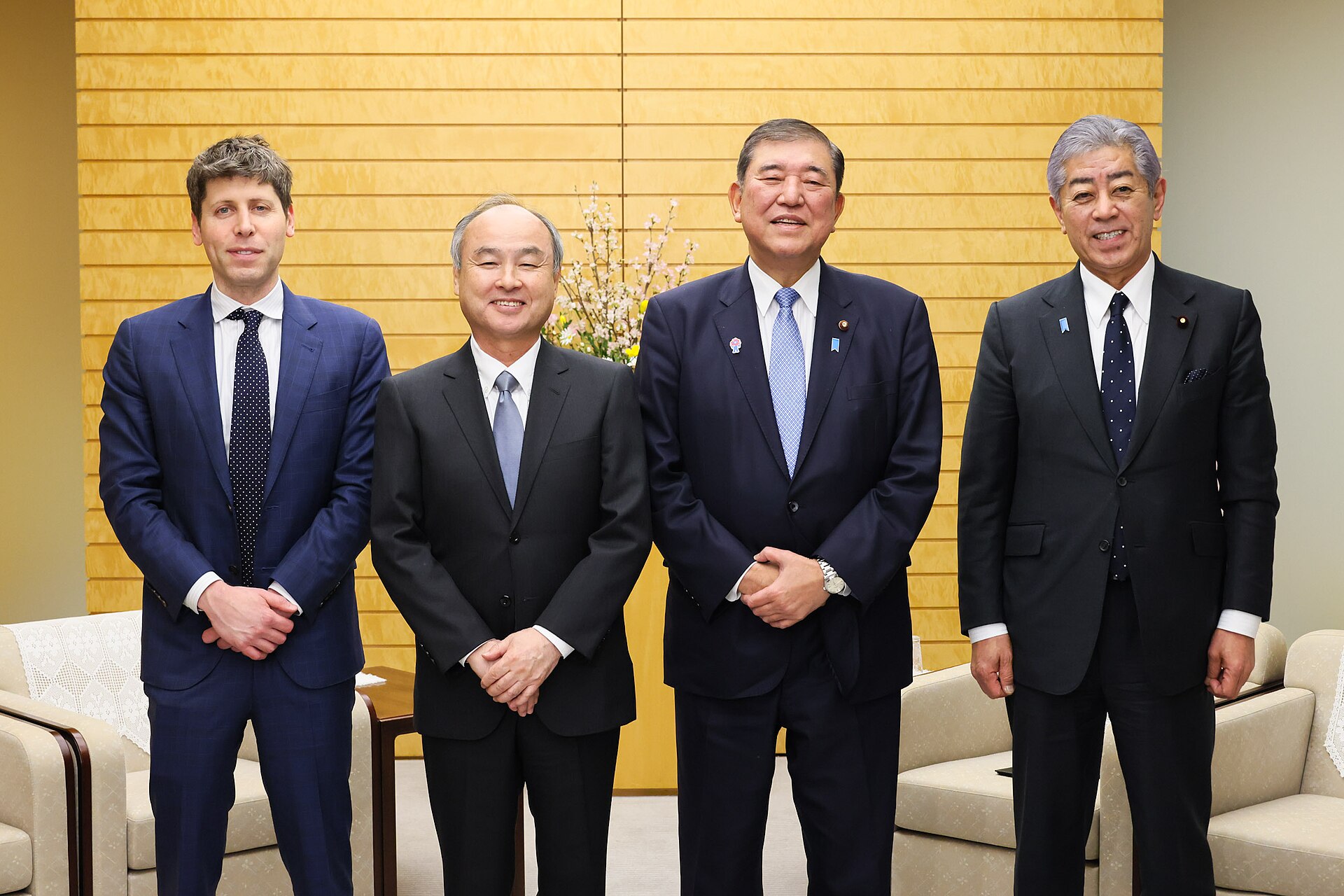
Masayoshi Son and Sam Altman at a February 2025 meeting in Tokyo. Photo: Office of the Prime Minister of Japan / Wikimedia Commons, CC BY 4.0. Resized for web. Source file.
Quick answer
SoftBank has launched more than $11 billion equivalent in bonds to help finance its next OpenAI investment. Reuters reported a $10 billion dollar-denominated offering split across 3.5-, 5.5- and 7.5-year maturities, plus €1 billion of euro notes split across four- and six-year maturities. The notes are expected to price September 24 and settle September 29.
SoftBank’s official February agreement calls for a $30 billion follow-on investment in OpenAI, paid in three $10 billion tranches. The first closed April 1, the second July 1, and the third is planned for October 1. After the full follow-on investment, SoftBank expects its cumulative OpenAI investment to reach $64.6 billion and its ownership interest to be approximately 13%, subject to closing conditions.
This is not simply “SoftBank buying more OpenAI.” It is a case study in how the AI capital cycle is increasingly being financed: private equity-style stakes, bridge loans, long-term bonds, data-center projects and huge infrastructure commitments are becoming intertwined.
What SoftBank actually launched today
According to a term sheet reported by Reuters, SoftBank Group launched five senior unsecured bond tranches: three in U.S. dollars and two in euros. “Senior unsecured” means the debt sits relatively high in the company’s repayment hierarchy but is not secured by a specific pool of collateral.
| Currency | Total announced | Maturities | Key dates |
|---|---|---|---|
| U.S. dollars | $10 billion | 3.5 years, 5.5 years, 7.5 years | Expected pricing Sept. 24; settlement Sept. 29 |
| Euros | €1 billion | 4 years, 6 years | Expected pricing Sept. 24; settlement Sept. 29 |
The term sheet says the proceeds are intended primarily to fund SoftBank’s $10 billion third tranche into OpenAI, with some proceeds available for general corporate purposes. Citigroup and JPMorgan are listed as lead bookrunners.
The exact coupon rates and investor demand matter because they will show how markets price SoftBank’s AI exposure. A bond sale can be fully subscribed and still be expensive if investors demand a high yield. Until the notes are priced, it is more accurate to focus on the structure and scale than to speculate about the final cost of the debt.
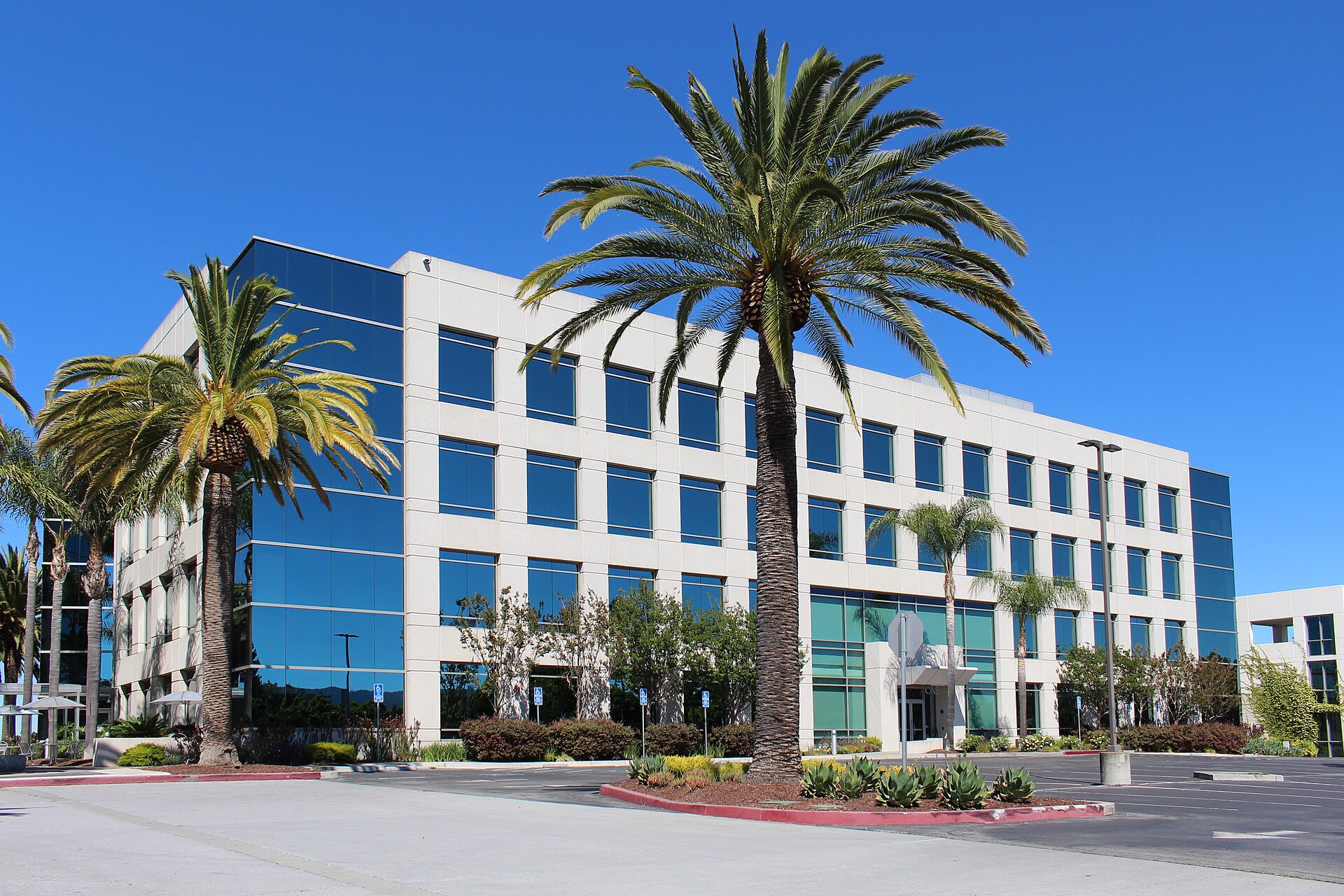
One Circle Star Way in Redwood City, formerly home to SoftBank Vision Fund’s Silicon Valley office. Photo: Coolcaesar / Wikimedia Commons, CC BY-SA 4.0. Resized for web. Source file.
How big is SoftBank’s OpenAI bet?
SoftBank’s February 27 filing provides the cleanest picture. Before the latest follow-on agreement, the group said it had already invested an aggregate $34.6 billion in OpenAI through SoftBank Vision Fund 2 since September 2024.
The new agreement adds another $30 billion in three equal tranches:
- $10 billion — April 1, 2026: completed.
- $10 billion — July 1, 2026: completed.
- $10 billion — October 1, 2026: planned, subject to closing conditions.
SoftBank said the follow-on investment was agreed at a $730 billion pre-money valuation. If all three tranches close, its cumulative OpenAI investment is expected to total $64.6 billion for an approximately 13% ownership interest.
Those are unusually large numbers even by private-market AI standards. The size also explains why financing mechanics matter. SoftBank is not treating OpenAI as a small venture allocation inside a diversified portfolio; the investment is large enough to affect group-level financing, leverage and earnings sensitivity.
The preferred shares are designed to convert automatically into OpenAI common shares in an IPO or related listing transaction. That makes the timing of any future public listing strategically important even though SoftBank’s investment case does not depend on an immediate IPO. Digital Pulse Brief has separate coverage of OpenAI’s 2026 IPO timing and market implications.
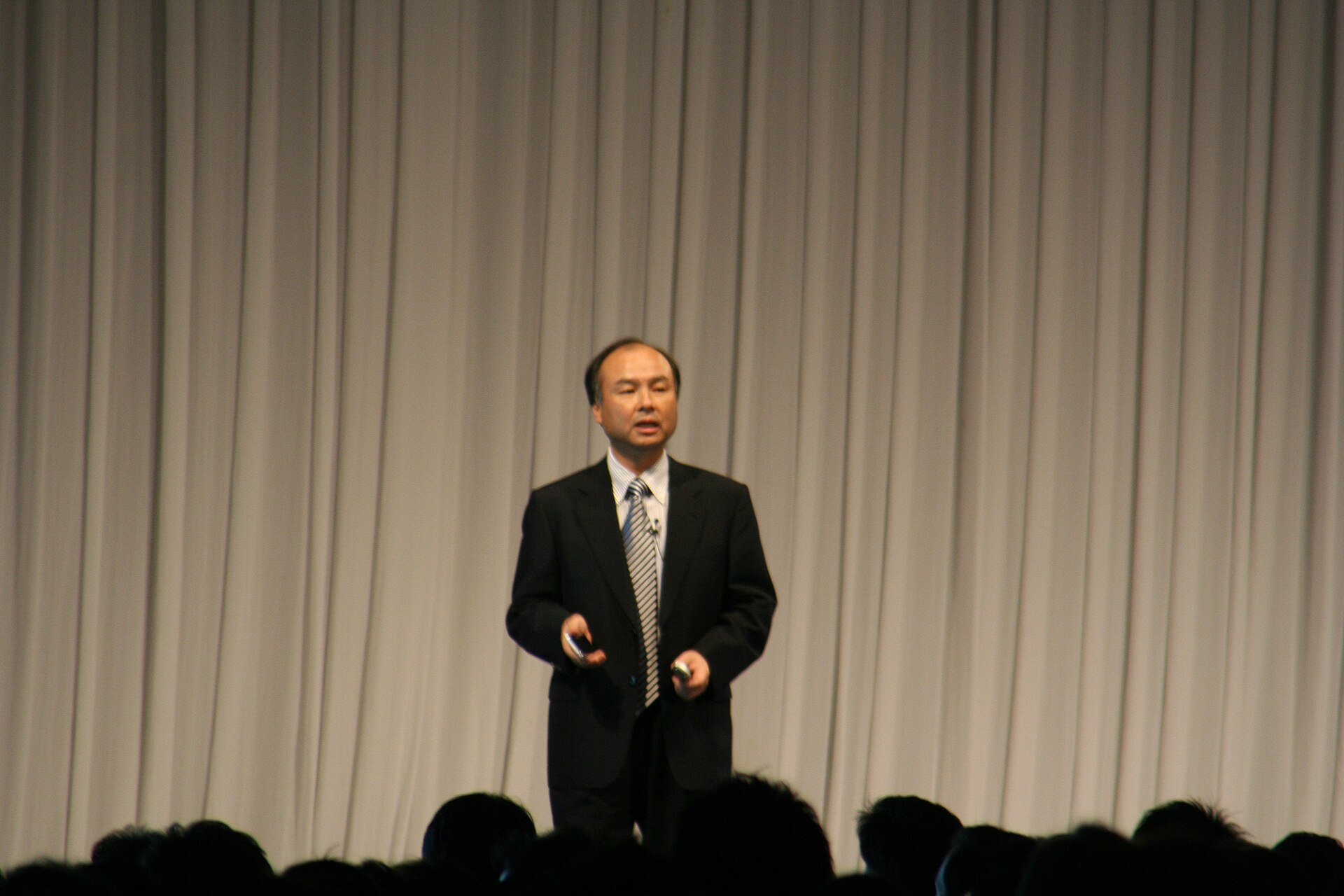
Masayoshi Son at SoftBank Mobile Summit 2008. Photo: Nobuyuki Hayashi (nobihaya) / Wikimedia Commons, CC BY 2.0. Resized for web. Source file.
Why SoftBank is using debt instead of simply paying cash
SoftBank said from the beginning that the follow-on investment would initially be financed with bridge loans and then replaced over time with existing assets and other financing measures. In March, the company signed a $40 billion bridge facility with major banks. By September, it had drawn $30 billion from that facility.
On September 9, SoftBank announced it would prepay the remaining $25.9 billion outstanding bridge-loan balance on September 15. Today’s bond sale fits that broader refinancing strategy: short-term bridge borrowing gives a company speed and certainty when a large deal must close; longer-dated bonds can then spread funding across several maturities.
This matters because debt changes the economics of an equity bet. If OpenAI’s value rises substantially, SoftBank benefits from owning a larger stake while the bond obligations remain fixed. If OpenAI’s valuation falls, the debt does not shrink with it. Leverage therefore magnifies the importance of the investment outcome.
SoftBank says its financial policy remains to keep loan-to-value below 25% in normal market conditions, with an upper threshold of 35% in emergencies, while maintaining enough cash to cover at least two years of bond redemptions. Those guardrails are important context: the company is making a very aggressive AI investment while publicly committing to balance-sheet limits.
Why OpenAI attracts capital at this scale
The AI business has a financing profile unlike conventional software. A traditional SaaS company can often scale revenue without building its own physical infrastructure at the same pace. Frontier AI requires enormous spending on accelerators, networking, memory, data centers, energy, model training and inference capacity.
That is why OpenAI’s strategic relationships increasingly span far beyond model development. SoftBank’s investment sits alongside infrastructure projects, data-center construction and a wider ecosystem of chip and cloud suppliers. The capital is not merely funding salaries and product development; it is helping finance the physical compute platform needed to operate AI at global scale.
SoftBank’s own February statement framed OpenAI as central to its broader “ASI” strategy, while OpenAI described SoftBank as a long-term partner for infrastructure, research and global product expansion. The language matters because it suggests the relationship is intended to be deeper than a passive financial stake.
That connection also helps explain why SoftBank is willing to refinance aggressively around the investment. If the company believes AI infrastructure becomes a foundational layer of the global economy, then owning a large stake in OpenAI—and financing adjacent infrastructure—can be seen as one coordinated strategy rather than a series of unrelated bets.
For the product side of that strategy, see our coverage of GPT-6 Astra and OpenAI’s shift toward computer-using agents.
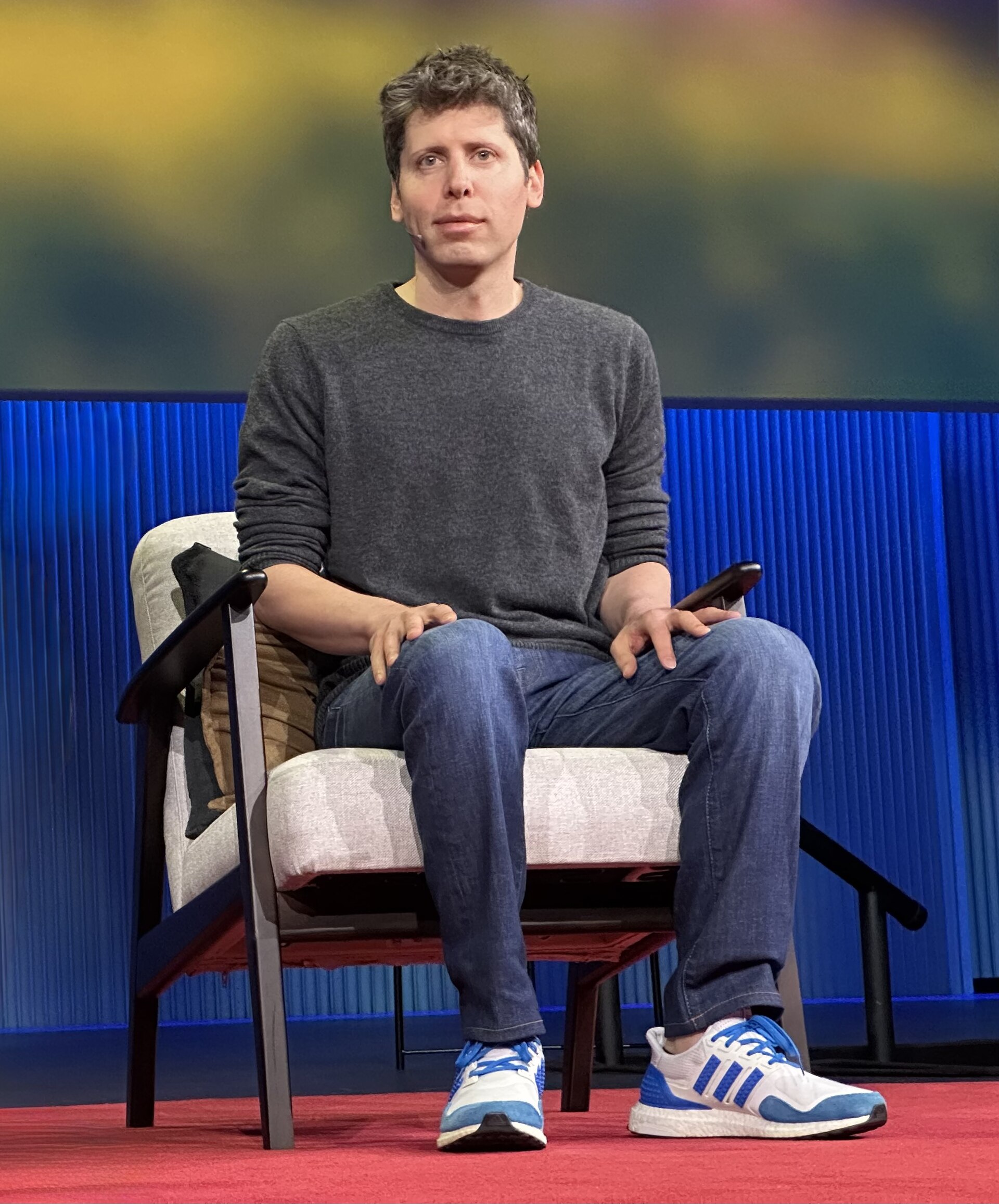
Sam Altman speaking at TED in April 2025. Photo: Steve Jurvetson / Wikimedia Commons, CC BY 2.0. Resized for web. Source file.
The risk side: this is a concentrated, leveraged private-market bet
The bullish version of the story is easy to understand: SoftBank gains a large position in the company behind ChatGPT and frontier AI infrastructure while global demand for AI keeps expanding. The risk case is just as important.
First, OpenAI is still a private company. The $730 billion pre-money valuation is a negotiated funding-round valuation, not a continuously traded public-market price. Private valuations can move sharply between rounds, and liquidity is more limited.
Second, SoftBank’s accounting will transmit valuation changes into reported earnings. The company says its OpenAI shares will be measured at fair value through profit or loss, with quarterly fair-value changes recognized as investment gains or losses. That can make reported results more sensitive to how OpenAI is valued.
Third, the debt is real even if the equity value changes. Bonds have fixed contractual obligations. A decline in the value of the OpenAI stake would not reduce principal owed to bondholders.
Fourth, concentration increases strategic dependence. After the full follow-on investment, SoftBank expects roughly 13% ownership. At the same time, its AI infrastructure ambitions are increasingly connected to OpenAI. That creates potential upside from alignment—but also means setbacks at one partner can affect multiple parts of the strategy.
None of these points means the investment will succeed or fail. They explain why investors are watching the financing structure, bond pricing and SoftBank’s loan-to-value discipline as closely as they watch new OpenAI models.
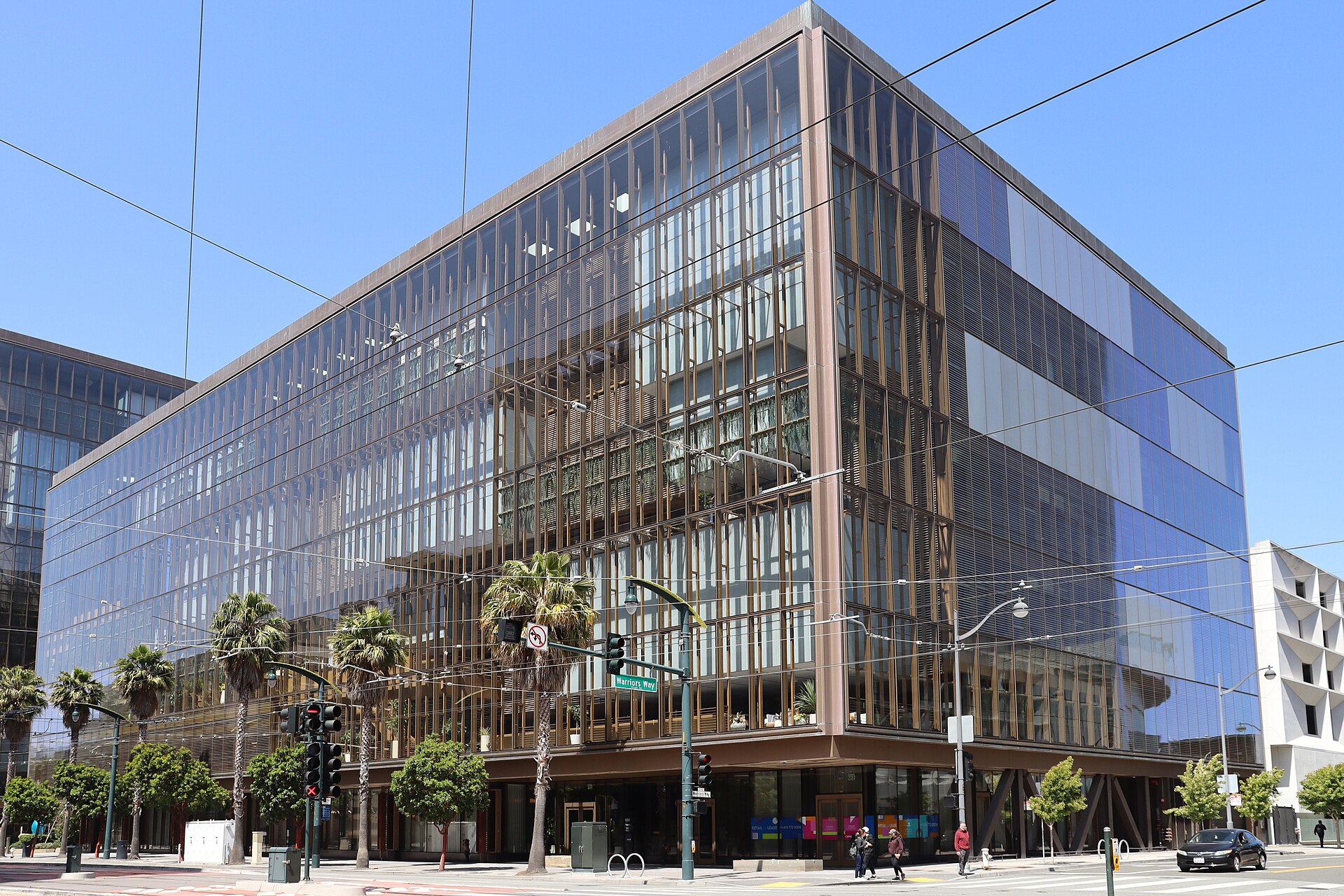
1515 Third Street in San Francisco, a building used by OpenAI as its headquarters. Photo: Coolcaesar / Wikimedia Commons, CC BY 4.0. Resized for web. Source file.
What this means for OpenAI
For OpenAI, the immediate benefit is straightforward: another large, committed source of capital from a strategic partner. The third tranche is scheduled for October 1, and SoftBank’s financing activity is designed to ensure that commitment can be funded without relying on a single short-term bridge loan.
The deeper benefit is strategic duration. Frontier AI companies are making multi-year infrastructure commitments, so capital that can stay aligned over several years is more useful than financing that depends on a quick exit. SoftBank’s bond maturities extend as far as 7.5 years in the current offering, while its OpenAI preferred shares are designed to convert in a future listing rather than forcing an immediate public-market event.
That matters at a time when OpenAI is balancing product expansion, safety work, infrastructure build-out and the expectations attached to an extremely high private valuation. The company does not need every investor to agree on the same timeline; it needs enough capital partners willing to finance the interval between today’s spending and whatever long-term economics emerge.
For readers following that balance between growth and safety, our AI slowdown and tech-stocks explainer looks at the market reaction to calls for a slower frontier pace.
What to watch next
- September 24: expected bond pricing. Final yields will show how investors price SoftBank credit risk around this strategy.
- September 29: expected bond settlement, according to the term sheet reported by Reuters.
- October 1: planned closing date for SoftBank’s third $10 billion OpenAI tranche, subject to closing conditions.
- SoftBank LTV: watch whether the group remains comfortably inside its stated below-25% normal-market policy.
- OpenAI valuation: because SoftBank marks the stake to fair value quarterly, future valuation changes can feed into reported investment gains or losses.
- AI infrastructure commitments: the larger question is whether revenue growth across AI products can keep pace with the capital required for compute and data centers.
The most important number may not be the $11 billion headline. It may be the eventual yield investors demand. That price is the market’s real-time judgment on how much financing risk SoftBank is taking to stay at the center of the AI boom.
SoftBank OpenAI investment FAQ
How much is SoftBank raising in bonds?
Reuters reported $10 billion of U.S.-dollar senior unsecured notes plus €1 billion of euro-denominated notes, equivalent to more than $11 billion at current exchange rates.
What will the money be used for?
The term sheet says proceeds will primarily fund SoftBank’s $10 billion third follow-on investment tranche in OpenAI, expected to close October 1, with additional proceeds available for general corporate purposes.
How much has SoftBank committed to OpenAI?
SoftBank’s February filing says the latest agreement adds $30 billion in three $10 billion tranches. After completion, cumulative investment is expected to reach $64.6 billion and ownership approximately 13%, subject to closing conditions.
What valuation did SoftBank use for the 2026 OpenAI investment?
The February 2026 follow-on agreement lists a $730 billion pre-money valuation.
Is this one of the largest high-yield bond deals?
Bloomberg and the Financial Times have described the planned sale as one of the largest high-yield or “junk” bond offerings by a single company, excluding distressed exchanges. The exact final pricing and allocations remain subject to the bond-sale process.
Does this mean OpenAI is about to IPO?
No. SoftBank’s preferred shares are designed to convert in a future IPO or related listing, but the financing itself does not establish an IPO date.
Bottom line
SoftBank’s $11 billion-plus bond sale shows how quickly the AI race has moved from venture capital into the global debt markets. The company is borrowing across currencies and maturities to support a private-company stake that could reach $64.6 billion in cumulative investment after the October tranche.
That structure can work extremely well if OpenAI’s long-term value and AI infrastructure economics justify today’s valuations. It also increases SoftBank’s exposure to valuation swings, financing costs and execution risk. The bond pricing on September 24 will be one of the clearest market signals yet about how willing investors are to finance the next layer of the AI boom.
This article is for informational purposes and is not investment advice.
Sources and image credits
- Reuters — SoftBank launches $10B plus €1B bond sale for OpenAI investment (September 21, 2026)
- SoftBank Group — Follow-on Investments in OpenAI (February 27, 2026)
- SoftBank Group — Execution of second OpenAI tranche (July 1, 2026)
- SoftBank Group — Early Repayment of Bridge Loans (September 9, 2026)
- Financial Times — SoftBank’s planned high-yield bond deal (September 21, 2026)
- Wikimedia Commons — Son and Altman meeting, Office of the Prime Minister of Japan, CC BY 4.0
- Wikimedia Commons — Masayoshi Son, Nobuyuki Hayashi, CC BY 2.0
- Wikimedia Commons — Sam Altman at TED, Steve Jurvetson, CC BY 2.0
- Wikimedia Commons — SoftBank Vision Fund office, Coolcaesar, CC BY-SA 4.0
- Wikimedia Commons — OpenAI headquarters building, Coolcaesar, CC BY 4.0
Image record: All five photos are real photographs of the people or locations described. Local WordPress copies were resized/compressed for web delivery; no AI-generated article imagery or creative alteration is claimed.
DIGITAL PULSE BRIEF NEWSLETTER
Get clear AI, technology and business insights in your inbox
Breaking developments, practical explainers, reviews and useful tech intelligence — without the noise.
WHAT TO READ NEXT
New Microsoft Copilot 2026: Home, Code and Autopilot Turn Copilot Into a Work Operating Layer  Claude Opus 5.5 Explained: Pricing, Coding Gains, Safety Changes and Who Should Use It
  Gemini 3.8 Live Avatar Is Now GA: 97 Languages, Custom Avatars, SynthID and Enterprise Use
MORE FROM DIGITAL PULSE BRIEF