REVIEWS · FOLDABLE PHONES
Samsung Galaxy Z Fold 8 Review: The Passport Foldable Finally Makes Sense
Samsung’s Galaxy Z Fold8 is a deliberate break from the tall, narrow Fold formula: shorter, wider, lighter and built around a 4:3 inner screen. The new shape makes the tablet-phone idea more convincing, but the $1,899.99 launch price and missing telephoto camera still make this a premium compromise rather than an automatic upgrade.
Published September 21, 2026 · Research-based review · Prices and promotions can change
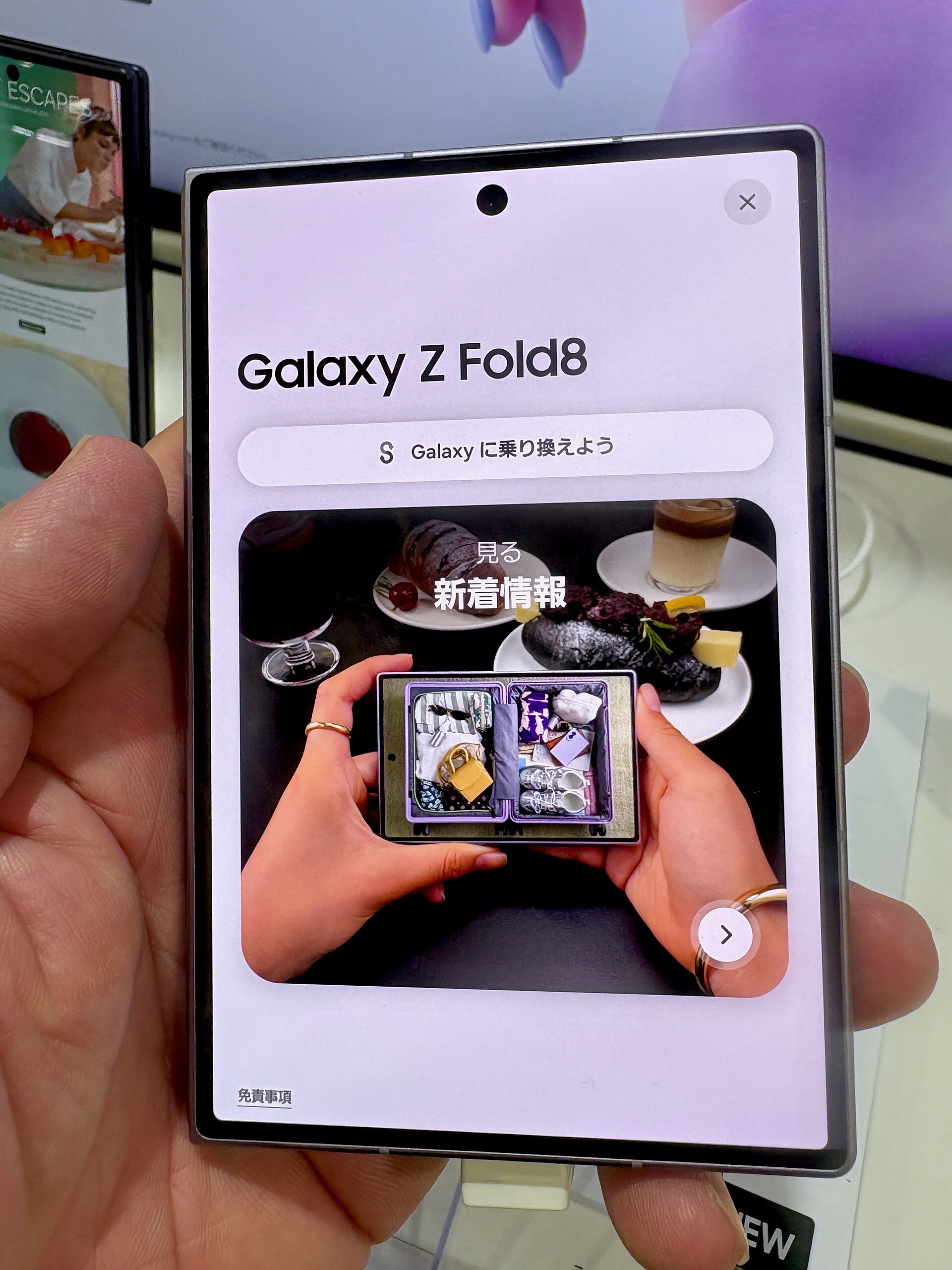
Actual Samsung Galaxy Z Fold8 showing the outer display. Photo: Kyu3a / Wikimedia Commons, CC BY-SA 4.0. Resized for web. Source file.
Digital Pulse Brief verdict
The Galaxy Z Fold8 is one of Samsung’s most coherent foldables yet. At 201g, it is unusually light for a book-style foldable, and its wider 5.5-inch cover screen plus 7.6-inch 4:3 inner display make reading, video, multitasking and two-handed browsing feel more natural than on older narrow Folds. Samsung’s mature multi-window software remains a major strength.
But Samsung has also made the trade-offs obvious. The Fold8 starts at $1,899.99 in the U.S., the dual 50MP rear setup has no dedicated telephoto lens, S Pen support is gone, and the new wide-short shape will not suit everyone. For buyers who genuinely want a phone that becomes a small tablet, it is compelling. For buyers who mostly stay on the outer screen, a conventional flagship still gives you more camera hardware for less money.
Review disclosure: This is a research-based review built from Samsung’s official specifications and launch documentation plus published hands-on testing from established reviewers. Digital Pulse Brief did not conduct its own long-term lab test of this unit, so we do not present original battery benchmarks, camera samples or a numeric score.
At a glance
| U.S. launch price | $1,899.99 for 256GB; higher capacities cost more |
| Availability | General availability began August 7, 2026 in select markets |
| Weight / thickness | 201g; 4.5mm unfolded, 9.7mm folded |
| Displays | 5.5-inch cover screen; 7.6-inch 4:3 main screen; up to 120Hz |
| Processor | Snapdragon 8 Elite Gen 5 for Galaxy |
| Memory / storage | 12GB or 16GB RAM; 256GB, 512GB or 1TB storage, depending configuration |
| Rear cameras | 50MP wide + 50MP ultrawide; no dedicated telephoto |
| Battery | 4,800mAh; wireless charging supported |
| Software at launch | One UI 9 based on Android 17 |
Design: the big change is the shape
The most important Fold8 specification is not the processor or camera count. It is the geometry. Samsung has moved to a shorter, wider “passport” shape. Closed, the phone is broad rather than tall; open, it becomes a squarer 4:3 slate. That changes how both screens are used.
The hardware is also much easier to carry than older Galaxy Folds. Samsung lists the Fold8 at 201g and 4.5mm thick when unfolded. Folded, it is 9.7mm thick. Samsung calls it its lightest Galaxy Z Fold yet, and independent reviewers broadly agree that the reduced weight makes the device feel far less burdensome.
The shape is not universally better. A wide phone can be awkward for one-handed reach, and the shorter cover screen gives up the familiar tall-phone layout. The Guardian found that the proportions can compromise typing and some traditional phone tasks, while WIRED’s testing was more positive about the new ergonomics and how often the shape encouraged use of the inner display.
That tension defines the product: Samsung is no longer trying to make a foldable that behaves exactly like a normal slab phone when closed. It is optimizing the whole device around opening it.
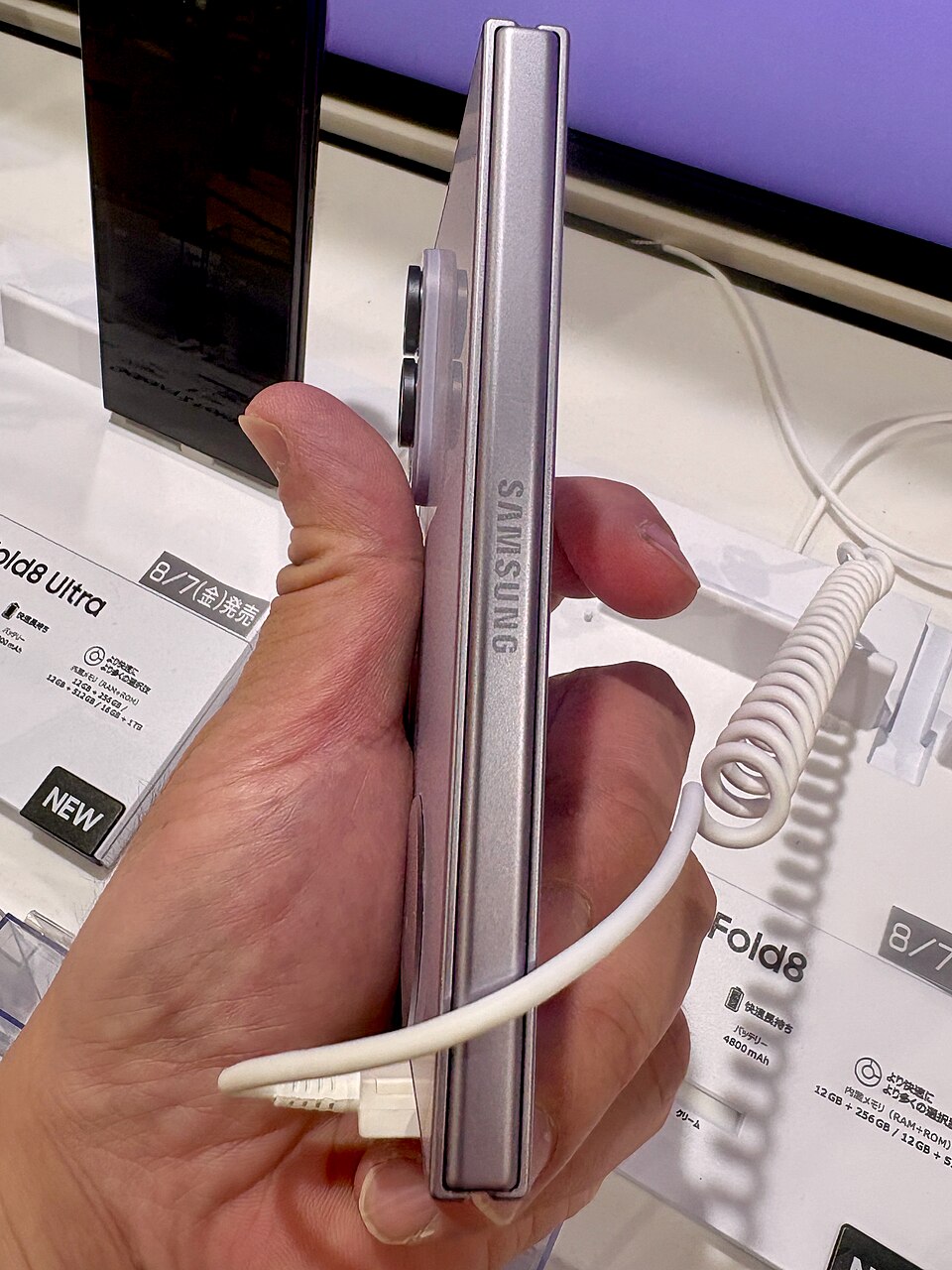
The actual Galaxy Z Fold8 folded side profile and hinge. Photo: Kyu3a / Wikimedia Commons, CC BY-SA 4.0. Resized for web. Source file.
Displays: a better canvas, if you actually unfold it
The cover screen measures 5.5 inches, while the main panel is 7.6 inches with a 4:3 aspect ratio. Samsung’s own specifications list a 1–120Hz adaptive refresh range on the main Fold8 display and up to 3,000 nits peak brightness in its model comparison documentation.
The 4:3 canvas is the main attraction. Web pages, documents, comics, maps and split-screen apps have more room to breathe than on a narrow inner panel. Video will still produce black bars depending on aspect ratio, but the wider format makes the Fold8 feel more like a small tablet than an unusually tall phone that happens to open.
Samsung has also continued reducing the visual prominence of the crease. Reviewers at WIRED and Tech Advisor both described the fold line as less distracting than before. It has not vanished, and buyers should still expect the tactile realities of a flexible OLED, but it is increasingly something you stop noticing rather than the first thing you see.
The question is whether your daily apps reward the format. Samsung’s own software makes good use of the space; some third-party apps remain optimized first for ordinary phones. A foldable’s value still depends partly on whether the software you live in scales intelligently.
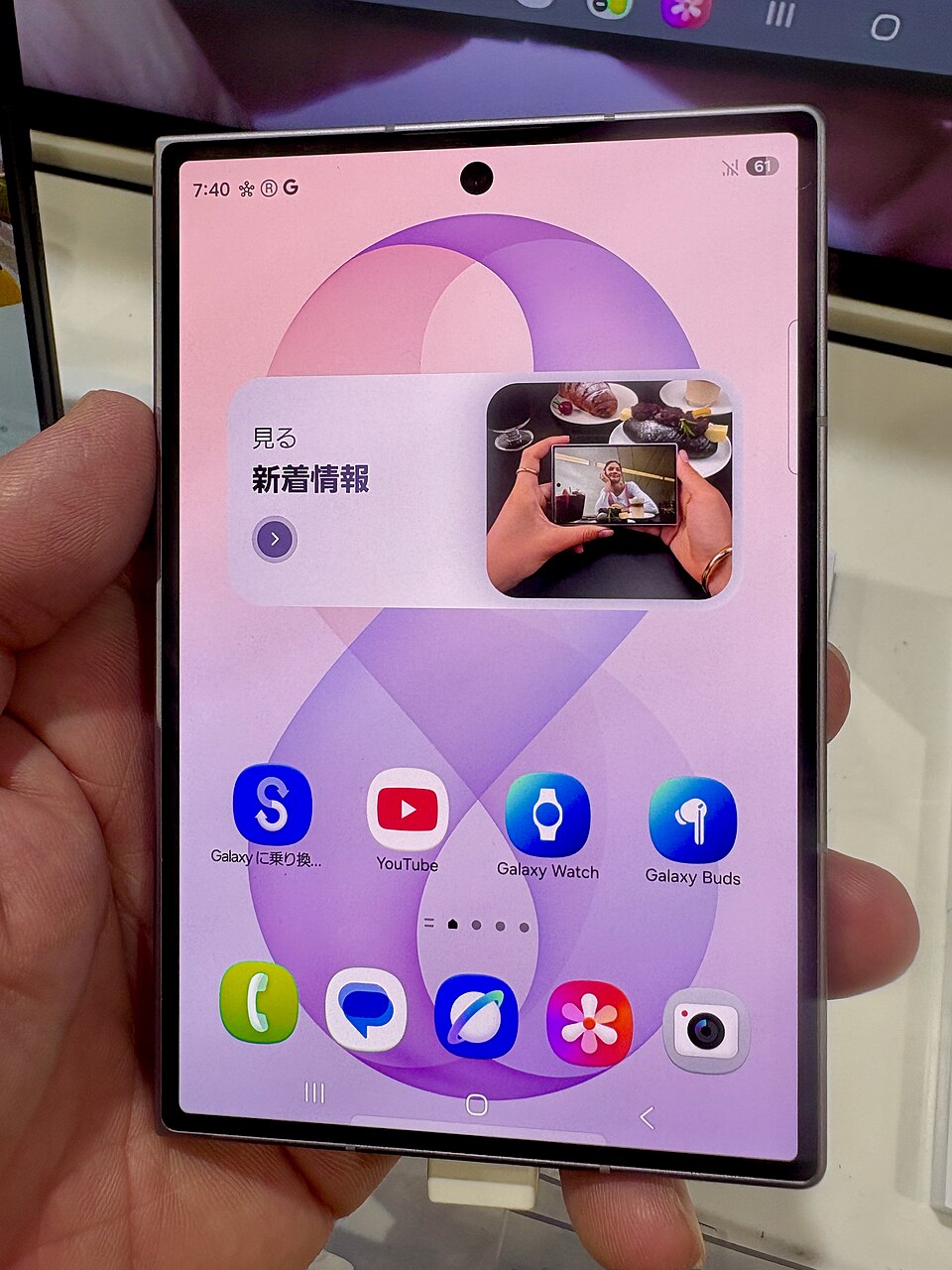
Actual Galaxy Z Fold8 running Samsung’s One UI home screen on the outer display. Photo: Kyu3a / Wikimedia Commons, CC BY-SA 4.0. Resized for web. Source file.
Performance and software: Samsung’s real advantage
The Fold8 uses Qualcomm’s Snapdragon 8 Elite Gen 5 for Galaxy. On paper, that gives the device flagship-class CPU, GPU and NPU resources; in practice, independent reviews consistently describe general performance as fast. Tech Advisor did note that sustained gaming behavior could be better, so buyers should not assume the large screen automatically makes this the best gaming phone in its price bracket.
Samsung’s software remains a stronger reason to buy a Fold than raw benchmark numbers. One UI 9, based on Android 17 at launch, supports multi-window workflows, drag-and-drop behavior and a taskbar-style approach that can make the inner display genuinely productive rather than merely large.
Galaxy AI features are layered over that foundation. Samsung promotes tools such as Now Nudge, Photo Assist and My FanCam, but the more important point is integration: AI functions are being placed inside the camera, editing and multitasking experiences instead of treated as a separate chatbot destination.
For work, the Fold8’s appeal is simple. Two apps side-by-side on a 7.6-inch display can replace the constant app switching required on a conventional phone. That is also why the product is more persuasive for email-heavy professionals, researchers, travelers and readers than for someone who mainly messages, scrolls short-form video and takes photos.
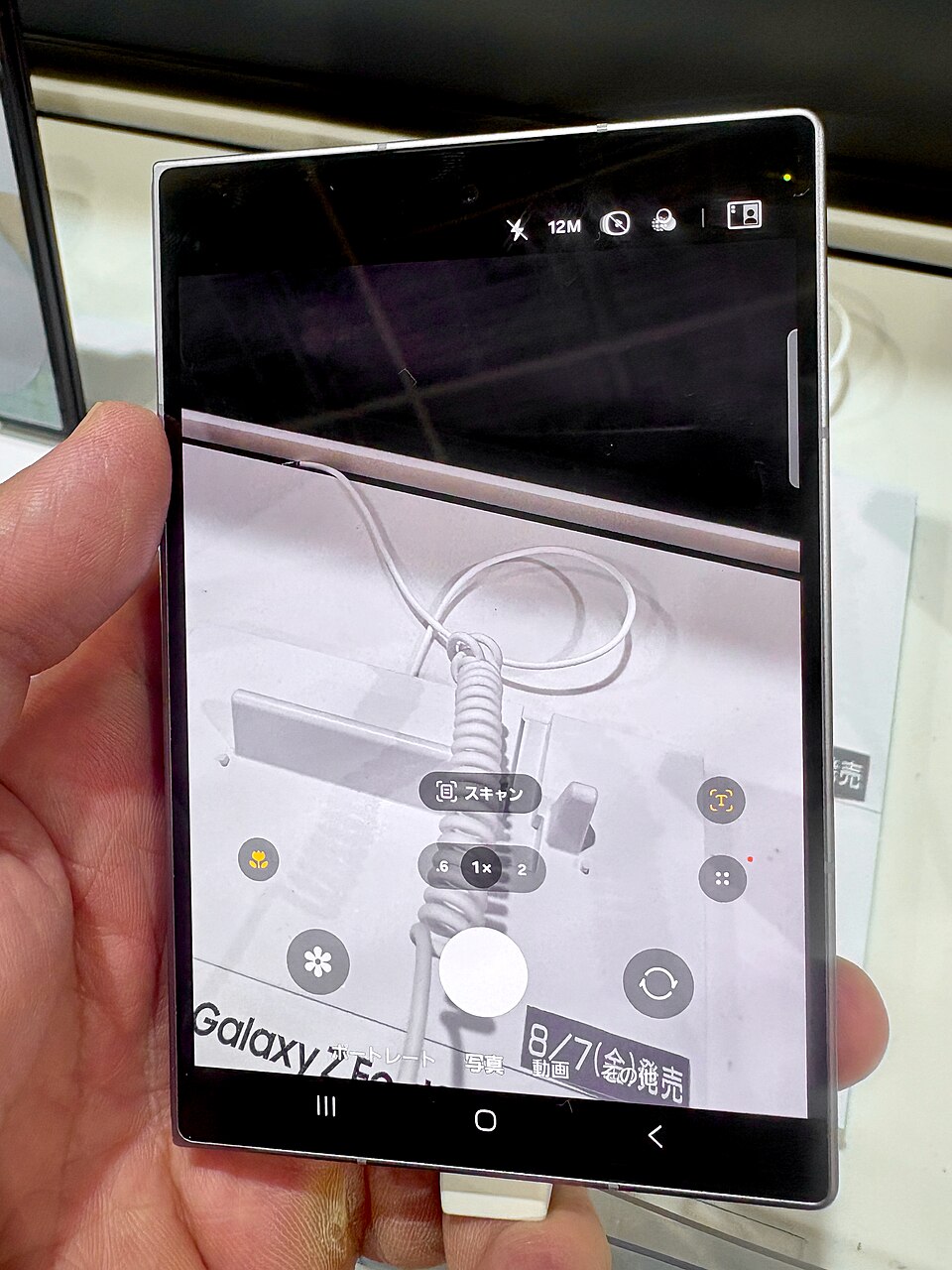
Actual Galaxy Z Fold8 with the Camera app open on the outer display. Photo: Kyu3a / Wikimedia Commons, CC BY-SA 4.0. Resized for web. Source file.
Cameras: good everyday hardware, weak zoom value
Samsung equips the Galaxy Z Fold8 with two 50MP rear cameras: a wide camera and an ultrawide. There are also 10MP cameras associated with the cover and main displays. That is an unusual decision at this price because there is no dedicated telephoto camera.
The absence matters more than the headline megapixel count. At $1,899.99, buyers are entering a tier where conventional flagships and Samsung’s own more expensive Fold8 Ultra compete on camera flexibility. A digital crop can handle casual zooming, but it is not equivalent to dedicated optical telephoto hardware for distant subjects, portraits or travel.
Independent reviewers generally found the main and ultrawide cameras capable in normal conditions. WIRED’s review says the standard Fold8 performs well in many scenarios, while noting the Ultra model’s stronger camera system. The Guardian and Tech Advisor both identify the lack of telephoto as one of the clearest compromises.
There is a foldable-specific upside: the external display can make framing and previewing more flexible, and the wide device can work comfortably as a mini editing canvas. Samsung’s My FanCam and Photo Assist features also push post-capture editing into the device’s AI workflow.
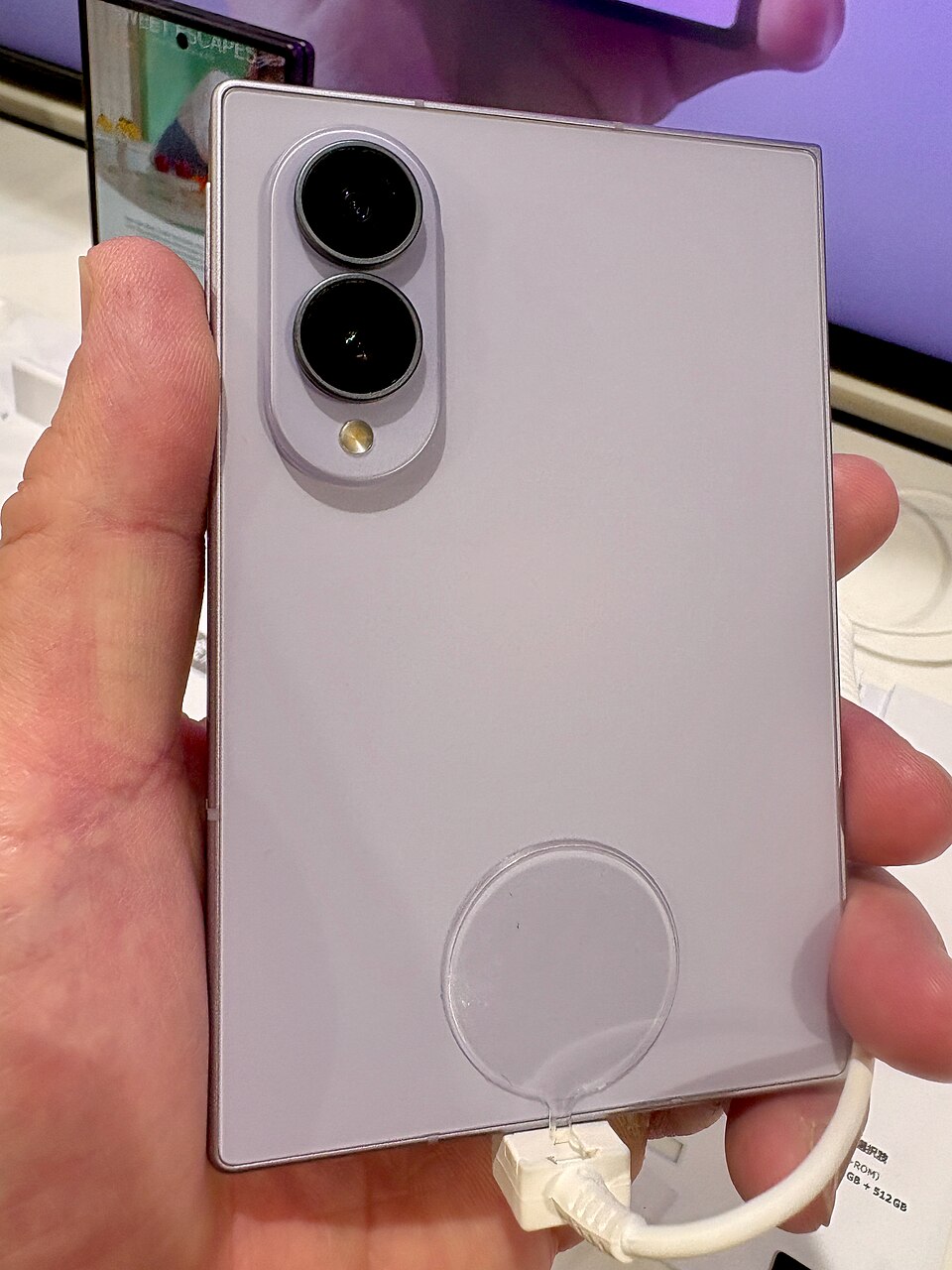
Actual Galaxy Z Fold8 rear panel showing the dual-camera hardware. Photo: Kyu3a / Wikimedia Commons, CC BY-SA 4.0. Resized for web. Source file.
Battery: reassuring, but not the reason to buy
The Fold8 has a 4,800mAh battery. Samsung advertises up to 26 hours of video playback, but controlled promotional figures are not the same as mixed real-world use. Published reviews are more useful for context: The Guardian reported roughly 40 hours between charges in its use, while Tech Advisor characterized battery life as solid.
Those results suggest that the unusual shape and two-screen design do not automatically translate into poor endurance. Still, battery life depends heavily on how often the large inner screen is active, brightness, cellular conditions, camera use and gaming. We would not turn one reviewer’s endurance result into a universal promise.
Wireless charging is supported. Samsung’s U.S. retail page also makes a more mundane point buyers should notice: the box contains the phone, a USB-C cable and ejector pin, but no charger.
For a device this expensive, the better way to think about battery is not “best in class” but “good enough that the foldable form factor no longer automatically forces a day-to-day endurance penalty.”
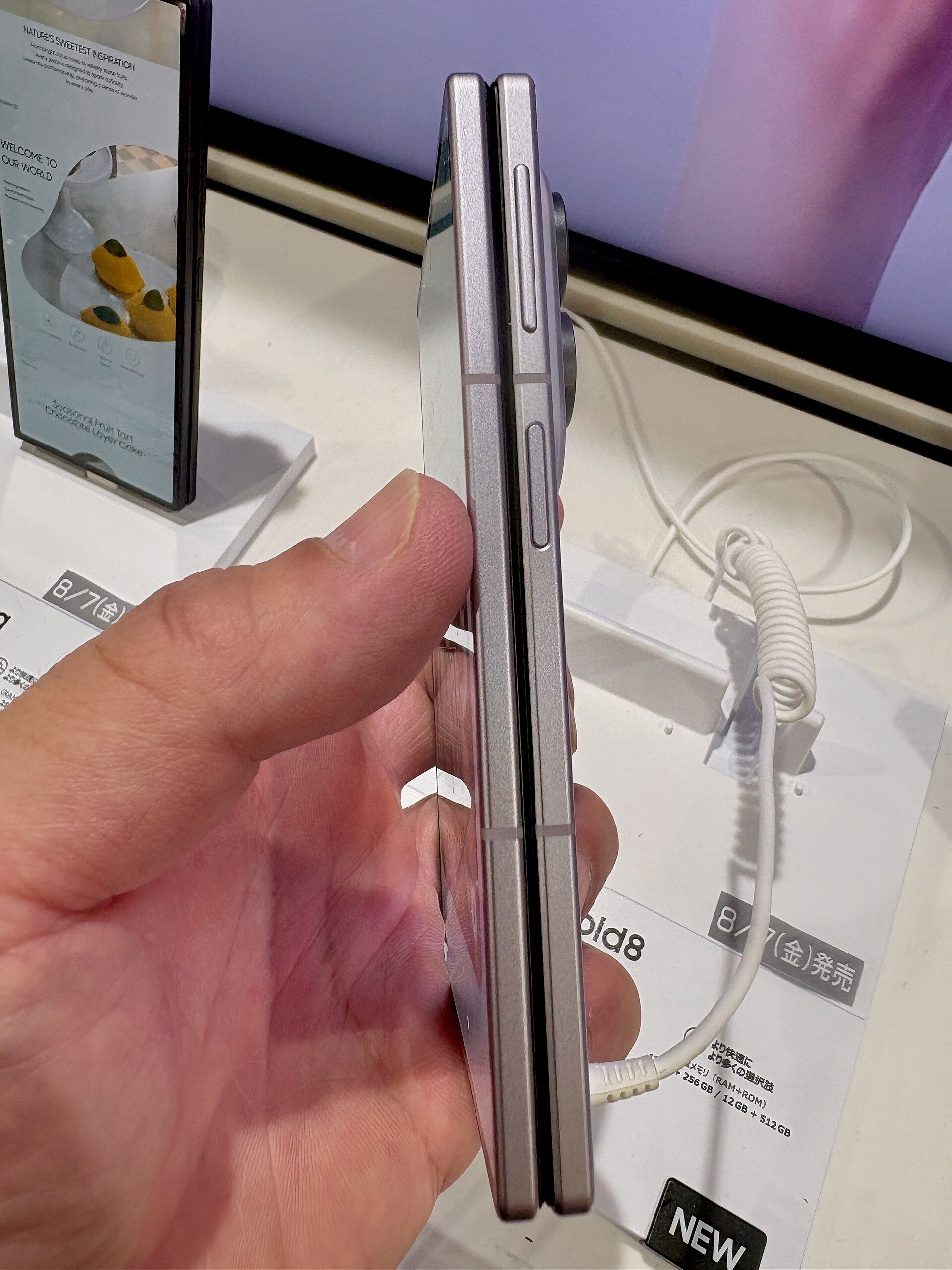
Actual Galaxy Z Fold8 side profile showing the power and volume controls. Photo: Kyu3a / Wikimedia Commons, CC BY-SA 4.0. Resized for web. Source file.
What the Fold8 gets right — and where it still compromises
What we like
- 201g body is unusually light for a book-style foldable.
- 4:3 inner screen makes reading and multitasking more natural.
- Samsung’s mature multi-window software uses the big screen well.
- Flagship-class Snapdragon performance.
- Crease is less visually distracting than earlier generations.
- Battery results from independent reviewers are reassuring.
What still needs work
- $1,899.99 launch MSRP is a serious barrier.
- No dedicated telephoto camera.
- Wide-short shape can feel awkward for one-handed phone use.
- No S Pen support despite the tablet-like inner screen.
- Foldable displays remain more physically delicate than standard glass slabs.
- Some apps still make imperfect use of unusual aspect ratios.
Who should buy the Galaxy Z Fold8?
Consider it if: you regularly read long documents, manage email and chat side by side, edit photos on a phone, use maps while messaging, watch a lot of media, or otherwise have a real use for a tablet-sized canvas in your pocket. The lighter chassis reduces the everyday penalty of carrying that second screen.
Skip it if: camera zoom is a priority, you rarely open a foldable, you prefer one-handed use, or your budget is already stretched by normal flagship pricing. Paying nearly $1,900 for a phone makes sense only when the inner display changes what you can do.
Apple buyers considering a foldable can also read our iPhone Duo first-impressions guide and our iPhone 18 Pro vs iPhone Duo comparison. Those devices target a similar premium buyer but make different choices around ecosystem, proportions and software.
Bottom line: the Galaxy Z Fold8 is easier to recommend than earlier mainstream Folds because Samsung has reduced the weight and made the inner display shape more purposeful. It is still a niche purchase—but now the niche is defined by use case rather than by tolerance for awkward hardware.
Samsung Galaxy Z Fold8 FAQ
When did the Galaxy Z Fold8 launch?
Samsung unveiled the Fold8 family at Galaxy Unpacked on July 22, 2026. U.S. general availability for the Galaxy Z Fold8 began August 7, 2026.
How much does the Galaxy Z Fold8 cost?
Samsung’s U.S. launch pricing starts at $1,899.99 for 256GB. Samsung lists 512GB and 1TB variants at higher prices. Promotions, trade-ins and retailer discounts change frequently, so check current pricing before buying.
Does the Galaxy Z Fold8 have a telephoto camera?
No. The standard Fold8 uses a 50MP wide and 50MP ultrawide rear camera pair, without a dedicated telephoto lens.
Does the Galaxy Z Fold8 support the S Pen?
No. Samsung’s current comparison documentation lists S Pen support as unavailable on the Galaxy Z Fold8.
How heavy is the Galaxy Z Fold8?
Samsung lists it at 201 grams, making it the company’s lightest Galaxy Z Fold to date.
Is this a hands-on Digital Pulse Brief review?
No. This article is a research-based review. We synthesized Samsung’s first-party specifications with published hands-on observations from independent reviewers and clearly separate manufacturer claims from third-party testing.
Sources and image credits
Specifications and availability were checked against Samsung’s official pages. Review judgments above are our synthesis of those facts and independent hands-on reporting, not republished manufacturer marketing.
- Samsung US — Galaxy Z Fold8 product page
- Samsung US — Galaxy Z Fold8 pricing and configurations
- Samsung US Newsroom — Making the Most of Your New Galaxy Z Fold8 (August 4, 2026)
- Samsung US Newsroom — official launch and availability (August 5, 2026)
- The Guardian — Galaxy Z Fold8 review (August 10, 2026)
- Tech Advisor — Galaxy Z Fold8 review (August 3, 2026)
- WIRED — Galaxy Z Fold8 and Fold8 Ultra review (August 2026)
- Wikimedia Commons — Samsung Galaxy Z Fold 8 image category
- Creative Commons Attribution-ShareAlike 4.0 International license
Image record: All six article photos show the actual Samsung Galaxy Z Fold8. They were photographed by Kyu3a and published on Wikimedia Commons under CC BY-SA 4.0. Local WordPress copies were resized/compressed for web delivery; no creative alteration is claimed.
DIGITAL PULSE BRIEF NEWSLETTER
Get clear AI, technology and business insights in your inbox
Breaking developments, practical explainers, reviews and useful tech intelligence — without the noise.
WHAT TO READ NEXT
iPhone 18 Pro Review: Apple’s Camera-First Flagship Is a Serious Upgrade  Canva Pro Review 2026: Is $180/Year Worth It?
  Claude Pro Review 2026: Is It Worth $20/Month?
MORE FROM DIGITAL PULSE BRIEF