REVIEWS · PREMIUM SMARTPHONES
iPhone 18 Pro Review: Apple’s Camera-First Flagship Is a Serious Upgrade
The iPhone 18 Pro is not a visual reinvention, but Apple has changed the parts that matter most to demanding users: the main camera now has variable aperture, the A20 Pro chip gets a much more serious cooling system, battery life improves, charging is faster, and Siri AI finally becomes a core part of the iOS experience. The result is a mature flagship that feels more “Pro” than last year’s model—even if recent iPhone 17 Pro owners can safely sit this one out.
Published September 21, 2026 · Research-based review · Prices and promotions can change
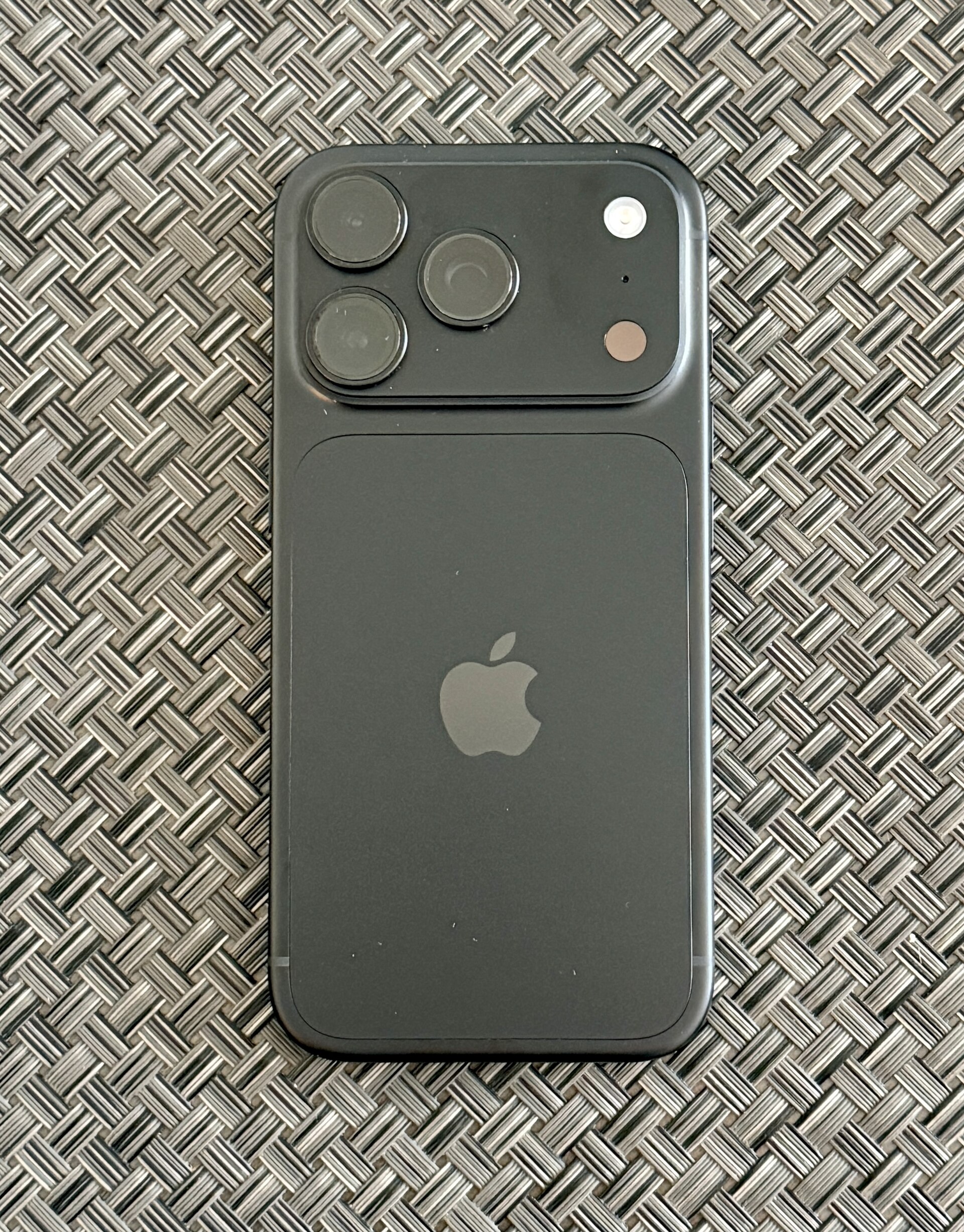
Actual black iPhone 18 Pro photographed from the back on launch day. Photo: Farragutful / Wikimedia Commons, CC BY-SA 4.0. Resized for web. Source file.
Digital Pulse Brief verdict
The iPhone 18 Pro is the most convincing “Pro” iPhone Apple has shipped in years. The 48MP variable-aperture main camera is the headline, but the more meaningful upgrade is the combination of that camera with new manual controls, stronger sustained A20 Pro performance, better thermals and faster charging. It is a phone aimed at people who actually use an iPhone as a camera, video tool, gaming device or mobile workstation.
The catch is value. At $1,199 in the U.S., the iPhone 18 Pro is expensive, and the iPhone 17 Pro remains very capable. The 18 Pro is easiest to justify if you are upgrading from an iPhone 15 Pro or older, care about photography/video, or want Apple’s newest Siri AI and connectivity stack. If you already own a 17 Pro, the gains are real but not essential.
Review disclosure: This is a research-based review. Digital Pulse Brief did not conduct its own long-term lab test of this unit. We cross-checked Apple’s specifications and launch documentation with independent hands-on testing, and we do not present borrowed battery figures or camera observations as our own measurements.
iPhone 18 Pro specs at a glance
| U.S. launch price | $1,199 |
| Availability | September 18, 2026 |
| Storage | 256GB, 512GB, 1TB, 2TB |
| Display | 6.3-inch Super Retina XDR OLED, ProMotion up to 120Hz, up to 3,000 nits outdoor peak |
| Weight | 211g |
| Chip | A20 Pro: 6-core CPU, 7-core GPU, Dual 16-core Neural Engine |
| Rear cameras | 48MP Main with variable aperture, 48MP Ultra Wide, 48MP 4x Telephoto; optical-quality 8x option |
| Front camera | 18MP Center Stage |
| Battery claim | Up to 34 hours video playback in Apple tech specs; U.S. eSIM-only variants are advertised up to 36 hours |
| Software | iOS 27 with Apple Intelligence and Siri AI |
Design and display: familiar shape, better details
Apple has not reinvented the external shape of the Pro line, and that is probably the right call. The iPhone 18 Pro keeps a 6.3-inch format, aluminium unibody construction, Ceramic Shield 2 on the front and Ceramic Shield on the back. It weighs 211g, so this is still a dense, premium-feeling phone rather than a lightweight flagship.
The display remains one of the safest parts of the package: 2622×1206 resolution, ProMotion up to 120Hz, always-on support and up to 3,000 nits outdoor peak brightness. The meaningful visual change is a smaller Dynamic Island that can show more Live Activity information without occupying as much screen space.
None of this makes an iPhone 17 Pro look old. What it does is reduce friction around a design Apple already knows works. The anti-reflective coating, 1-nit minimum brightness and high outdoor brightness are the kinds of improvements users notice over a year rather than in a five-minute showroom comparison.
The new finishes—black, silver, glacier and burgundy—also give the Pro line a broader visual range. Burgundy is the launch-year signature color, but the black model shown throughout this review is a useful reminder that the camera hardware and thicker Pro silhouette remain the dominant visual cues.
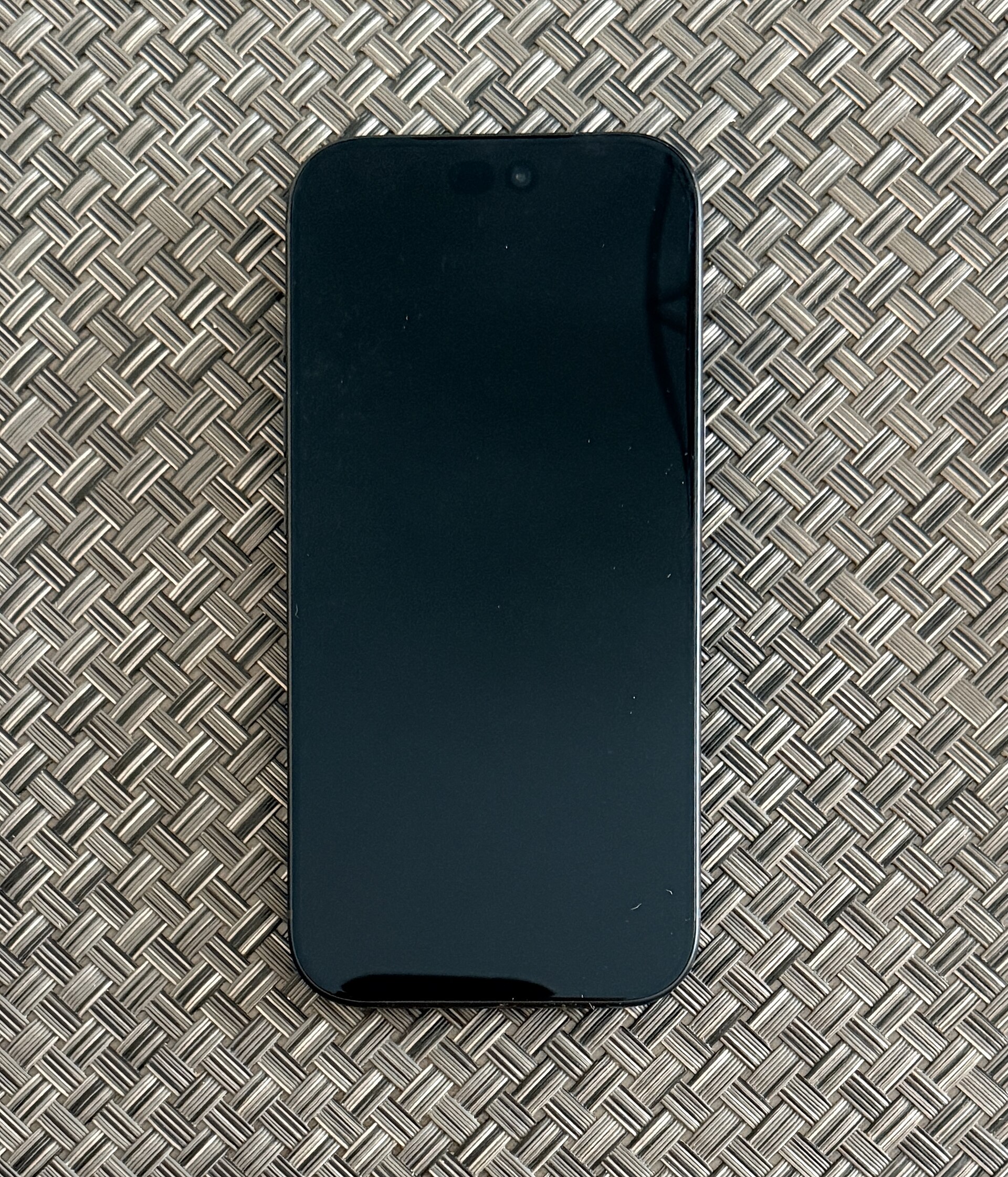
Actual black iPhone 18 Pro photographed from the front on September 18, 2026. Photo: Farragutful / Wikimedia Commons, CC BY-SA 4.0. Resized for web. Source file.
Camera: variable aperture is the upgrade that changes the conversation
The iPhone 18 Pro’s defining hardware feature is its 48MP Fusion Main camera with variable aperture. Apple offers four aperture positions—ƒ/1.48, ƒ/1.8, ƒ/2.8 and ƒ/4.0—using a six-blade mechanism. The phone can switch automatically, while Pro controls let photographers choose settings manually.
That matters because aperture changes two things smartphone cameras have historically simulated with software: how much light reaches the sensor and how much of a scene is naturally in focus. A wider aperture helps in darker scenes and can create shallower depth of field; a narrower aperture can keep more of a group or landscape sharp. Apple still layers computational photography on top, but the physical aperture gives the system more real optical information to work with.
The rest of the Pro camera stack is substantial: a 48MP ultrawide, a 48MP 4x telephoto and an optical-quality 8x option. Apple also supports ProRAW, ProRes RAW, Apple Log 2, 4K Dolby Vision recording and manual shutter speed, white balance and histogram controls. This is a much more coherent “pro” package than simply adding another AI editing feature.
Independent testing from TechRadar described the camera system as the biggest leap in this generation and praised the extra control without losing the iPhone’s point-and-shoot ease. That aligns with the hardware story: the 18 Pro is not just adding more megapixels; it is giving photographers more ways to decide how those megapixels are used.
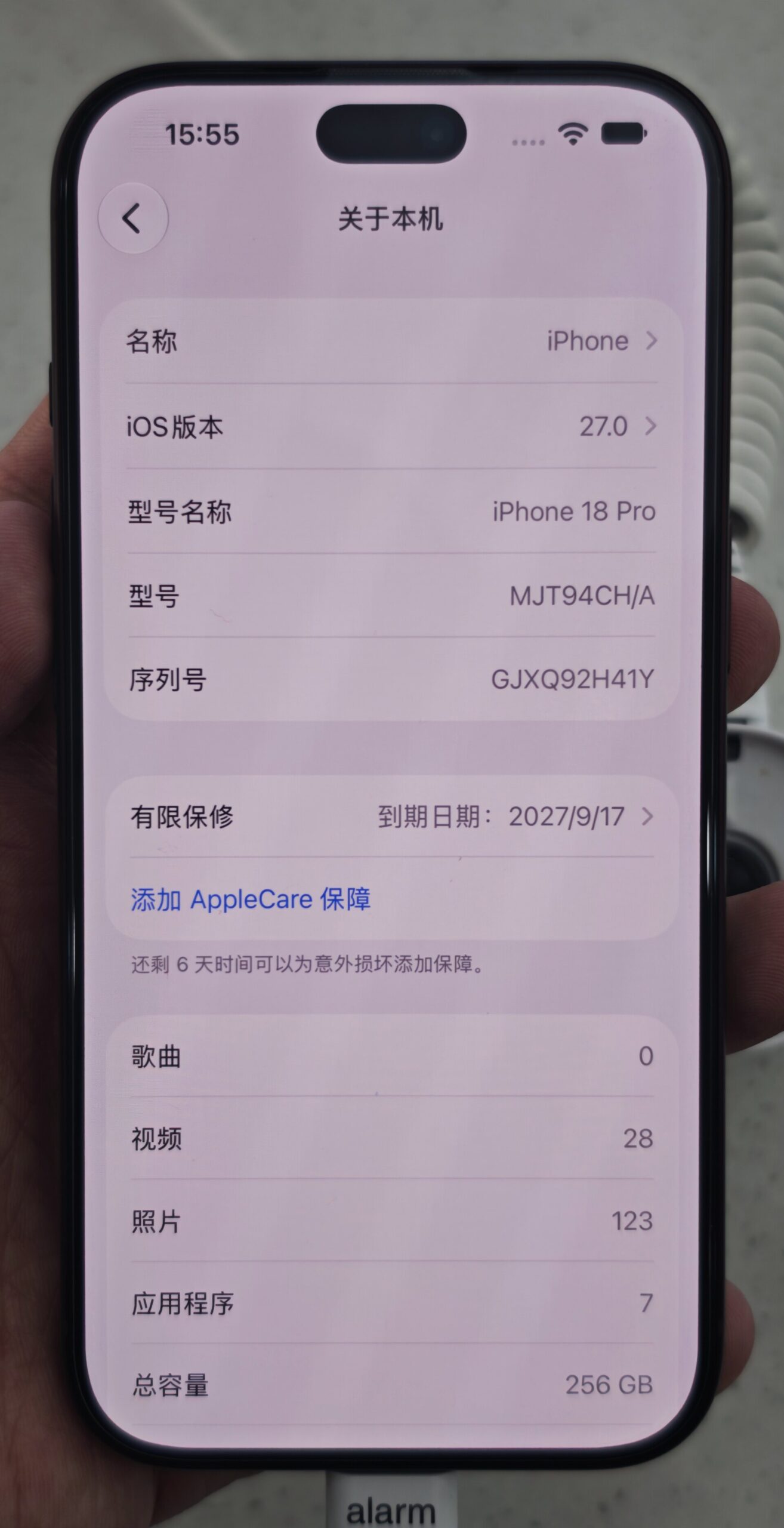
Actual iPhone 18 Pro photographed in the real world on September 19, 2026. Photo: Junrui Gao / Wikimedia Commons, CC BY-SA 4.0. Resized for web. Source file.
Apple Reference Image: a quiet feature with big implications
One of the most interesting iPhone 18 Pro camera features is not about making pictures look better. Apple Reference Image is designed to preserve a verifiable reference from the main camera sensor so viewers can compare an edited image with a signed original representation.
That matters in an era when generative editing, synthetic images and computational photography increasingly blur the boundary between capture and creation. Apple positions the feature as useful for photojournalists, photographers and anyone who needs stronger evidence about how an image originated.
The system does not eliminate misinformation, and it depends on workflows and software that understand the reference data. But it is a notable architectural shift: rather than asking users to trust that an image is authentic, the camera is beginning to carry provenance information alongside the image itself.
For Digital Pulse Brief readers following AI and media authenticity, this may prove more consequential than many of the headline Apple Intelligence features. It gives the iPhone 18 Pro a role not just as a content-creation device, but as part of the infrastructure for proving what was captured.
A20 Pro and thermals: performance finally gets room to breathe
The A20 Pro is built on a 2nm process and combines a 6-core CPU, 7-core GPU and Dual 16-core Neural Engine. Apple claims 50% more memory bandwidth than A19 Pro and up to 40% faster GPU performance, but the more practical improvement may be the thermal design around it.
Apple redesigned the internal packaging so the silicon can connect more directly to a larger vapor chamber. The company says the chamber has three times the surface area of the previous generation and enables up to a 40% improvement in sustained performance compared with iPhone 17 Pro.
Sustained performance is what matters for long gaming sessions, exporting video, on-device AI and other workloads that keep the chip hot. A phone that wins a short benchmark and then throttles aggressively is less useful than one that can hold a slightly lower peak for longer.
TechRadar’s review specifically found thermals noticeably better, which supports the idea that Apple’s cooling changes are more than marketing. For creators and gamers, that is arguably a bigger upgrade than another year of peak CPU gains.
The A20 Pro also drives Apple’s new AI stack, including Siri AI and on-device Apple Intelligence features. Readers who want the broader software context can see our Siri AI and iOS 27 explainer.
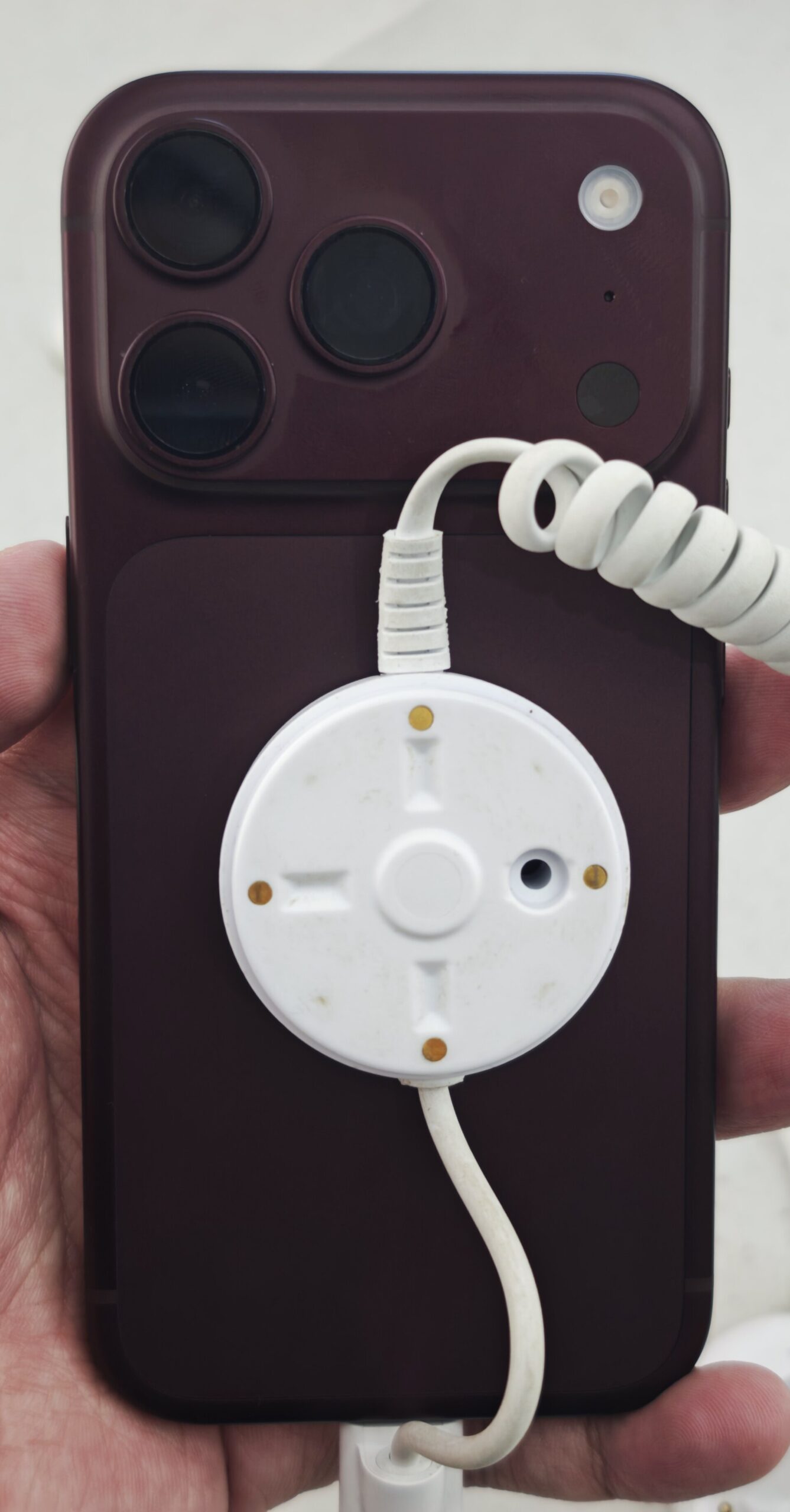
Actual iPhone 18 Pro photographed from another real-world angle on September 19, 2026. Photo: Junrui Gao / Wikimedia Commons, CC BY-SA 4.0. Resized for web. Source file.
Battery and charging: the boring upgrade you will notice every day
Apple’s technical specifications list up to 34 hours of video playback for iPhone 18 Pro, while the company’s U.S. launch material says eSIM-only models can reach up to 36 hours. Those are controlled claims rather than a universal real-world result, so they should be treated as comparative guidance rather than a promise.
Independent testing is more encouraging than the raw number alone. TechRadar’s week-long review described battery life as excellent, and Apple has paired the efficiency gains with significantly faster charging. With a compatible 60W-capable adapter, Apple says the phone can reach 50% in around 15 minutes. MagSafe can reach 50% in around 30 minutes with suitable hardware.
Faster top-ups change the day-to-day experience more than a small increase in total capacity. If you can recover half a charge during a shower or short break, the phone becomes easier to live with even on heavy camera or travel days.
The downside is familiar: the high-power adapter needed for the fastest wired charging is sold separately. At a $1,199 starting price, buyers should include accessories in the real cost of ownership rather than treating the MSRP as the final number.
iOS 27 and Siri AI: finally part of the hardware story
iPhone 18 Pro launches with iOS 27 and the new Siri AI experience. Apple says Siri can use personal context, understand what is on screen and take actions across apps. The company is positioning the device as a personal AI hub rather than a phone with a few isolated generative features.
That direction makes the A20 Pro’s Neural Engine more relevant. The phone is being designed around a mix of on-device processing and Apple’s privacy-focused cloud architecture, rather than treating AI as a feature that lives entirely on remote servers.
Because Siri AI is rolling out in beta and feature availability varies by language and region, buyers should not purchase the phone for a single promised AI workflow without checking current availability. Our iOS 27 rollout guide tracks the wider software context.
The strongest AI argument for the iPhone 18 Pro is therefore not any one demo. It is longevity: this is the Apple device with the most headroom for the company’s next several years of local AI models, camera intelligence and personal-context features.
What the iPhone 18 Pro gets right — and where it still falls short
What we like
- Variable-aperture 48MP main camera adds real optical control.
- 48MP ultrawide and 48MP telephoto make the camera system unusually complete.
- Better vapor-chamber cooling improves sustained performance.
- Faster wired and MagSafe charging reduce daily battery anxiety.
- 6.3-inch ProMotion display remains compact by flagship standards.
- Apple Reference Image is a genuinely interesting authenticity tool.
What still needs work
- $1,199 starting price is high.
- 211g is still heavy for a 6.3-inch phone.
- Best charging speeds require extra accessories.
- Many Siri AI features remain rollout- and language-dependent.
- iPhone 17 Pro owners do not get a dramatic everyday redesign.
- Apple’s closed ecosystem still limits some power-user flexibility.
Who should buy the iPhone 18 Pro?
Buy it if: photography and video are central to how you use a phone, you regularly push performance for gaming or editing, you are upgrading from an iPhone 15 Pro or older, or you want the newest Apple Intelligence/Siri hardware platform in a smaller Pro size.
Wait or buy something else if: you already own an iPhone 17 Pro and are satisfied with its cameras and battery, you mainly use your phone for messaging/social apps, or the $1,199 starting price stretches your budget. Last year’s Pro remains fast and capable.
If you are deciding between Apple’s conventional flagship and its foldable, read our iPhone 18 Pro vs iPhone Duo comparison. The 18 Pro is the safer choice for camera consistency, durability and one-handed use; the Duo is the more radical choice for multitasking and screen space.
Bottom line: iPhone 18 Pro is a meaningful camera-and-performance upgrade disguised as a familiar phone. It is not a mandatory annual upgrade, but it is one of the strongest reasons in years for an older Pro owner to move forward.
iPhone 18 Pro FAQ
When did the iPhone 18 Pro launch?
Apple announced iPhone 18 Pro on September 9, 2026. Pre-orders opened September 12, and general availability began September 18 in more than 65 countries and regions.
How much does iPhone 18 Pro cost?
U.S. launch pricing starts at $1,199 for 256GB. Apple also offers 512GB, 1TB and 2TB configurations.
What is new about the iPhone 18 Pro camera?
The main 48MP Fusion camera now has four physical aperture settings—ƒ/1.48, ƒ/1.8, ƒ/2.8 and ƒ/4.0—plus new Pro controls for aperture, shutter speed, white balance and histogram viewing.
Does iPhone 18 Pro have optical zoom?
Yes. Apple lists a 48MP 4x Fusion Telephoto plus an optical-quality 8x option, alongside 2x from the main sensor.
Is iPhone 18 Pro worth upgrading from iPhone 17 Pro?
For most 17 Pro owners, not automatically. The 18 Pro’s variable aperture, improved thermals, faster charging and new AI platform are meaningful, but the overall form factor and daily experience remain evolutionary rather than radically different.
Is this a hands-on Digital Pulse Brief review?
No. This is a research-based review using Apple first-party specifications and independent hands-on reporting. We clearly avoid claiming personal testing we did not perform.
Sources and image credits
Specifications, pricing and availability were checked against Apple’s current first-party documentation. Review judgments are our synthesis of those facts and independent published testing.
- Apple Newsroom — iPhone 18 Pro announcement (September 9, 2026)
- Apple — iPhone 18 Pro product page
- Apple — iPhone 18 Pro technical specifications
- TechRadar — iPhone 18 Pro and Pro Max review (September 16, 2026)
- The Wall Street Journal — iPhone 18 Pro review (September 2026)
- Wikimedia Commons — iPhone 18 Pro image category
- Creative Commons Attribution-ShareAlike 4.0 International
Image record: All four article images are photographs of the actual iPhone 18 Pro, captured by Farragutful or Junrui Gao and published on Wikimedia Commons under CC BY-SA 4.0. Local WordPress copies were resized/compressed for web delivery; no creative alteration is claimed.
DIGITAL PULSE BRIEF NEWSLETTER
Get clear AI, technology and business insights in your inbox
Breaking developments, practical explainers, reviews and useful tech intelligence — without the noise.
WHAT TO READ NEXT
Samsung Galaxy Z Fold 8 Review: The Passport Foldable Finally Makes Sense  Canva Pro Review 2026: Is $180/Year Worth It?
  Claude Pro Review 2026: Is It Worth $20/Month?
MORE FROM DIGITAL PULSE BRIEF