
META CONNECT 2026 · DAY 2 · DEVELOPER RECAP
Meta Connect 2026 Day 2: Horizon Create, Model API GA, AI Glasses Tools and $2M for Developers
Meta’s Day 2 developer announcements turn the Connect hardware story into a build roadmap: Model API is GA, new AI-glasses tooling starts rolling out September 30, VR SDKs are live, Horizon creation is going agentic, and two $1M developer prize pools are on the table.
Published September 25, 2026 · Developer news analysis · Digital Pulse Brief
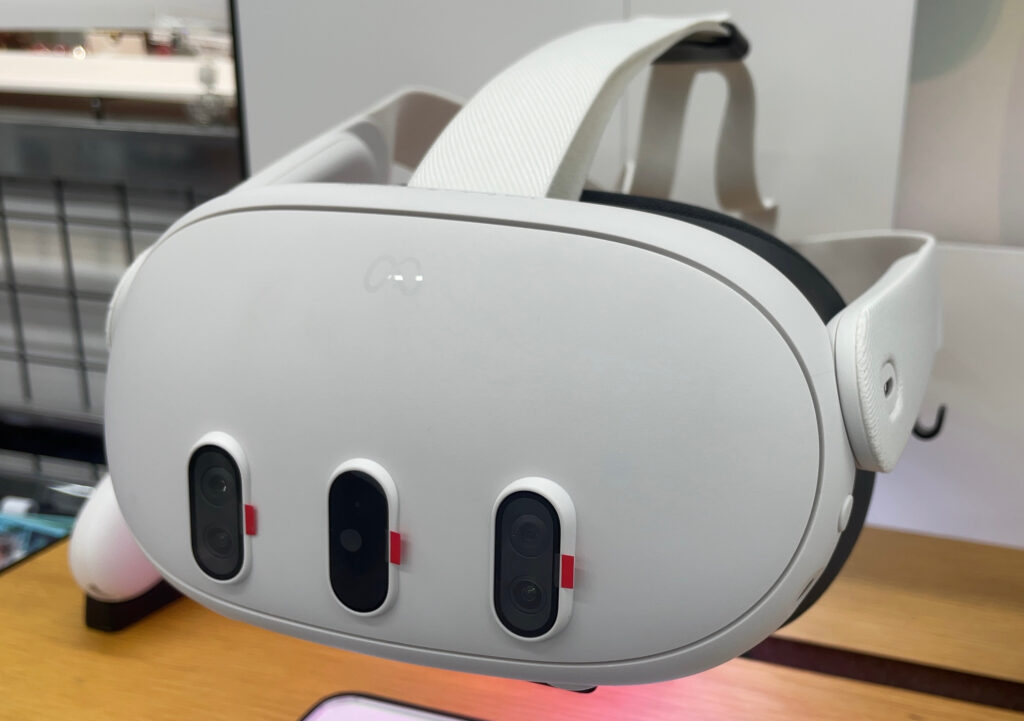
Meta Quest 3 provides current-platform context for Meta’s new VR developer roadmap. Photo: Kyu3a / Wikimedia Commons, CC BY-SA 4.0. Source file.
Quick answer: Meta Connect 2026 Day 2 shifted the story from hardware to the developer stack. Meta made its Model API generally available globally, moved Muse Code out of beta, announced Muse Spark 1.3, launched Wearables Device Access Toolkit 1.0, opened new web and connector paths for AI glasses, released v207 SDKs for VR Glasses, introduced Horizon Create and Horizon Studio, and announced two separate $1M developer prize pools.
The important distinction is timing. Some of these tools are available now, some begin rolling out on September 30, 2026, Horizon Create and Horizon Studio are still in early access, and Meta VR Glasses hardware will not ship until spring 2027. For developers deciding what to build this week, those differences matter more than the keynote sequence.
This is a developer-focused follow-up to Digital Pulse Brief’s Meta Connect 2026 Day 1 consumer-hardware recap. Rather than repeat the product announcements, this guide separates what is usable now from what is still preview, waitlist or future hardware.
Meta Connect 2026 Day 2: what is actually available?
| Announcement | Status | Who it matters to | What to do now |
|---|---|---|---|
| Meta Model API | Generally available globally | AI app and enterprise developers | Evaluate first-party API and partner deployment options |
| Muse Spark 1.3 | Available; Oracle Cloud supported, Google Cloud private preview | Reasoning, coding and agent developers | Benchmark against existing model stack using your own workloads |
| Muse Code | Out of beta; Windows available | Software teams using multi-agent coding | Test long-horizon engineering workflows |
| Wearables Device Access Toolkit 1.0 | Stable release; rollout starts Sep. 30 | iOS/Android developers | Prepare an existing mobile app for hands-free glasses experiences |
| AI-glasses Web Apps | Developer path available | Web developers | Prototype on Meta Ray-Ban Display with standard web technologies |
| Meta AI Connectors | Developer preview | API/MCP service developers | Join preview if your service fits conversational access |
| Meta VR v207 SDKs | Available now | Unity, Unreal, Android and WebXR developers | Test VR Glasses compatibility before spring 2027 hardware |
| Horizon Create / Studio | Testing / early access | Game creators and small studios | Join the waitlist and evaluate the distribution model |
Meta’s official end-to-end Connect recap frames the strategy around velocity and accessibility: more models, more deployment choices and more ways to carry existing apps into Meta’s device ecosystem.

Meta CEO Mark Zuckerberg in 2025. Photo: Jeff Sainlar / Meta via Wikimedia Commons, CC BY-SA 4.0. Source file.
Meta Model API is now generally available globally
The most immediate AI platform change is that Meta Model API is now generally available globally. Meta says the service supports enterprise workloads through its first-party API and third-party partners, moving it beyond a limited preview into a production-oriented option.
At the same time, Meta expanded the Muse model family. Muse Spark 1.3 is positioned for complex coding and agentic workflows. Muse Code is now out of beta and available on Windows, using multiple agents that can work in parallel across isolated workspaces. Meta also highlighted Muse Image, Muse Voice Transcribe and Muse Glimmer, an open-weights 30B-parameter model intended for local or single-GPU deployment.
Why this matters: Meta is not forcing one deployment model. The pitch spans first-party API access, cloud partners, local/open-weights use and a coding-agent product. That makes the decision less about “which Meta model is best?” and more about where latency, privacy, cost, compliance and developer control sit in your application.
Cloud availability is not identical
Meta says Muse Spark 1.3 is available through Oracle Cloud AI Platform, while Google Cloud availability is in private preview. That difference is easy to miss in a launch recap but matters for teams with existing procurement and infrastructure commitments.
A separate $1M Global AI Developer Hackathon is coming
Meta also announced a global virtual AI developer hackathon with a $1 million cash prize pool. The event will have separate tracks for indie developers and startup teams, use Meta Model API, Muse Code or open-weights models, and include free Model API credits plus technical workshops from Meta Superintelligence Labs. Applications were not yet open in Meta’s recap; developers can sign up for notification.
This is one of two $1M developer programs announced around Connect. The second is the VR Start competition, discussed below. Together, Meta has put $2 million in announced cash prize pools behind getting developers to build on its new AI and spatial platforms.
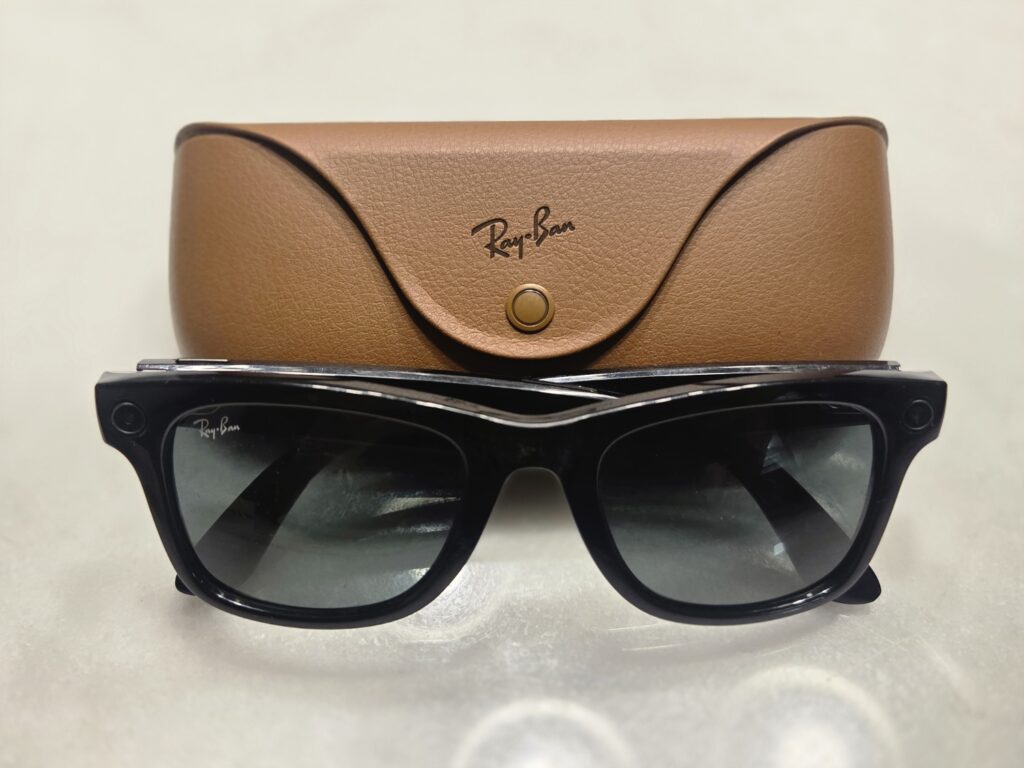
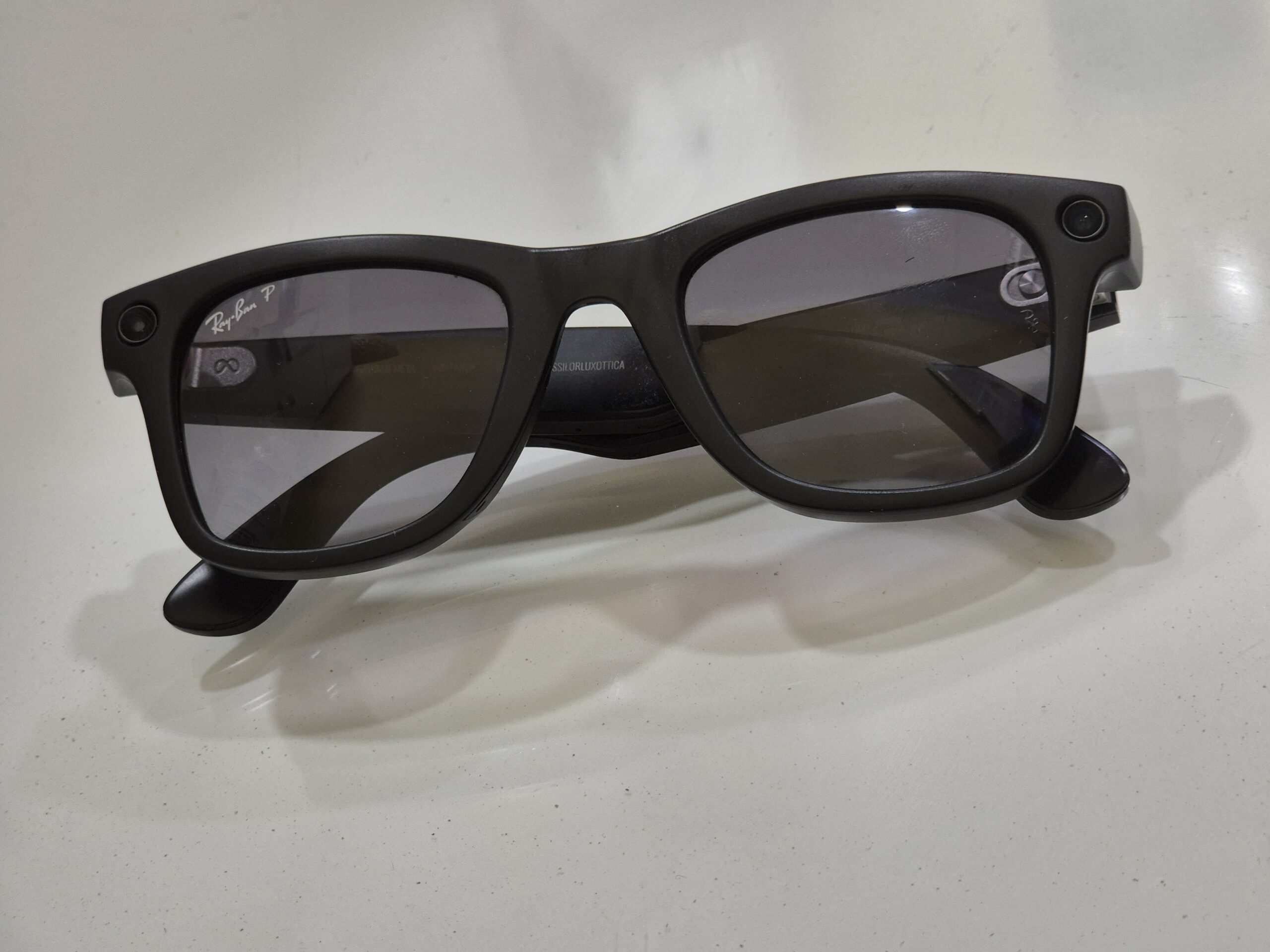
Ray-Ban Meta Gen 1: CCadio / Wikimedia Commons, CC BY 4.0. Ray-Ban Meta Gen 2: ItzANormalFioko / Wikimedia Commons, CC BY-SA 3.0. Images show existing supported hardware, not fabricated Connect 2026 event photography.
AI glasses now have three distinct developer paths
Meta’s AI-glasses strategy is no longer one SDK. Developers can now choose between extending a mobile app, building a web app for display glasses, or connecting a service directly to Meta AI.
Mobile app → Device Access Toolkit 1.0Keep the existing iOS or Android app, backend and store listing, while adding camera, microphone/audio, motion and glasses-aware inputs.
Web app → Meta Ray-Ban DisplayUse standard HTML, CSS and JavaScript. Meta says no separate native SDK is required for the web-app path.
Service/API → Meta AI ConnectorsExpose selected actions through an API or MCP server so Meta AI can call the service from glasses, app or web. This remains in developer preview.
The Wearables developer FAQ says Device Access Toolkit 1.0 begins rolling out on September 30, 2026. It supports Ray-Ban Meta Gen 1 and Gen 2, Ray-Ban Meta Display, Oakley Meta HSTN and Oakley Meta Vanguard, with capability differences by device.
For display glasses, Meta is also exposing new contextual inputs including device position, location and wrist motion from Meta Neural Band. WebMCP, still in developer preview, lets a web app explicitly define the functions Meta AI is allowed to invoke.
Discovery is the bigger platform shift
Until now, much of AI-glasses development lived in developer mode. Meta says two discovery surfaces are coming: select experiences directly on Meta Ray-Ban Display and a curated catalog in the Meta AI app. Submission timing has not yet been announced, so developers should not treat this as an open app store today.
The practical opportunity is early positioning. If submissions open after developers have already tested camera, motion, voice or display experiences, those teams will be better prepared than teams waiting for a formal storefront announcement.
For the hardware side, see our Day 1 breakdown of Ray-Ban Meta Audio, Gen 3, Meta VR Glasses and Muse.
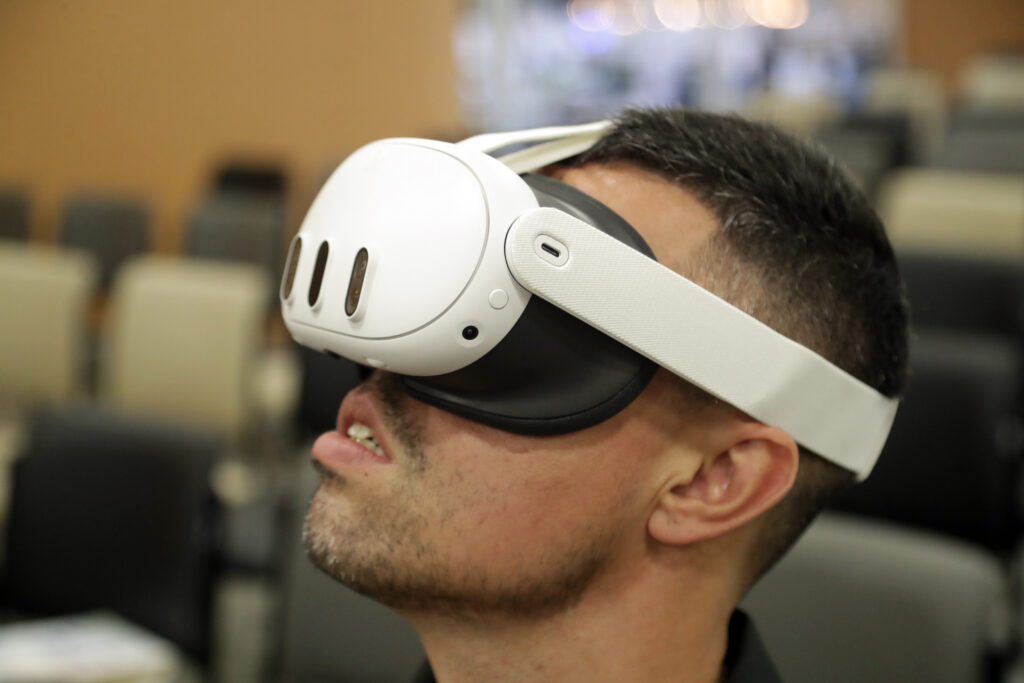
Person using Meta Quest 3. Image released into the public domain by the author and sourced via Wikimedia Commons. Source file.
Meta VR Glasses do not ship until spring 2027 — but the SDKs are here now
Meta’s new VR Glasses are future hardware, but the developer work starts immediately. Meta says the v207 SDKs for Unity, Unreal, Android and Web are available now, and the glasses run the same operating system, Store and payment platform as Meta Quest.
That continuity is important because Meta is presenting VR Glasses as an addition to Quest rather than a replacement. Existing Quest developers do not need to discard their engine or storefront strategy, but they do need to account for a different interaction model.
Design changes developers should test now
- Eyes and hands are the primary inputs. The glasses ship without controllers in the box.
- Hands compatibility affects discovery. Meta says the Store will recommend hands-compatible content for the VR Glasses audience.
- The field of view is narrower than Quest 3. Meta’s developer recap cites roughly 70×66 degrees for VR Glasses versus 110×96 on Quest 3, while offering higher resolution per eye.
- Hover behavior changes. Meta says hover events never fire because gaze is private by design, so UI that depends on hover needs another interaction pattern.
- Testing does not require the final hardware. Meta XR Simulator, Meta Spatial Simulator and Immersive Web Emulator support the VR Glasses input model and field of view.
The company also introduced a Device Readiness Check for prioritizing compatibility work, and Meta VR CLI can give coding agents access to platform documentation, debugging and profiling. Meta XR Operator can interact with a running app in Meta XR Simulator and verify changes.
The VR Start competition is open now
The second Meta VR Start Developer Competition runs from September 24 through November 18, 2026. Meta says the program offers $1 million across 20 cash prizes, with top prizes of $100,000 in each major category. Winners are scheduled to be announced around December 11.
Tracks include entertainment, gaming and productivity, plus special awards. Eligibility is limited to Meta Horizon Start Program members, and Meta’s competition page says entries should be fully usable with hands end-to-end. Developers can build for Quest, VR Glasses or both. Full terms remain on the official competition page.
Meta headquarters entrance in Menlo Park. Photo: Nokia621 / Wikimedia Commons, CC BY-SA 4.0. Source file.
Horizon Create and Horizon Studio turn prompts into playable games
Meta’s most aggressive creator-platform bet is Horizon Create on mobile and Horizon Studio in the browser. Both are built on the agentic creation capabilities of Meta Horizon Engine and are designed to turn natural-language prompts into playable 2D or 3D games.
Horizon Create is the phone-first workflow: start with a prompt or template, let the system generate, playtest and iterate. Horizon Studio is the more controlled browser environment, adding visual editing, asset swapping and direct parameter adjustments. Projects move between the two tools with assets, systems and iteration history preserved.
Meta says published games can become eligible for native distribution across Facebook, Instagram and Horizon. That is strategically important. The value proposition is not only “AI makes game creation easier”; it is “creation and distribution live inside the same network.”
What is not confirmed yet: Horizon Create and Horizon Studio are still in testing and early access. Meta says broader access is coming, but it has not published a universal launch date. Monetization details are also not complete; Meta points to in-game monetization and the Horizon Creator Fund while saying more information is coming.
Which Meta Connect developer announcement matters most to you?
| If you are… | Start with… | Reason |
|---|---|---|
| Building an AI SaaS or agent | Meta Model API / Muse Spark 1.3 | Production API access is GA and deployment options are expanding |
| Running a software team | Muse Code | Out of beta with multi-agent workflows for longer engineering tasks |
| Maintaining an iOS/Android app | Device Access Toolkit 1.0 | Extends an existing app instead of forcing a new glasses-only product |
| Web developer | AI-glasses Web Apps | Uses familiar HTML/CSS/JS and can be tested without a native SDK |
| API/service company | Meta AI Connectors | Lets Meta AI call selected service actions without a separate app |
| Quest/VR studio | v207 SDKs + VR Start competition | Hardware ships later, but compatibility and competition window are open now |
| Game creator without a full engine team | Horizon Create / Studio waitlist | Agentic creation plus native Meta distribution is the core proposition |
What changed from Day 1 to Day 2?
Day 1 was about the consumer story: new glasses, Muse as a personal agent, new audio and display hardware, and the spring-2027 VR device. Day 2 answered the developer question: what can actually be built for those platforms, with which tools, and when?
The answer is now much clearer. Meta is trying to reduce platform-switching costs: existing mobile apps can extend to glasses, normal web code can run on display glasses, Quest workflows carry into VR Glasses, and API services can connect directly to Meta AI. Horizon Create goes further by trying to remove coding from the first step entirely.
That does not guarantee developer adoption. Distribution, monetization, hardware installed base, review policies and long-term platform economics will matter more than launch demos. But compared with a hardware-only reveal, Day 2 provides concrete build paths and deadlines developers can act on now.
Meta Connect 2026 Day 2 FAQ
Is Meta Model API generally available now?
Yes. Meta says Meta Model API is generally available globally, with enterprise support and compliance options through its first-party API and third-party partners.
When does Wearables Device Access Toolkit 1.0 roll out?
Meta’s developer FAQ says the stable 1.0 release begins rolling out on September 30, 2026.
Can developers build for Meta VR Glasses before the hardware ships?
Yes. Meta says the v207 SDKs and simulators are available now. The hardware itself is expected in spring 2027.
Are Horizon Create and Horizon Studio generally available?
No. They are in testing with early access rolling out gradually. Meta is taking waitlist sign-ups but has not announced a universal public launch date.
How much prize money did Meta announce for developers?
Meta announced two separate $1M pools: a $1M Global AI Developer Hackathon and a $1M Meta VR Start Developer Competition. The VR competition is already running through November 18, while the AI hackathon recap directs developers to sign up for application notifications.
Can web developers build for Meta Ray-Ban Display without a native SDK?
Yes. Meta says web apps can use standard HTML, CSS and JavaScript and run on Meta Ray-Ban Display without a separate native app or SDK.
Methodology and source notes
This article was researched on September 25, 2026 from Meta’s official developer recap, Wearables FAQ, Horizon creation announcement, AI-glasses developer announcement, VR developer materials and competition rules summary. Digital Pulse Brief did not independently test Muse Spark 1.3, Muse Code, Horizon Create, Horizon Studio, Device Access Toolkit 1.0 or the v207 SDKs for this article.
Primary sources
- Meta for Developers — Meta Connect 2026 end-to-end recap
- Meta — Horizon Create and Horizon Studio recap
- Meta — Building for AI glasses and new discovery surfaces
- Meta Wearables Developer FAQ
- Meta — Build for Meta VR Glasses today
- Meta — 2026 Meta VR Start Developer Competition
- Meta Connect 2026 developer sessions on demand
You may also like
META CONNECT · DAY 1Everything Announced: VR Glasses, Ray-Ban Meta Audio, Gen 3 and Muse META CONNECT GUIDEMeta Connect 2026: Start Time, How to Watch and What to Expect AI AGENTS · PRIVACYAmazon Blocks Meta Muse AI Agent From Shopping
Visual-use record: this article uses independently licensed Wikimedia Commons photography already documented in the Digital Pulse Brief media library. Meta Quest 3 photos are CC BY-SA 4.0 or public domain as noted; Ray-Ban Meta photography is CC BY 4.0 / CC BY-SA 3.0 as credited; Meta headquarters and Mark Zuckerberg images are CC BY-SA 4.0 with source records retained in WordPress. No launch-event image, interface screenshot or benchmark graphic was fabricated.
DIGITAL PULSE BRIEF NEWSLETTER
Get clear AI, technology and business insights in your inbox
Breaking developments, practical explainers, reviews and useful tech intelligence — without the noise.
WHAT TO READ NEXT
New Microsoft Copilot 2026: Home, Code and Autopilot Turn Copilot Into a Work Operating Layer  Claude Opus 5.5 Explained: Pricing, Coding Gains, Safety Changes and Who Should Use It
  Gemini 3.8 Live Avatar Is Now GA: 97 Languages, Custom Avatars, SynthID and Enterprise Use
MORE FROM DIGITAL PULSE BRIEF