What Is an AI Agent? How Agentic AI Works, What It Can Do and Where It Can Go Wrong

AI agents are AI systems designed to pursue a goal through multiple steps. They interpret a task, plan, call tools, inspect results and continue until a stopping condition.
AI agent vs chatbot
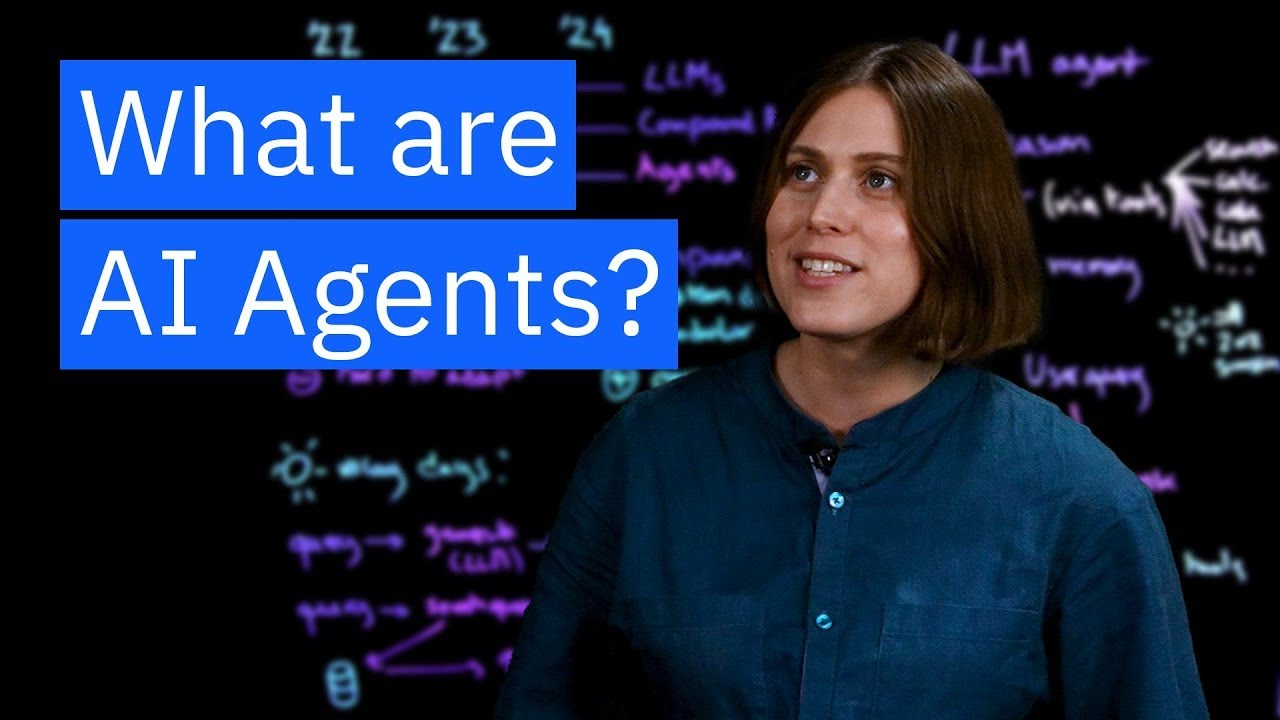
A chatbot mainly responds. An agent adds a goal → plan → action → observation loop and may use search, files, code, APIs, databases or business software.
How agentic AI works
Most systems combine a model, instructions, context or memory, tools and an orchestration loop.
Why AI agents matter in 2026
Agentic systems are moving into coding, research, security operations, customer support and enterprise workflows.
Security controls
- Least privilege.
- Tool allowlists.
- Human approval.
- Treat external content as untrusted data.
- Log actions.
- Set limits.
- Verify important results.
The building blocks of an AI agent
A useful way to understand an agent is to separate the system into six parts: a model that interprets the task, instructions that define boundaries, context or memory, tools that can act on the outside world, an orchestration loop that decides what happens next, and guardrails that limit authority. The model is only one component. The surrounding software determines what data the agent can see, which actions it can take and when a human must approve a step.
Agentic AI vs automation
Traditional automation follows a fixed sequence: if X happens, run Y. An AI agent can choose among several possible next steps based on the current state of the task. That flexibility is useful when inputs are messy or the path is not known in advance, but it also makes testing and governance more important.
| Approach | Best fit | Main limitation |
|---|---|---|
| Rule-based automation | Stable, repeatable processes | Breaks when conditions fall outside predefined rules |
| Chatbot | Question answering and drafting | Usually stops after returning a response |
| AI agent | Multi-step tasks that need tools or decisions | More autonomy creates more security and reliability risk |
Where AI agents are useful
Agents are most valuable when a task has a clear goal, a limited toolset and an outcome that can be checked. Examples include triaging support tickets, preparing research from approved sources, testing code in a sandbox, reconciling structured business data, or monitoring a workflow for exceptions. They are less suitable when the objective is vague, the action is irreversible, or the system would need broad access to sensitive data.
Why permissions matter more than model intelligence
A highly capable model with read-only access is usually less dangerous than a weaker model that can send money, delete records or publish code without approval. The practical security boundary is therefore the permission model around the agent. Use narrow credentials, short-lived tokens, tool allowlists and explicit approval for destructive or high-impact actions.
How to evaluate an AI agent before deployment
- Define the exact goal and stopping condition.
- List every tool, data source and external system the agent can access.
- Separate read permissions from write permissions.
- Decide which actions always require human confirmation.
- Test failure cases, malicious inputs and incomplete data.
- Log tool calls and important decisions for review.
- Measure task success, error rate, cost and recovery behavior.
For teams building agent workflows, the goal should not be maximum autonomy. It should be the minimum autonomy required to complete the task safely and reliably. See also our prompt injection guide and Zero Trust explainer.
Common agent design patterns
Not every agent needs an open-ended loop. A router can choose the right specialist tool, a planner can break a task into subtasks, a supervisor can delegate work to narrower agents, and a reviewer can check a draft before anything is published or executed. Simpler patterns are often easier to secure and debug than a single agent with dozens of tools.
Planner and executor
The planner proposes a sequence of steps while the executor performs only the approved action. Separating these roles makes it easier to validate plans and impose limits before tools run.
Supervisor and specialists
A supervisor can send coding, research or data tasks to purpose-built workers with different permissions. The benefit is compartmentalization: the research worker does not automatically need production deployment access.
Reviewer loop
A second model or deterministic validator can inspect outputs for missing evidence, unsafe tool calls or schema errors. Reviewers do not guarantee correctness, but they can catch predictable failure modes before a result reaches the user.
Reliability: the hidden cost of autonomy
Multi-step systems compound small errors. If each step is only slightly unreliable, a long chain can fail much more often than a single response. Good agent design therefore uses checkpoints, bounded retries, explicit timeouts and deterministic validation. When the system cannot verify success, it should stop or escalate rather than continue indefinitely.
Cost and latency considerations
Agents can call models and tools repeatedly, so one user request may trigger many operations. Teams should set budgets for model tokens, external APIs, compute time and tool calls. A useful design records why each call was made and prevents loops from consuming resources without improving the result.
What good agent governance looks like
- Named owner for each production agent.
- Documented purpose, data access and tool permissions.
- Versioned instructions and model configuration.
- Change review for new tools or broader permissions.
- Monitoring for unusual action sequences and repeated failures.
- A simple way to disable the agent or revoke credentials quickly.
The safest production agents are usually not the ones with the most autonomy. They are the ones whose goals, permissions, limits and success criteria are explicit enough that people can understand what the system is allowed to do.
Sources