Home › Premium Tech › Roman Space Telescope
NASA Roman Space Telescope Is Awake: First Photons, WFI Activation and What Happens Next
NASA’s Nancy Grace Roman Space Telescope has switched on its 300-megapixel Wide Field Instrument and detected its first starlight while traveling toward L2. Here is what has actually happened, what the early test means, and why Roman’s wide-field design could change astronomy.
Digital Pulse Brief Editorial Desk • September 18, 2026 • News + explainer
Quick answer: what changed this week?
On September 15, NASA reported that the Nancy Grace Roman Space Telescope’s Wide Field Instrument (WFI) had been successfully activated in space. The 300-megapixel infrared camera is Roman’s primary science instrument. Engineers also completed an initial checkout of the Coronagraph Instrument, Roman’s technology demonstrator for directly imaging planets around other stars.
The milestone came a little over two weeks after Roman launched aboard a SpaceX Falcon Heavy on August 30, 2026 at 7:26 a.m. EDT. The observatory is still in commissioning and is traveling toward the second Sun–Earth Lagrange point, L2, roughly one million miles from Earth. NASA says the mission remains on track to release its first science images in early 2027.
The most important nuance: the fuzzy star image NASA shared is not a finished science image. It is a first-light engineering test taken before final focus and optical alignment. The deliberately out-of-focus stars give the team a baseline for tuning the telescope.
Current status, September 18: WFI is operational; all 18 infrared detectors have been activated; test data has reached engineers on Earth; WFI focus and filter-wheel mechanisms have been checked; the Coronagraph can communicate with its major components; full commissioning continues.
Why Roman is not just ‘another Hubble’
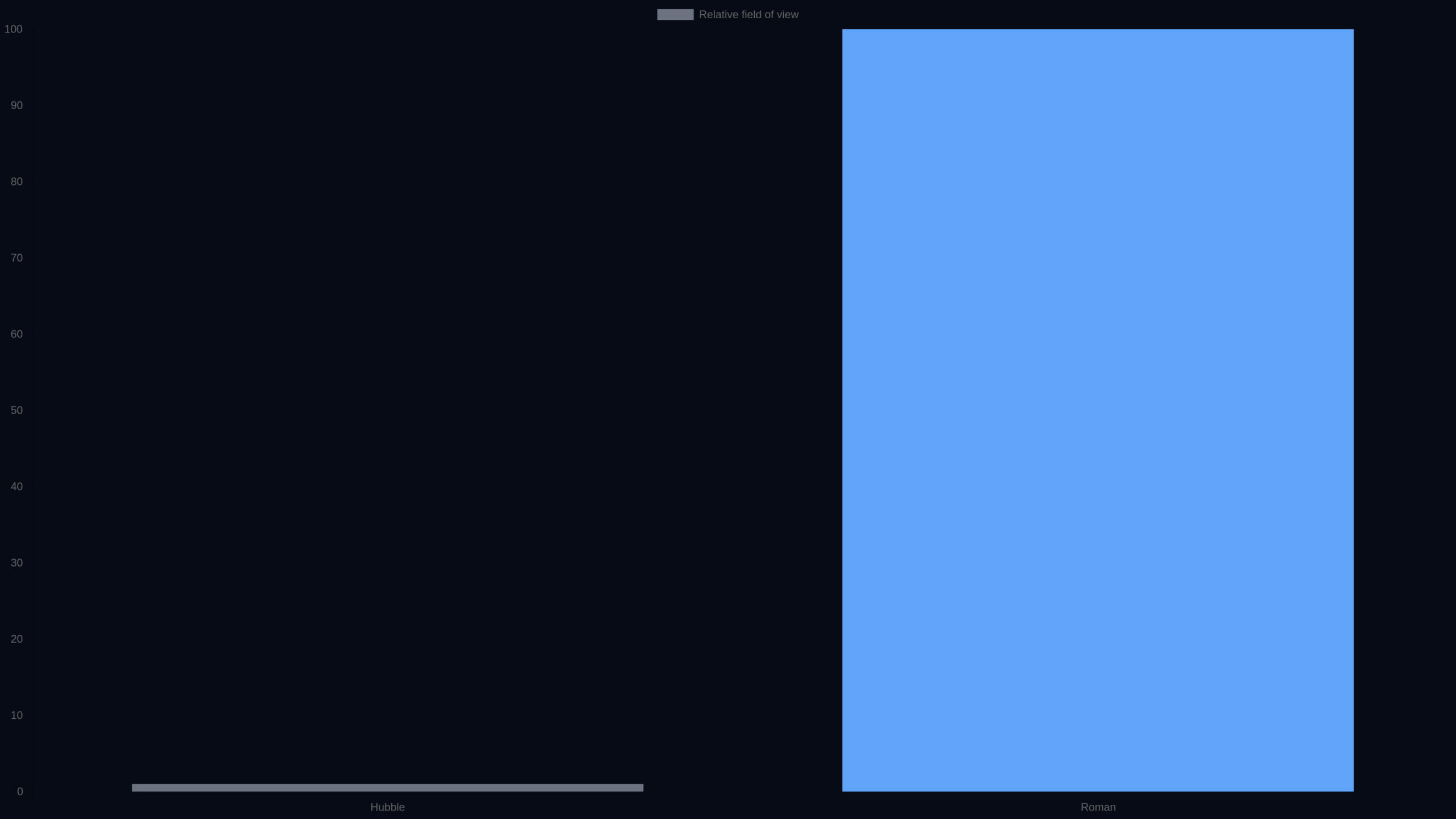
Roman and Hubble share a surprisingly important number: both use a 2.4-meter primary mirror. But Roman is designed for a different job. Hubble is exceptionally good at taking deep, narrow, highly detailed observations. Roman combines Hubble-like angular resolution with a field of view at least 100 times larger.
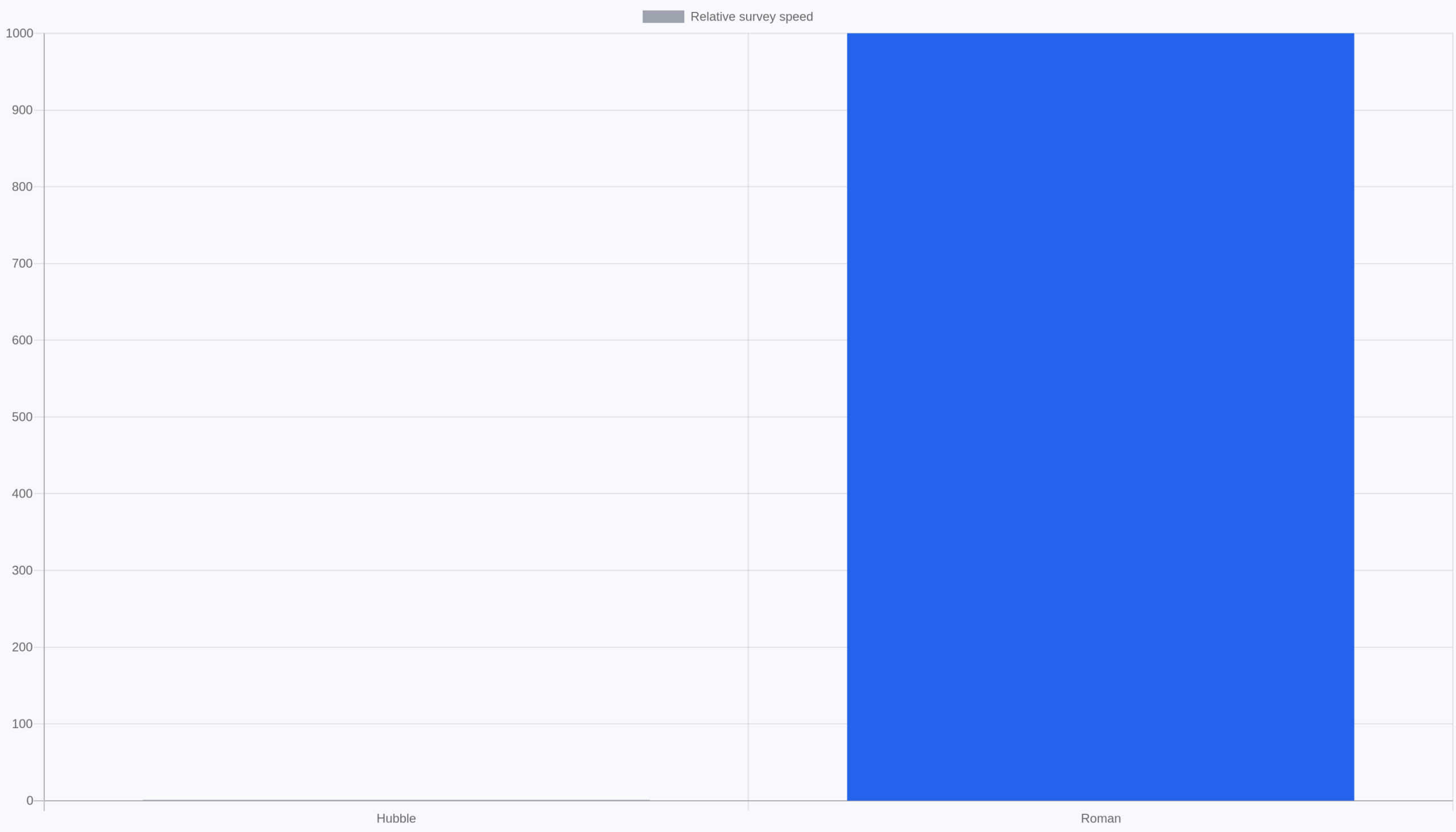
That changes the scale of the questions astronomers can ask. Instead of studying one small patch and extrapolating, Roman can repeatedly map enormous areas of the sky with consistent sharpness. NASA says the observatory is designed to survey the universe 1,000 times faster than Hubble.
Think of Hubble as a powerful telephoto lens and Roman as a high-resolution panoramic survey camera. They are complementary rather than substitutes: Roman can discover populations and rare events across huge fields, while Hubble and Webb can perform detailed follow-up observations.
Inside the Wide Field Instrument: 18 detectors and a 300-megapixel view
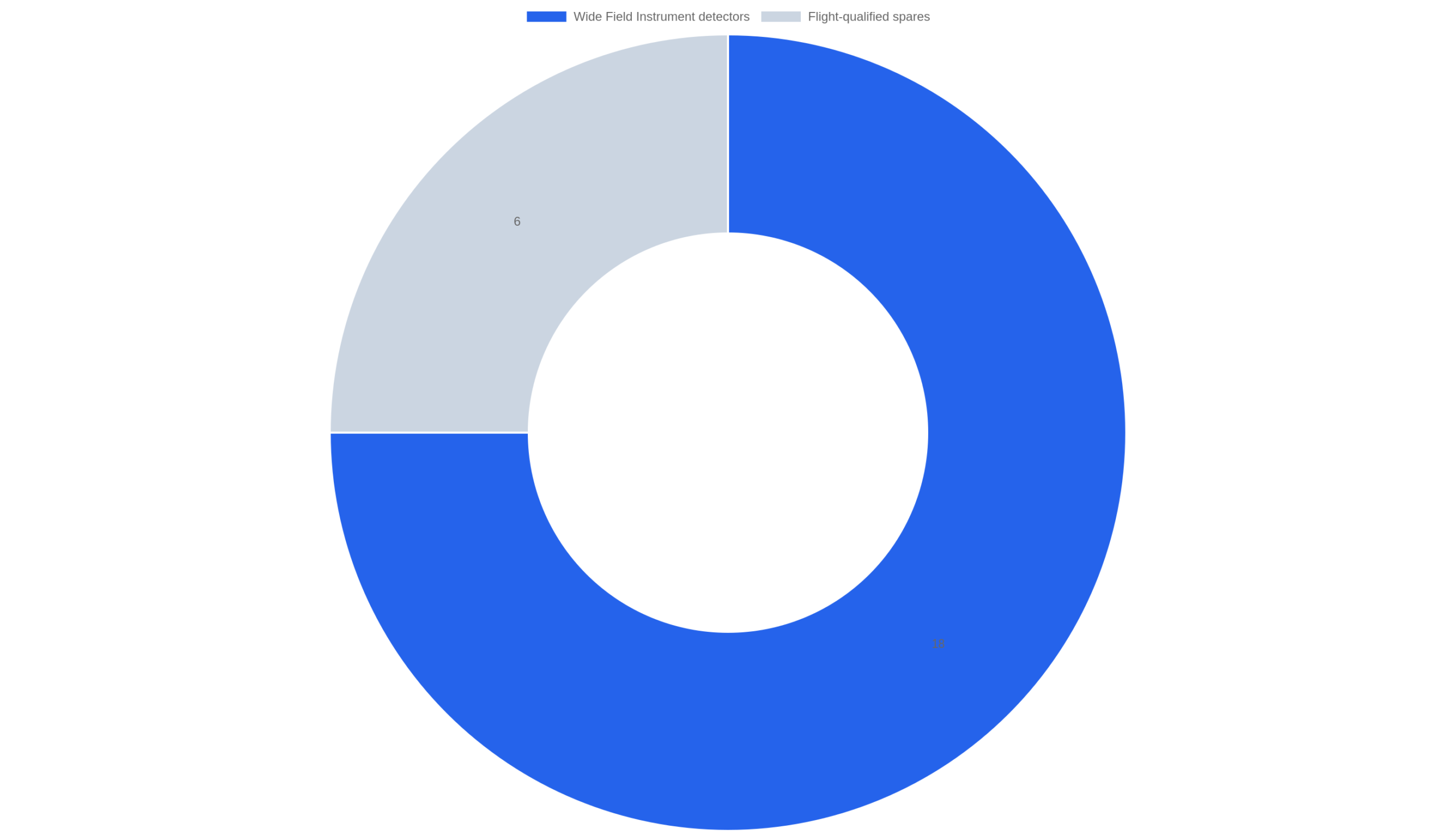
WFI is the workhorse behind Roman’s survey capability. NASA describes it as a 300-megapixel infrared camera built around 18 flight detectors. Each detector has about 16.8 million pixels; six additional detectors were retained as flight-qualified spares.
Before activation, the instrument spent roughly 10 days warming and drying out after launch. NASA says engineers then cooled it from about minus 85°F (minus 65°C) toward its final operating temperature of roughly minus 300°F (minus 183°C). On September 11, the team activated all 18 infrared detectors.
Engineers subsequently tested the calibration system, the element wheel containing filters and prisms, and the focus mechanism. The first starlight reached the detector array while it was still in its launch configuration and far from best focus. That is why the stars appeared as large donut-like features rather than crisp points.
The test matters because it shows the optical and electronic chain is alive: photons entered the telescope, reached the WFI detectors, were converted into data, and that data made it back to engineers on Earth.
The three numbers that explain Roman’s scale
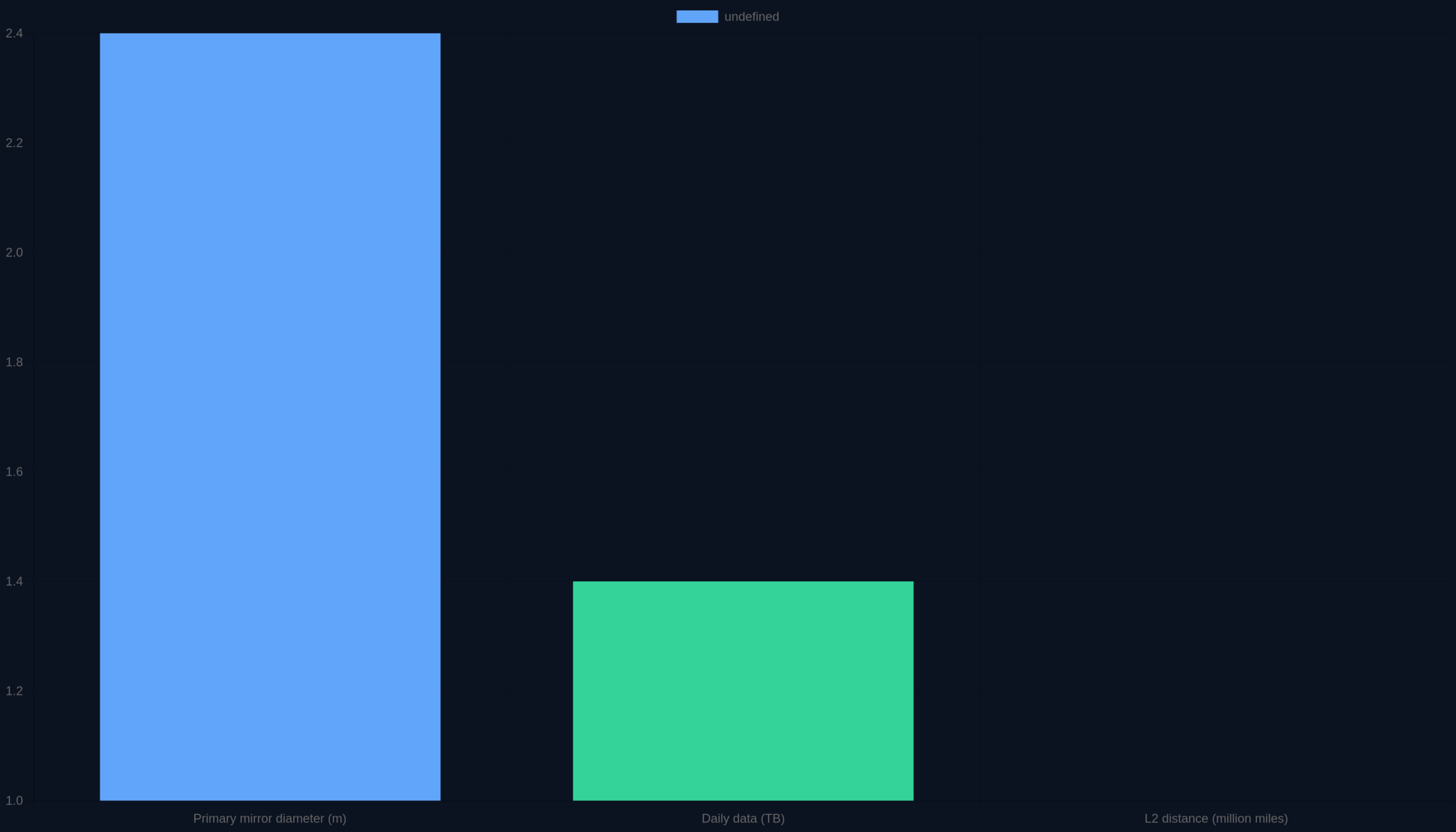
2.4 meters: Roman’s primary mirror diameter. It matches Hubble’s diameter but uses modern materials and is much lighter.
1.4 terabytes per day: NASA expects Roman to return about 1.4 TB of data daily, the highest data rate yet for a NASA astrophysics mission. That scale is why automated analysis, machine learning and citizen-science workflows matter.
About one million miles: Roman is traveling to Sun–Earth L2. The relatively stable thermal and gravitational environment is well suited to precision astronomy, and Webb operates around the same Lagrange region at a safe separation.
What the Coronagraph adds — and what it does not
Roman’s second instrument is a technology demonstration rather than the observatory’s primary survey camera. The Coronagraph Instrument uses optics, masks, deformable mirrors and sensors to suppress a star’s glare so much fainter objects nearby can be seen.
NASA’s September checkout confirmed that controllers can communicate with the instrument’s software, thermal controls, mechanisms, cameras and avionics. The team also verified thermal control and began a decontamination period.
The goal is not to photograph an Earth twin immediately. Roman’s Coronagraph is intended to demonstrate technologies for directly imaging giant exoplanets and dusty disks. The engineering lessons are relevant to future concepts such as NASA’s Habitable Worlds Observatory, which is intended to push direct imaging toward Earth-like worlds.
Important distinction: WFI is Roman’s main science instrument. The Coronagraph is a technology demonstration. Treating them as equivalent instruments would overstate the coronagraph’s mission role.
What Roman will actually study
Dark energy and cosmic expansion
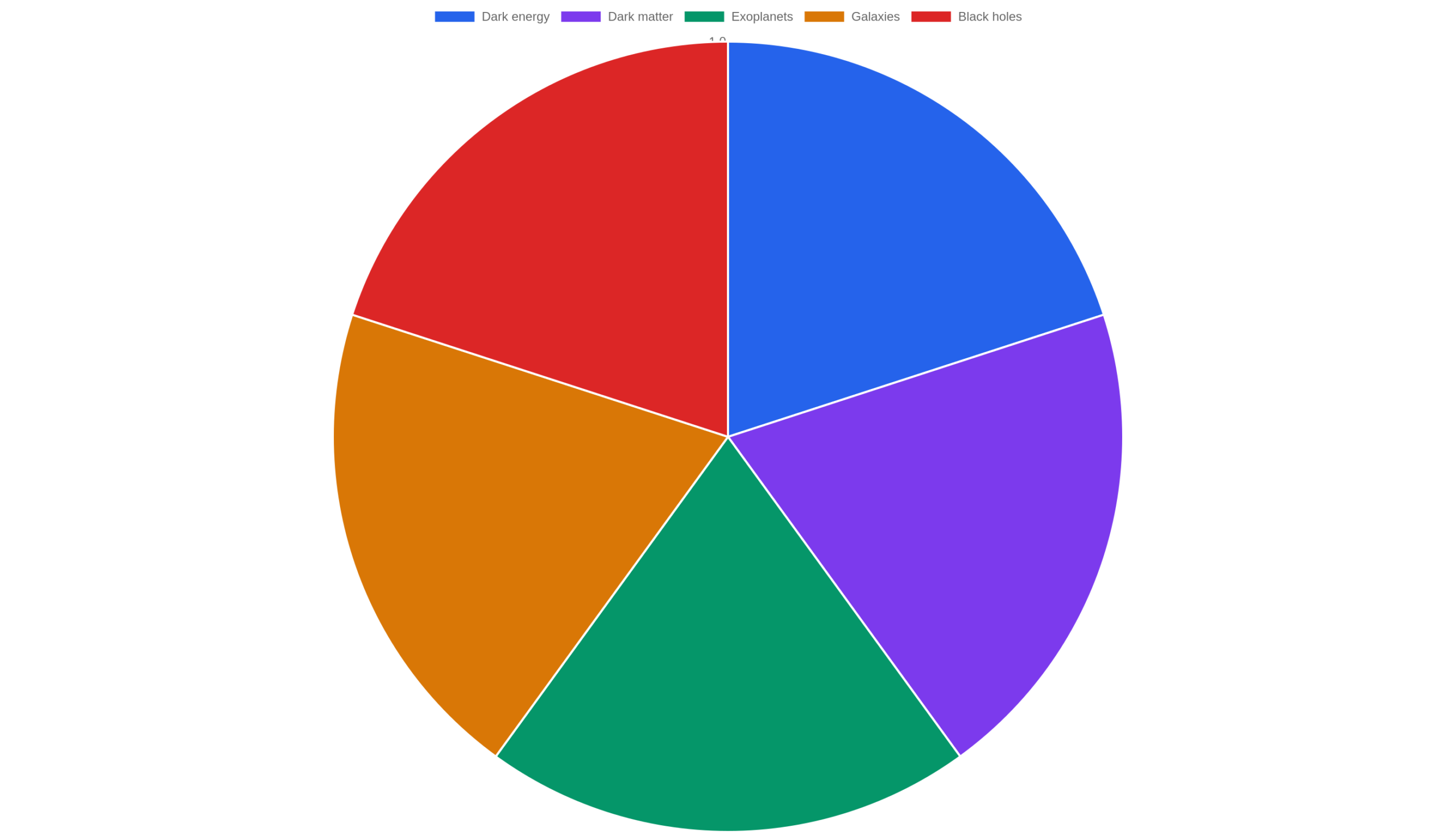
Roman will map the distribution and distances of huge numbers of galaxies and supernovae. By measuring how cosmic structure and expansion changed over time, researchers can test competing explanations for dark energy — the name given to whatever is driving the universe’s accelerating expansion.
Dark matter through gravitational lensing
Roman can measure tiny distortions in the apparent shapes of background galaxies caused by intervening mass. Mapping this weak gravitational lensing across broad areas lets astronomers infer where otherwise invisible dark matter is distributed.
Exoplanets by microlensing
Roman will monitor dense star fields and look for temporary brightening caused when a foreground star — and sometimes its planet — bends the light of a background star. This technique can find planets at orbital distances and masses that complement transit surveys.
Everything the survey accidentally catches
A wide, repeated survey also becomes a discovery engine for transient events, black holes, distant galaxies and objects in our own solar system. NASA plans to make processed Roman data public, allowing researchers worldwide to pursue science beyond the mission’s core survey questions.
What happens next: commissioning before science
Roman is still an observatory in commissioning, not yet a telescope doing its planned science surveys. The team has to align the optics, focus WFI, activate and verify fine guidance, calibrate detectors, validate pointing, continue coronagraph checks and confirm the spacecraft behaves predictably in its operational environment.
NASA described the post-launch commissioning phase as roughly three months. The observatory’s first public science images are expected in early 2027, assuming commissioning continues as planned.
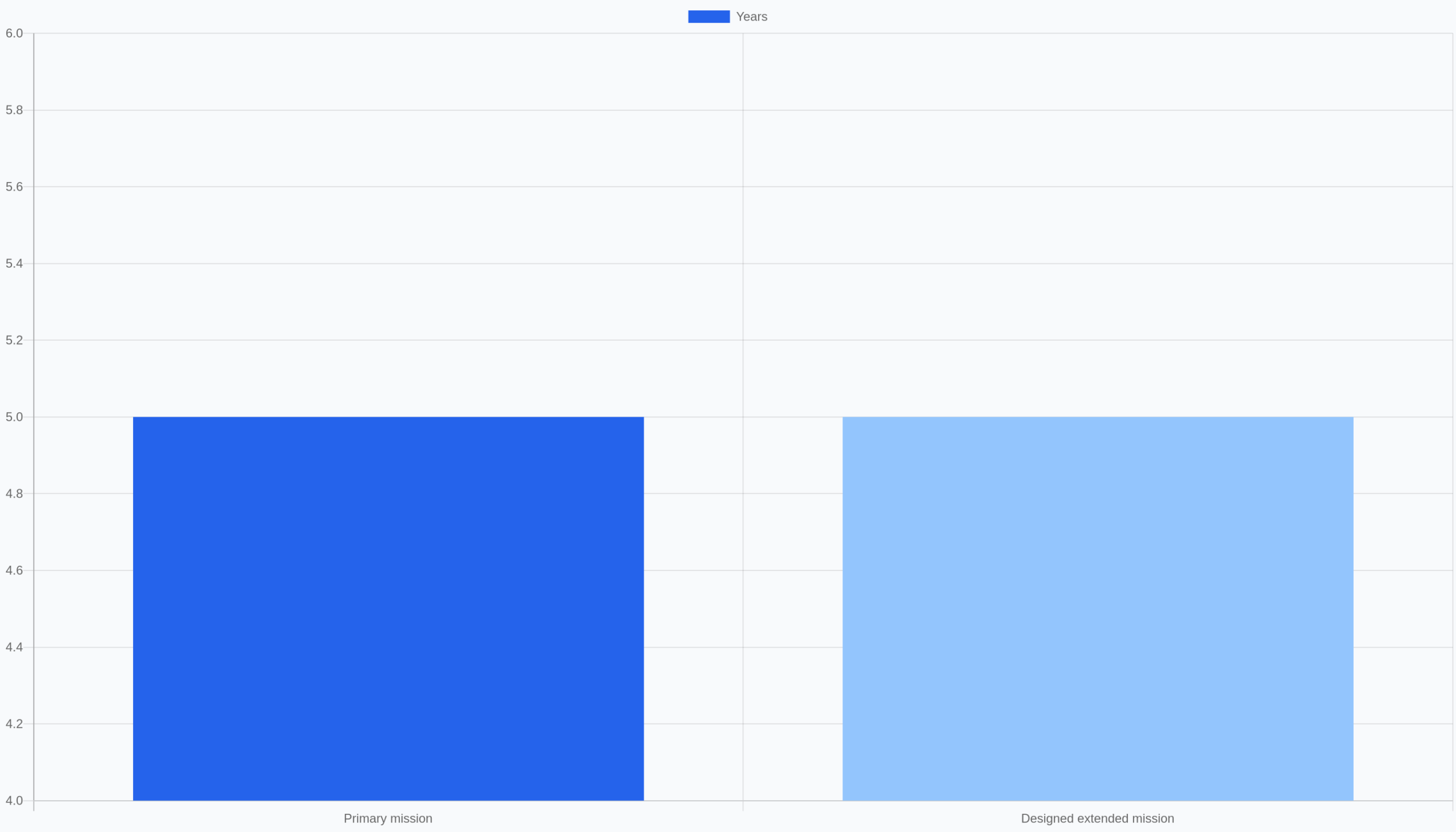
After that, Roman begins a five-year primary mission. NASA says the spacecraft was designed to support an additional five-year extended mission. A September 14 mission update also said fuel-saving performance has improved the telescope’s potential lifetime, but an extension would still depend on spacecraft health, science priorities and future NASA decisions.
Why Roman is also a data-infrastructure story
The telescope hardware gets the headlines, but Roman’s scientific impact depends just as much on the systems that move, process, catalog and analyze its data. NASA expects about 1.4 TB every day. A survey instrument that repeatedly captures huge portions of the sky creates a different computing problem from a telescope that takes fewer narrow observations.
That makes Roman relevant to readers following cloud and infrastructure as well as astronomy. Pipelines must calibrate raw detector output, associate observations with sky coordinates, identify changes over time and make large datasets discoverable to researchers. NASA has explicitly said machine learning, AI and citizen scientists will help flag significant findings.
The same scaling pattern appears in terrestrial AI infrastructure: more capable instruments and models create pressure on storage, networking and orchestration. Our explainer on Microsoft TauGrid and Kubernetes AI workloads looks at that problem from the data-center side.
Roman vs Hubble vs Webb: the practical difference
| Telescope | Best shorthand | Why it matters |
|---|---|---|
| Roman | Wide, sharp infrared surveys | Finds populations, patterns and rare events across enormous sky areas |
| Hubble | Narrower precision observations across UV/visible/near-IR | Decades of deep imaging and targeted follow-up |
| Webb | Extremely sensitive infrared detail | Studies faint and distant targets in extraordinary depth |
Roman’s advantage is therefore not that it simply produces a sharper picture than every other telescope. Its differentiator is survey scale at high resolution. Roman can find the interesting needles; Hubble and Webb can help inspect selected needles in greater detail or at complementary wavelengths.
Frequently asked questions
Has the Roman Space Telescope started science operations?
Not yet. Roman is in commissioning while traveling toward L2. Its WFI has been activated and tested, but NASA expects the first science images in early 2027.
Did Roman already take its first picture?
It detected its first starlight with WFI, but the released test frame is an engineering image taken far from best focus. It should not be confused with Roman’s first finished science image.
How powerful is Roman compared with Hubble?
Roman has a 2.4-meter primary mirror like Hubble and similar angular resolution in its relevant observing range, but WFI provides a field of view at least 100 times larger. NASA says Roman is designed to survey the universe 1,000 times faster than Hubble.
Where is Roman going?
To an orbit around Sun–Earth L2, roughly one million miles from Earth, the same general Lagrange region used by the James Webb Space Telescope.
What is Roman’s main camera?
The Wide Field Instrument, a 300-megapixel infrared camera using 18 flight detectors.
When will Roman release its first science images?
NASA currently expects them in early 2027, after commissioning and calibration.
Sources and methodology
This article relies primarily on first-party NASA mission updates and technical documentation. We distinguish engineering test imagery from finished science observations and label NASA performance figures as NASA specifications rather than independent benchmarks.
- NASA Science — WFI activation and Coronagraph checkout, September 15, 2026
- NASA — Roman launch release, August 30, 2026
- NASA Science — Roman mission overview
- NASA Science — Building Roman and instrument specifications
- NASA Images and Media Usage Guidelines
Visual methodology: Rather than using generic stock photography, Digital Pulse Brief created the six charts in this article from the cited NASA specifications. They are original editorial visualizations; they are not NASA artwork and do not imply NASA endorsement.
Explore more Premium Tech and AI & Automation coverage from Digital Pulse Brief.
DIGITAL PULSE BRIEF NEWSLETTER
Get clear AI, technology and business insights in your inbox
Breaking developments, practical explainers, reviews and useful tech intelligence — without the noise.
WHAT TO READ NEXT
What Is an AI PC? NPU, TOPS and Copilot+ PC Requirements Explained  Meta Connect 2026 Day 1: Everything Announced — Meta VR Glasses, Ray-Ban Meta Audio, Gen 3 and Muse Snapdragon Summit 2026 Day 2 Recap: Agentic PCs, Linux, Sound Elite Gen 2 and New Devices
MORE FROM DIGITAL PULSE BRIEF