


Qualcomm and Arm are back in a Delaware federal court in a five-day trial that could reshape how much Qualcomm pays for Arm technology — but it does not mean Snapdragon phones or PCs are about to stop working. The current case began on October 5, 2026 and is separate from Arm’s earlier Nuvia lawsuit, which ended in Qualcomm’s favor at the district-court level in 2025 and is now on appeal.
The new dispute centers on Qualcomm’s claim that Arm breached licensing contracts, withheld chip-testing tools, publicized a 2024 license-termination threat in a way that hurt Qualcomm’s business, and failed to negotiate future licensing terms in good faith. Arm denies the allegations and disputes Qualcomm’s claimed damages.
What matters right now
| Trial status | Ongoing as of October 6, 2026 |
| Main case | Qualcomm accuses Arm of contract breaches involving deliverables, licensing negotiations and a publicized termination threat |
| Money at stake | Qualcomm is seeking relief that could include suspending Arm royalty payments for up to five years; the judge is considering whether that remedy is available |
| Earlier Nuvia case | District-court judgment favored Qualcomm and Nuvia in September 2025; Arm appealed |
| Consumer action | None right now. Arm withdrew its 2024 Qualcomm license-termination notice in January 2025 and said it had no current plan to terminate the license while reserving its rights |
Status checked October 6, 2026 against Reuters reporting, Qualcomm and Arm SEC filings, Qualcomm’s investor statement, and official Qualcomm product documentation. The trial is ongoing, so outcomes and remedies can change.
The practical answer for buyers: there is no verified basis today to avoid, return or replace a Snapdragon phone or Windows-on-Arm PC because of this lawsuit. The dispute is about contracts, royalties and the future commercial relationship between Qualcomm and Arm — not a current shutdown of consumer devices.
What is the Qualcomm vs Arm trial actually about?
The current case was brought by Qualcomm, not Arm. Qualcomm filed a separate Delaware lawsuit in April 2024 alleging that Arm failed to provide deliverables required under Qualcomm’s Architecture License Agreement, or ALA. Qualcomm later expanded the complaint to include claims tied to Arm’s 2024 termination notice, alleged interference with customer relationships, and the terms offered for newer Arm technology.
According to Reuters’ account of the opening arguments, Qualcomm says Arm withheld chip-testing tools that should have been delivered under contract. Qualcomm also alleges that Arm disclosed to the media a 2024 notice threatening to terminate Qualcomm’s architecture license, creating uncertainty around Qualcomm’s ability to keep shipping chips.
Arm denies breaching the contracts. Its public filings say it disagrees with Qualcomm’s assertions and intends to defend the case vigorously.
What Qualcomm claims Arm did
Qualcomm’s case combines several different allegations. They should not be treated as proven facts while the trial is still underway.
- Withheld required tools or deliverables: Qualcomm says Arm failed to provide chip testing and verification resources required by contract.
- Improperly publicized a license threat: Qualcomm argues that Arm’s 2024 termination notice was disclosed in a way that damaged Qualcomm’s business relationships.
- Harmed a Meta chip deal: Qualcomm told the jury that uncertainty around its Arm license affected negotiations with Meta Platforms. Reuters reported Qualcomm’s claim that the final deal value was about $170 million lower.
- Failed to negotiate future terms in good faith: a related bench trial before U.S. District Judge Maryellen Noreika concerns negotiations for newer Arm technology.
- Offered dramatically higher future royalty terms: Reuters reported Qualcomm’s allegation that the royalty rate for a newer architecture generation was proposed at a level roughly 1,800% above an earlier version. That figure is Qualcomm’s litigation position, not an independently established market price.
How Arm is responding

Arm disputes Qualcomm’s claims
Arm’s public filings say it disagrees with Qualcomm’s allegations and intends to defend the case. In court, Arm has also challenged Qualcomm’s claimed commercial harm and the requested royalty remedy.
Image credit: Arm. Corporate logo used editorially under Arm’s published logo guidelines, which permit journalists and media outlets to use the logo for editorial purposes.
On the Meta issue, Arm’s lawyers argue that Qualcomm’s lost-value theory does not prove the license notice caused the commercial change. Reuters reported Arm’s position that Meta’s priorities were shifting from virtual-reality headsets toward AI glasses, which affected what Meta wanted from Qualcomm.
Arm has another major reason to fight the case aggressively: Qualcomm is a significant customer. Arm’s fiscal-year 2026 filing said Qualcomm represented about 9% of Arm’s total revenue. Arm also warned investors that the litigation could affect its relationship with Qualcomm, revenue, reputation and legal costs.
Why could billions of dollars in royalties be at stake?
Qualcomm is one of Arm’s largest licensees. Arm’s business model depends heavily on licensing intellectual property and collecting royalties when partners ship chips based on Arm technology.
Reuters reports that Qualcomm is asking for a remedy that could let it stop paying certain royalties to Arm for as long as five years. Because Qualcomm ships huge volumes of mobile, PC and connected-device silicon, a multi-year royalty interruption could be worth billions of dollars.
That outcome is not guaranteed. Judge Noreika is considering whether the contract language Qualcomm relies on actually permits such a royalty suspension. If that provision is unavailable, Qualcomm could be limited to a smaller damages claim even if it proves a breach.
Important: “billions at stake” describes the potential economic value of Qualcomm’s requested remedy. It is not a damages award, settlement or verdict. The trial is still in progress.
Architecture License Agreement vs Technology License Agreement
The dispute is easier to understand once the two license concepts are separated.
| Agreement | What it generally covers in this dispute | Why it matters |
|---|---|---|
| Architecture License Agreement (ALA) | Allows Qualcomm to develop custom CPU implementations compatible with the licensed Arm architecture, subject to the contract’s terms | Qualcomm’s custom Oryon CPUs depend on its ability to design its own CPU cores while remaining Arm-compatible |
| Technology License Agreement (TLA) | Covers access to specific Arm technology and related commercial terms | Qualcomm alleges Arm failed to offer certain future license terms at commercially reasonable prices and conditions |
The exact contract language is confidential in important areas, which is one reason outside observers should be cautious about predicting the outcome from public summaries alone.
Why Nuvia still matters to Snapdragon
Qualcomm acquired CPU startup Nuvia in 2021 to accelerate development of its own high-performance CPU cores. That work became central to the Qualcomm Oryon CPU family now used across Snapdragon products.
Arm sued Qualcomm and Nuvia in 2022, arguing that technology developed under Nuvia’s Arm license could not simply transfer to Qualcomm after the acquisition. A December 2024 jury found that Qualcomm had not breached the Nuvia agreement and that Qualcomm CPUs incorporating designs acquired with Nuvia were licensed under Qualcomm’s own ALA. The jury did not reach a verdict on one Nuvia-specific breach question.
In September 2025, the district court entered judgment for Qualcomm and Nuvia on the remaining issue. Qualcomm described that outcome as a complete victory. Arm appealed the judgment to the U.S. Court of Appeals for the Third Circuit, and Arm’s 2026 filings say that appeal remains pending.
That earlier case is related historically, but it is not the same lawsuit as the October 2026 trial.
Is Qualcomm’s Arm license currently being terminated?
No current termination is established. Qualcomm’s SEC filing says Arm sent Qualcomm a notice on October 22, 2024 alleging breaches of the Qualcomm ALA and asserting a right to terminate the agreement if the alleged problems were not cured within 60 days.
But Qualcomm’s filing also says that on January 8, 2025, Arm withdrew that notice and said it had no current plan to terminate the Qualcomm ALA, while reserving its rights depending on the litigation.
That distinction is critical. Headlines suggesting Snapdragon devices are immediately at risk of losing their Arm license over the current trial would overstate the public record.
What does the trial mean for Snapdragon phones and PCs?
Qualcomm’s newest Snapdragon platforms use custom Qualcomm Oryon CPUs. The architecture dispute therefore matters strategically: Qualcomm wants freedom to build its own high-performance cores under its existing license terms, while Arm has a commercial interest in protecting the value of its architecture and technology licenses.
But for existing devices, the situation is much less dramatic.
What is verified now
- Snapdragon products continue to ship
- Arm withdrew the 2024 termination notice
- No court order has halted existing Snapdragon devices
- No consumer recall or support shutdown has been announced because of this trial
What is not verified
- That phone prices will rise because of this case
- That Windows-on-Arm laptops will lose support
- That Qualcomm will stop making Arm-compatible CPUs
- That either company will terminate the relationship after trial
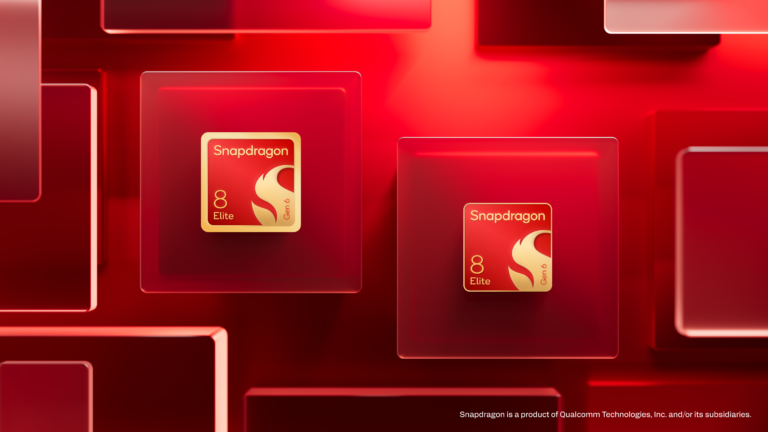
Qualcomm’s latest premium mobile platforms include the Snapdragon 8 Elite Extreme Gen 6 and Snapdragon 8 Elite Gen 6, both built around custom Oryon CPU technology. DPB’s Snapdragon 8 Elite Extreme Gen 6 vs Elite Gen 6 comparison explains the current mobile lineup.
On PCs, Oryon is also central to Snapdragon X-series processors. Our Snapdragon Summit 2026 Day 2 recap covers Qualcomm’s latest PC roadmap, while the Googlebook 2026 explainer looks at a current Snapdragon-powered laptop example.
Could this eventually affect chip prices or device roadmaps?
It is possible, but there is no responsible way to put a number on that impact today.
If Arm wins stronger future royalty terms, Qualcomm’s cost structure could change. If Qualcomm wins major damages or a royalty suspension, Arm’s economics with one of its largest customers could change instead. A settlement could rewrite future licensing terms without producing the dramatic courtroom outcome either side is currently arguing for.
Those commercial changes could eventually influence product strategy, margins or negotiations with device makers. But a direct line from “royalty dispute” to “your next phone will cost more” would be speculation unless Qualcomm, Arm or an OEM says so.
What could happen next?
| Possible outcome | What it would mean |
|---|---|
| Qualcomm proves contract breaches | Qualcomm could win damages or other contract remedies; the size depends on what the court allows |
| Qualcomm wins a royalty-suspension remedy | Potentially the highest-value outcome for Qualcomm, but the judge is separately considering whether that contractual remedy is available |
| Arm defeats the claims | Current royalty obligations and Arm’s defense position would be strengthened, subject to any remaining claims or appeals |
| Mixed verdict | Different contract and damages questions could go different ways; the trial contains multiple claims |
| Settlement | The companies could agree new commercial terms without waiting for every claim and appeal to finish |
There is also a separate procedural track from the earlier Nuvia case because Arm appealed the September 2025 judgment. Even a clear result in the October 2026 contract trial would not automatically erase that appeal.
What to watch as the trial continues
- The royalty clause: whether Judge Noreika allows Qualcomm to pursue a multi-year royalty suspension.
- The good-faith negotiation claim: the court is separately examining whether Arm negotiated future technology terms in good faith.
- Evidence around the Meta deal: Qualcomm must connect Arm’s alleged conduct to real commercial harm; Arm is challenging that causal link.
- How the jury separates the contracts: testing deliverables, termination notices, customer interference and future licensing terms are distinct issues.
- Any settlement signal: Qualcomm and Arm remain strategically dependent on one another even while they litigate.
Frequently asked questions
Is Qualcomm suing Arm right now?
Yes. The current Delaware trial is based on Qualcomm’s separate contract lawsuit against Arm. It began on October 5, 2026 and was reported as ongoing on October 6.
Is this the same lawsuit Arm filed over Nuvia?
No. Arm’s earlier Nuvia case began in 2022. The district court entered final judgment for Qualcomm and Nuvia in September 2025, and Arm appealed. The current case was brought by Qualcomm and concerns different alleged contract breaches.
Could Qualcomm really stop paying Arm royalties?
Qualcomm is seeking a remedy that could suspend certain royalty payments for up to five years, according to Reuters. The judge is considering whether that contractual remedy is legally available, so it should not be treated as an expected outcome.
Will Snapdragon phones stop working if Arm wins?
There is no evidence of that. Existing devices do not depend on a courtroom verdict to continue functioning, and Arm withdrew its 2024 Qualcomm license-termination notice in January 2025. No current product shutdown has been announced.
Should I avoid buying a Snapdragon laptop or phone?
There is no verified reason to make a purchase decision solely because of this trial. Buyers should compare the product itself — performance, battery life, software support, price and compatibility — rather than assume an unresolved licensing case will disrupt the device.
Why does Arm care so much about Qualcomm?
Qualcomm is a major Arm customer. Arm said in its fiscal-year 2026 reporting that Qualcomm accounted for about 9% of total revenue, making the commercial relationship significant to both companies.
Bottom line
The Qualcomm–Arm fight matters because it sits at the intersection of custom CPU design, Arm licensing economics and two of the most important chip roadmaps in phones and PCs.
Qualcomm is trying to prove that Arm breached its agreements and harmed its business while also challenging the economics of future licensing. Arm denies the claims and is defending the value and terms of its technology licenses. The most dramatic remedy Qualcomm seeks — years without certain royalty payments — is still only a request.
For consumers, the signal is simpler: there is no current reason to panic about Snapdragon hardware. The 2024 license-termination notice was withdrawn, products continue to ship, and the October 2026 trial has not produced a verdict or product restriction.
DPB will update this article if the court issues a material ruling, the parties settle, or either company announces a licensing change that affects current or future products.
Primary and authoritative sources
- Reuters — Qualcomm and Arm begin October 2026 contract trial
- Qualcomm SEC filing — Arm litigation, license notice and October 2026 trial schedule
- Arm SEC filing — Qualcomm/Nuvia litigation and Arm’s response
- Qualcomm investor statement — September 2025 district-court judgment
- Qualcomm — Oryon CPU architecture context
- Arm — corporate logo editorial-use guidelines
Related Digital Pulse Brief coverage
- Snapdragon 8 Elite Extreme Gen 6 vs 8 Elite Gen 6: Specs, 5GHz CPU, AI, Wi-Fi 8 and First Phones
- Snapdragon Summit 2026 Day 2 Recap: Agentic PCs, Linux, Sound Elite Gen 2 and New Devices
- Googlebook 2026: Price, Specs, Release Date and the Android Trade-Off
- Best AI Laptops to Buy in 2026
Digital Pulse Brief
Independent coverage of AI, chips, software and business technology — explained clearly and sourced to primary documents where available.
MORE FROM DIGITAL PULSE BRIEF