PREMIUM TECH · META CONNECT 2026 · DAY 1
Meta Connect 2026 Day 1: Everything Announced — Meta VR Glasses, Ray-Ban Meta Audio, Gen 3 and Muse
Meta’s first Connect keynote of 2026 delivered a new VR form factor, camera-free Ray-Ban Meta Audio, a practical Gen 3 upgrade, wider Display availability and a clearer role for Muse across wearable computing.
Published September 24, 2026 · Research-based news analysis · Digital Pulse Brief
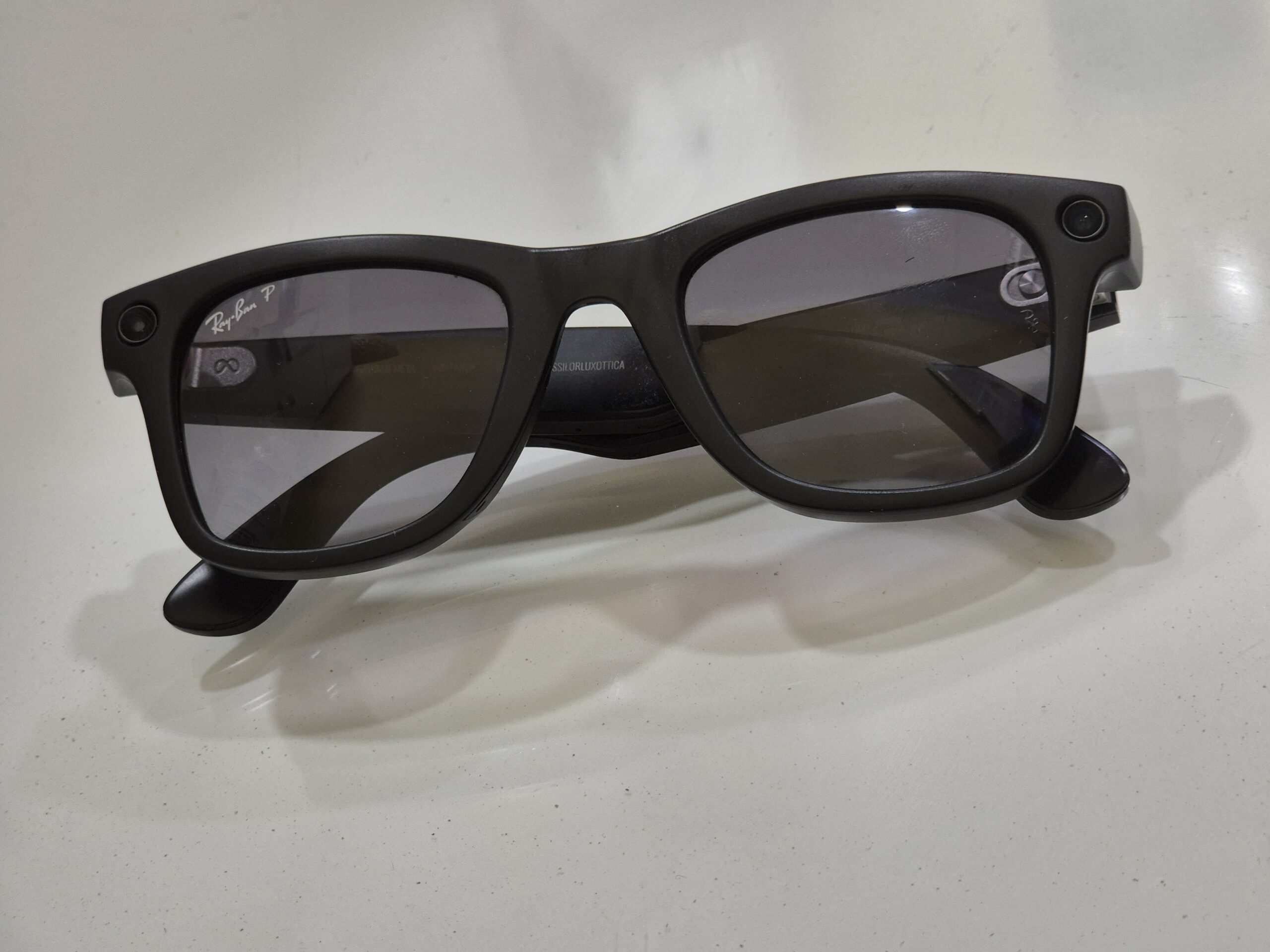
Context image: Ray-Ban Meta Gen 2 Wayfarer smart glasses. Photo: ItzANormalFioko / Wikimedia Commons, CC BY-SA 3.0. Source file. The newly announced Gen 3 is discussed below and is not represented by this photograph.
Quick answer: Meta Connect 2026 Day 1 was primarily a wearable-computing event. Meta unveiled Meta VR Glasses for spring 2027 at $1,299.99, introduced Ray-Ban Meta Audio camera-free AI glasses from $349, refreshed Ray-Ban Meta (Gen 3) from $449, expanded Meta Glasses styles and markets, and pushed its Muse personal AI agent deeper into the glasses roadmap. Meta’s VR announcement and Meta’s AI-glasses announcement are the primary sources.
Meta Connect 2026 has moved from pre-event speculation to a much clearer product strategy: Meta wants wearable computing to cover several layers, from inexpensive camera-free audio glasses to camera-equipped AI glasses, display glasses and a full spatial-computing device. That range matters more than any single demo, because it shows how Meta is trying to make “AI glasses” a category rather than one product.
This is a research-based news analysis, not a hands-on review. Digital Pulse Brief has not tested the newly announced hardware. Specifications, prices and availability below come from Meta’s first-party announcements and official event schedule unless otherwise noted.
Meta Connect 2026 Day 1 at a glance
| Announcement | What changed | Starting price | Availability |
|---|---|---|---|
| Meta VR Glasses | About 100g, 5K micro-OLED display, Snapdragon Reality Elite, external compute/battery puck, hand + eye input | $1,299.99 | Spring 2027 |
| Ray-Ban Meta Audio | Camera-free, open-ear audio + Meta AI, 43g, up to 12-hour battery | $349 | Pre-order now; ships Oct. 13 |
| Ray-Ban Meta (Gen 3) | Up to 9-hour battery, 6-mic array, 12MP camera, 3K video, Aviator/Zena/Wayfarer | $449 | Available now |
| Meta Adventurer | Meta’s lowest-priced new glasses option with plug-in case | $249 | Pre-order now; on sale Oct. 23 |
| LISA editions | Meta Adventurer and Capri collaboration styles | $399 | Announced at Connect |
| Meta Ray-Ban Display | New cycling/transit navigation, Hologram calling, Explore app and wider European/Canadian availability | Existing product | Canada/UK sales now; France/Italy/Germany rollout through Oct. 13 |
Prices above are Meta’s stated US starting prices where provided. Regional pricing, features and availability can differ.
Meta VR Glasses are the biggest hardware reveal
Meta VR Glasses are the clearest attempt yet to shrink a full VR/spatial-computing system into something closer to eyewear. Meta says the device weighs about 100 grams—roughly one-fifth the weight of Quest 3—because compute, battery and storage move into a separate puck connected by an optical tether. The glasses themselves carry the displays and sensors. Meta’s official product announcement.
The display system is branded 5K Infinite Display and uses micro-OLED panels at 37 pixels per degree with custom pancake lenses. Dolby Vision is supported for visuals, while Dolby Atmos spatial audio is integrated into the frames. The device runs Qualcomm’s Snapdragon Reality Elite platform and supports gaze and hand input without requiring controllers for basic use.
The puck is also the most important trade-off. Meta claims up to three hours of continuous high-resolution media playback and 45W charging. Moving weight off the face can make long sessions more comfortable, but buyers still have a tethered compute/battery module in a pocket or bag. That is a very different compromise from a self-contained Quest headset.
Meta is positioning the device around three high-value uses: entertainment, productivity and gaming. The company says Meta VR Glasses will be the first IMAX Enhanced-certified VR device, will support 3D streaming and immersive sports, and will launch with more than 75 games that can work with hand gestures. Xbox Cloud Gaming adds access to a wider catalog. For work, Meta says users can create multi-screen private workspaces and turn a flat surface into a keyboard and touchpad.
What matters: the $1,299.99 price and spring-2027 ship date put Meta VR Glasses in premium-computing territory, not mass-market smart-glasses territory. The core question is whether the dramatic weight reduction is worth carrying a tethered puck and accepting a three-hour media battery claim.
Official Meta product video: Meta VR Glasses in an airplane use case. Source: Meta Newsroom.
Ray-Ban Meta Audio removes the camera — and changes the privacy equation
Ray-Ban Meta Audio is Meta’s first audio-only AI-glasses line. The camera is gone; users still get open-ear speakers, microphones, Meta AI, music, podcasts and hands-free calls. Meta says the glasses weigh 43 grams, last up to 12 hours on a charge and gain up to an additional 48 hours from the charging case. They come in Clubmaster and Burbank styles across 23 color/lens combinations and support a range of optical prescriptions. Official Meta announcement.
Pre-orders start at $349, with shipping scheduled for October 13. The design is strategically important because it gives Meta a product for people who like wearable audio and voice AI but do not want a camera pointed at the world all day.
Camera-free does not mean privacy-free. Microphones and cloud-connected AI still raise consent, data-handling and bystander questions. Reuters reported this week that smart glasses and AI wearables are facing increased privacy scrutiny internationally. Removing the camera directly addresses visual recording concerns, but it does not end the broader debate about always-available sensing. Reuters privacy context.
Ray-Ban Meta Gen 3 gets more practical, not radically different
Ray-Ban Meta (Gen 3) keeps the camera-equipped formula but improves the parts people notice every day. Meta says battery life reaches up to nine hours, one hour more than Gen 2. A new six-microphone array is claimed to cut more than 90% of background noise for calls and voice commands, while the camera remains 12MP with 3K Ultra HD video.
The lineup expands to 27 color/lens combinations across three frame families: Aviator, Zena and Wayfarer. Zena is a new cat-eye design; Meta is also marking the Aviator’s 90th anniversary with a limited-edition colorway. A customizable action button gives quicker access to Meta AI or another chosen action.
Meta says a later software update will let compatible AI glasses capture and play back video with Dolby Atmos and 360-degree spatial sound. Gen 3 is available now from $449. This makes the new model a straightforward upgrade for buyers who still want camera-based capture and visual AI, while Meta Audio now occupies the camera-free branch of the lineup.
Meta is building a price ladder, not one “smart glasses” product
Connect also widened Meta’s own-branded glasses range. The new Meta Adventurer starts at $249 with a plug-in case, while the LISA collaboration brings Meta Adventurer and Capri special editions from $399. Meta says Meta Glasses are also expanding into Singapore, South Korea, Mexico and the United Arab Emirates, with Brazil coming soon and additional Ray-Ban/Oakley/Meta availability planned for more markets later in the year.
The strategy becomes easier to see when the prices sit next to each other: $249 for the cheapest new Meta Glasses, $349 for Ray-Ban Meta Audio, $449 for camera-equipped Gen 3, and $1,299.99 for Meta VR Glasses. Those devices do not compete for exactly the same buyer. Meta is trying to cover audio-first wearables, camera AI glasses, display glasses and immersive computing as separate steps.
Official Meta product video: Ray-Ban Meta Audio. Source: Meta Newsroom.
Muse is moving from an app into the glasses layer
Meta also used Connect to say that Muse, its personal AI agent, is coming to AI glasses. That matters because Muse is designed to do more than answer questions: Meta says it can carry out multi-step tasks across connected services, ask for confirmation before sensitive actions and keep an audit trail of what it has done. Meta’s Muse announcement.
Meta’s stated security model places each Muse in a dedicated Muse Secure VM, with a separate Sentinel component that controls internet actions. Users choose which services Muse can access, and Meta says Muse conversations and VM data are not shared with its advertising systems. Those are first-party claims, not an independent security audit, so the useful distinction is between what Meta says the architecture does and what outside testing may later establish.
For wearable computing, the significance is clear: glasses become a persistent interface to an agent that can act elsewhere. That could be more useful than putting another chatbot on a tiny device, but it also raises the stakes for permissions. Digital Pulse Brief previously examined that issue in our coverage of Amazon blocking Muse shopping access and the privacy questions around agentic commerce.
Meta Ray-Ban Display gets navigation, Hologram and more countries
Meta Ray-Ban Display did not get replaced; it got a platform update. Meta announced cycling and public-transit directions in the US and Canada starting later this month, plus walking directions that can reference visible landmarks instead of only street names. Meta’s Display update.
A new Hologram feature creates a photorealistic digital version of the wearer for video calls after a self-capture in the Meta AI app. Meta says early access starts on WhatsApp in the US later this fall. The company is also adding an Explore app for glasses experiences, richer calendar controls, mirrored phone notifications and Threads Community Feeds.
Availability is widening too: Meta Ray-Ban Display goes on sale in Canada and the UK, while France, Italy and Germany open pre-orders with broader retail and online availability beginning October 13. For Meta, that expansion is important because display glasses only become a platform if developers and consumers can actually buy them outside a narrow launch geography.
Privacy is now a product-design issue, not a footnote
One of the most interesting contrasts at Connect is that Meta simultaneously expanded camera-equipped glasses and introduced a camera-free model. Reuters’ recent reporting describes lawsuits, venue restrictions and regulatory scrutiny around smart glasses and AI wearables. The pressure is not abstract: it affects which sensors companies choose to include and how clearly recording is signaled to people nearby.
Gen 3 still uses a visible capture LED when recording photos or video. Meta Audio avoids visual recording entirely, but microphones remain essential for calls and AI. Buyers should therefore compare privacy behavior as a feature set—camera, microphones, recording indicators, data controls and connected-service permissions—not as a binary “private/not private” label.
Buying takeaway: choose Meta Audio if the camera is the feature you least want; choose Gen 3 if capture and visual AI are central to why you want smart glasses; treat Meta VR Glasses as a different category altogether until its 2027 launch, battery behavior and software catalog can be evaluated independently.
Official Meta product video: Hologram calling on Meta Ray-Ban Display. Source: Meta Newsroom.

Meta CEO Mark Zuckerberg in 2025. Photo: Jeff Sainlar / Meta via Wikimedia Commons, CC BY-SA 4.0. Source file.
Meta Connect Day 2: what happens next
Meta Connect continues on Thursday, September 24 with the developer state of the union at 10:00 a.m. Pacific. Meta’s developer schedule says the second day goes deeper into SDK updates and build paths for VR, AI glasses, AI and Horizon. Sessions are available on demand, and Meta says the livestream is available through its developer Facebook and YouTube channels with multiple language translations and ASL support. Official Meta Connect developer schedule.
For developers, the questions to watch are less glamorous but potentially more important than another hardware reveal: which wearable APIs are available, what permissions are required, how Muse can be integrated, what runs on-device versus in the cloud, and how developers distribute experiences across display and non-display glasses.
What Day 1 tells us about Meta’s wearable strategy
The strongest signal from Day 1 is segmentation. Meta is no longer asking one product to prove the entire smart-glasses idea. Camera-free audio glasses lower the social and privacy friction. Gen 3 keeps the capture-heavy mainstream path. Display glasses add visual information. Meta VR Glasses aim at immersive computing. Muse is the software layer Meta wants to span them.
That creates a more coherent portfolio, but also a more complicated buying decision. A low-cost Meta Adventurer is not a substitute for Ray-Ban Meta Audio, and neither is a substitute for the $1,299.99 VR device. Search results that lump them together as “Meta smart glasses” will increasingly miss the point.
Meta Connect 2026 Day 1 FAQ
What was the biggest Meta Connect 2026 announcement?
The most technically ambitious Day 1 reveal was Meta VR Glasses: a roughly 100-gram spatial-computing device with a 5K micro-OLED display system, external compute/battery puck and spring-2027 launch at $1,299.99.
Are Ray-Ban Meta Audio glasses camera-free?
Yes. Meta describes Ray-Ban Meta Audio as its first audio-only AI glasses. They keep open-ear audio, microphones and Meta AI but remove the camera.
How much do Ray-Ban Meta Audio and Gen 3 cost?
Ray-Ban Meta Audio starts at $349 and is scheduled to ship October 13. Ray-Ban Meta (Gen 3) starts at $449 and is available now, according to Meta.
When do Meta VR Glasses launch?
Meta says Meta VR Glasses will go on sale in spring 2027 for $1,299.99 in the US. Wider regional availability has not been detailed in the announcement we reviewed.
When is Meta Connect 2026 Day 2?
The developer state of the union is scheduled for September 24 at 10:00 a.m. Pacific, followed by developer content covering VR, AI glasses, AI and Horizon.
Methodology and source discipline
This article was researched on September 24, 2026 from Meta’s official Connect schedule and first-party product announcements, with Reuters used for independent privacy context. Digital Pulse Brief has not tested the newly announced hardware, so performance and battery figures are attributed to the manufacturers rather than presented as our measurements.
Primary sources
- Meta — Introducing Meta VR Glasses
- Meta — Introducing Ray-Ban Meta Audio and Ray-Ban Meta Gen 3
- Meta — New Features for Meta Ray-Ban Display
- Meta — Introducing Muse
- Meta for Developers — Connect 2026 schedule
- Reuters — privacy scrutiny around smart glasses and AI wearables
You may also like
META CONNECT 2026Meta Connect 2026: Start Time, How to Watch, AI Glasses, Muse and What to Expect META · AI AGENTSAmazon Blocks Meta Muse AI Agent From Shopping — The Privacy Fight Behind Agentic Commerce
Follow Digital Pulse Brief for practical AI, technology and business coverage that separates confirmed product facts from marketing claims and rumors.
Visual-use note: this article reuses only previously documented Creative Commons images already in Digital Pulse Brief’s media library and embeds official Meta product videos. No AI-generated launch photography or fabricated product UI is used.
Meta headquarters entrance sign in Menlo Park. Photo: Nokia621 / Wikimedia Commons, CC BY-SA 4.0. Source file.
DIGITAL PULSE BRIEF NEWSLETTER
Get clear AI, technology and business insights in your inbox
Breaking developments, practical explainers, reviews and useful tech intelligence — without the noise.
WHAT TO READ NEXT
What Is an AI PC? NPU, TOPS and Copilot+ PC Requirements Explained  Snapdragon Summit 2026 Day 2 Recap: Agentic PCs, Linux, Sound Elite Gen 2 and New Devices
  Meta Connect 2026: Start Time, How to Watch, AI Glasses, Muse and What to Expect
 MORE FROM DIGITAL PULSE BRIEF